Inauguration of Woodrow Wilson as the 28th President of the United States
1913 · Washington, D.C., United States
Woodrow Wilson was inaugurated as the 28th President of the United States.
March 4, 1897
William McKinley was inaugurated as the 25th President of the United States.
Washington, D.C., United States | United States Government
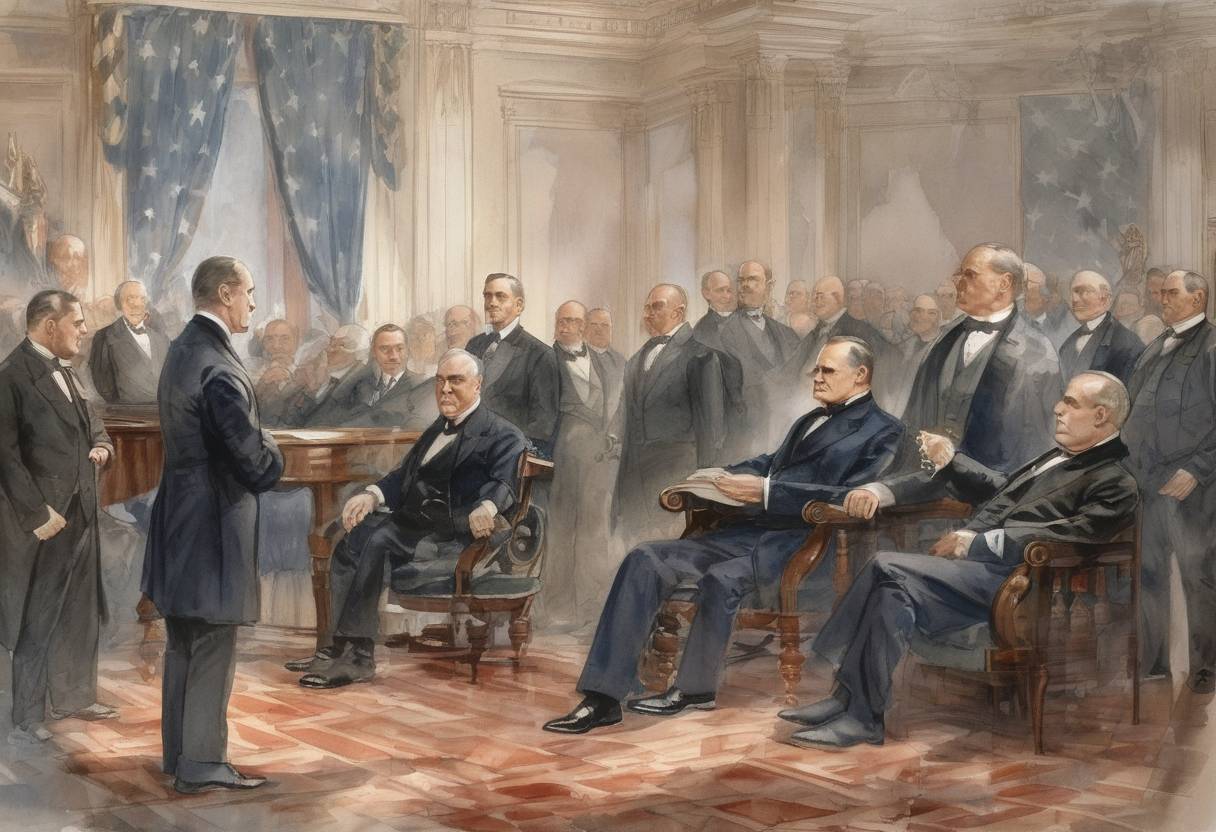
On March 4, 1897, William McKinley was inaugurated as the 25th President of the United States. This event marked the beginning of McKinley’s first term in office, following a decisive victory in the 1896 presidential election against the Democratic candidate, William Jennings Bryan.
Economic Concerns: The United States was emerging from the Panic of 1893, a severe economic depression that had significant impacts on the nation’s economy. McKinley’s campaign focused on restoring economic stability and promoting prosperity through protective tariffs and a commitment to the gold standard.
Election of 1896: McKinley’s campaign was managed by Mark Hanna, who effectively used modern campaign techniques, including extensive fundraising and media engagement. McKinley’s “front porch campaign” contrasted with Bryan’s extensive speaking tours, and McKinley’s message of economic stability resonated with voters.
Political Climate: The election was a pivotal moment in American politics, highlighting the divide between urban and rural interests, as well as differing views on monetary policy. McKinley’s victory signaled a shift towards Republican dominance in national politics.
Location: The inauguration took place at the East Portico of the United States Capitol in Washington, D.C.
Chief Justice: The oath of office was administered by Chief Justice Melville Fuller.
Inaugural Address: In his inaugural address, McKinley emphasized themes of national unity, economic recovery, and the importance of maintaining a strong currency. He advocated for protective tariffs to support American industries and reiterated his commitment to the gold standard.
Economic Policies: McKinley’s presidency is often associated with the passage of the Dingley Tariff in 1897, which raised tariffs to protect American industries. His administration also saw the passage of the Gold Standard Act in 1900, which firmly established gold as the basis for U.S. currency.
Foreign Policy: McKinley’s tenure included significant foreign policy developments, most notably the Spanish-American War in 1898, which resulted in the U.S. acquiring territories such as Puerto Rico, Guam, and the Philippines, marking a new era of American imperialism.
Legacy: McKinley’s presidency laid the groundwork for the Progressive Era, as his policies and the events of his administration influenced subsequent reforms and the expansion of American influence abroad.
William McKinley’s inauguration in 1897 was a defining moment in American history, setting the stage for economic recovery and increased international involvement. His leadership during a transformative period helped shape the trajectory of the United States at the turn of the 20th century.
Source: en.wikipedia.org