The Cairo Agreement: Granting Palestinian Self-Rule
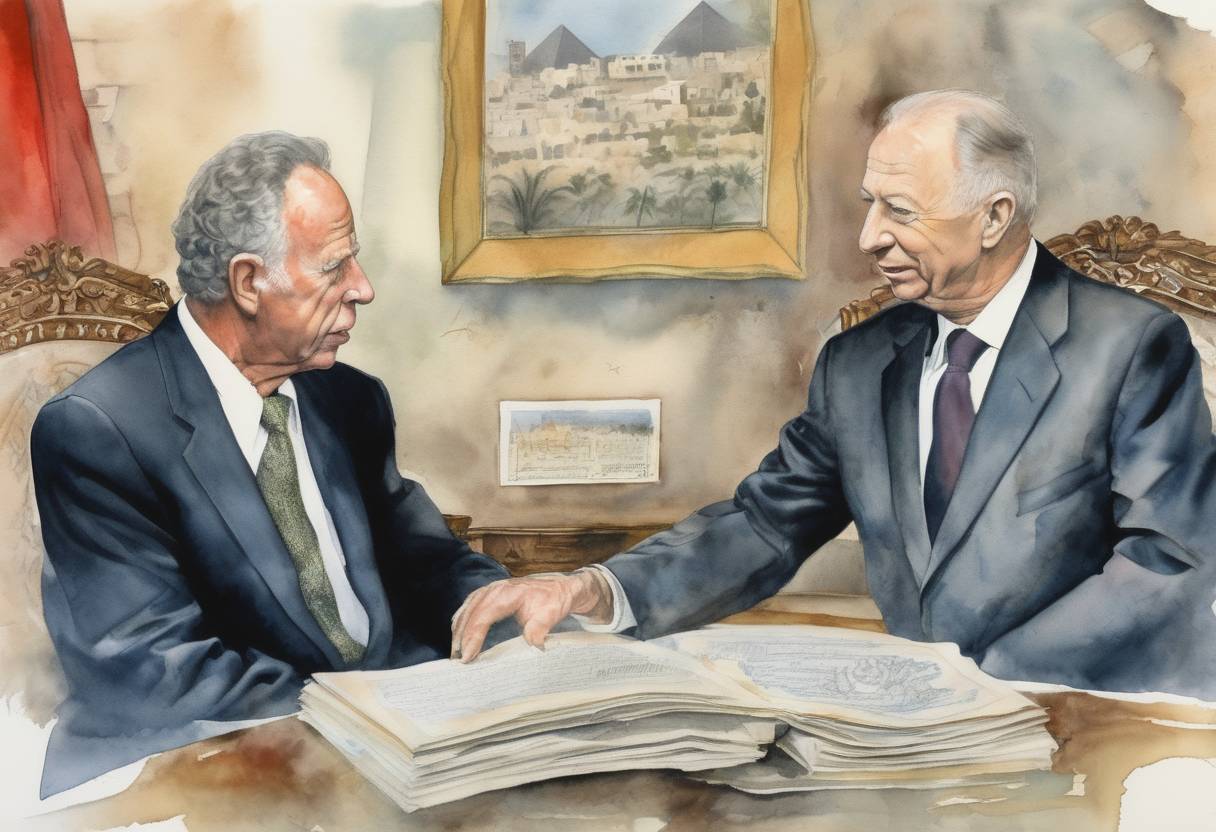
On May 4, 1994, a significant milestone in the Israeli-Palestinian peace process was reached when Israeli Prime Minister Yitzhak Rabin and Palestine Liberation Organization (PLO) leader Yasser Arafat signed an accord in Cairo, Egypt. This agreement, often referred to as the “Cairo Agreement,” was a pivotal step in implementing the Oslo Accords, which had been signed in Washington, D.C., in September 1993.
Background
The Oslo Accords marked the first face-to-face agreement between the government of Israel and the PLO, setting a framework for future relations and peace negotiations. The accords aimed to resolve the ongoing Israeli-Palestinian conflict by establishing a process for Palestinian self-governance in parts of the West Bank and Gaza Strip.
Key Provisions of the Cairo Agreement
The Cairo Agreement specifically addressed the transfer of authority from Israel to the Palestinians in the Gaza Strip and the West Bank town of Jericho. Key provisions included:
- Withdrawal of Israeli Forces: The agreement stipulated the withdrawal of Israeli military forces from the Gaza Strip and Jericho, allowing for Palestinian self-governance in these areas.
- Establishment of the Palestinian Authority: It formalized the creation of the Palestinian Authority (PA), which was to assume administrative control and provide governance in the designated areas.
- Security Arrangements: The agreement outlined security arrangements, including the establishment of a Palestinian police force to maintain order and security.
- Economic Cooperation: Provisions were made for economic cooperation and development, aiming to improve the living conditions of Palestinians in the self-rule areas.
Significance and Aftermath
The signing of the Cairo Agreement was a landmark event in the Middle East peace process. It represented a tangible step towards Palestinian self-determination and was seen as a hopeful move towards a lasting peace between Israelis and Palestinians. However, the agreement also faced significant challenges:
- Opposition and Violence: Both Israeli and Palestinian extremists opposed the agreement, leading to outbreaks of violence and terrorist attacks aimed at derailing the peace process.
- Implementation Challenges: The practical implementation of the agreement faced numerous hurdles, including disputes over borders, security, and the extent of Palestinian autonomy.
Despite these challenges, the Cairo Agreement laid the groundwork for further negotiations and agreements, including the subsequent Oslo II Accord in 1995. It remains a critical moment in the history of Israeli-Palestinian relations, symbolizing both the potential for peace and the complexities involved in achieving it.