Pedro Álvares Cabral and the Discovery of Brazil
1500 · Porto Seguro, Brazil
Portuguese navigator Pedro Álvares Cabral becomes the first European to sight Brazil, claiming it for Portugal.
July 1, 1543
Three Portuguese merchants arrive in Tanegashima, Japan, and introduce firearms, the first documented arrival of Europeans in Japan.
Tanegashima, Japan
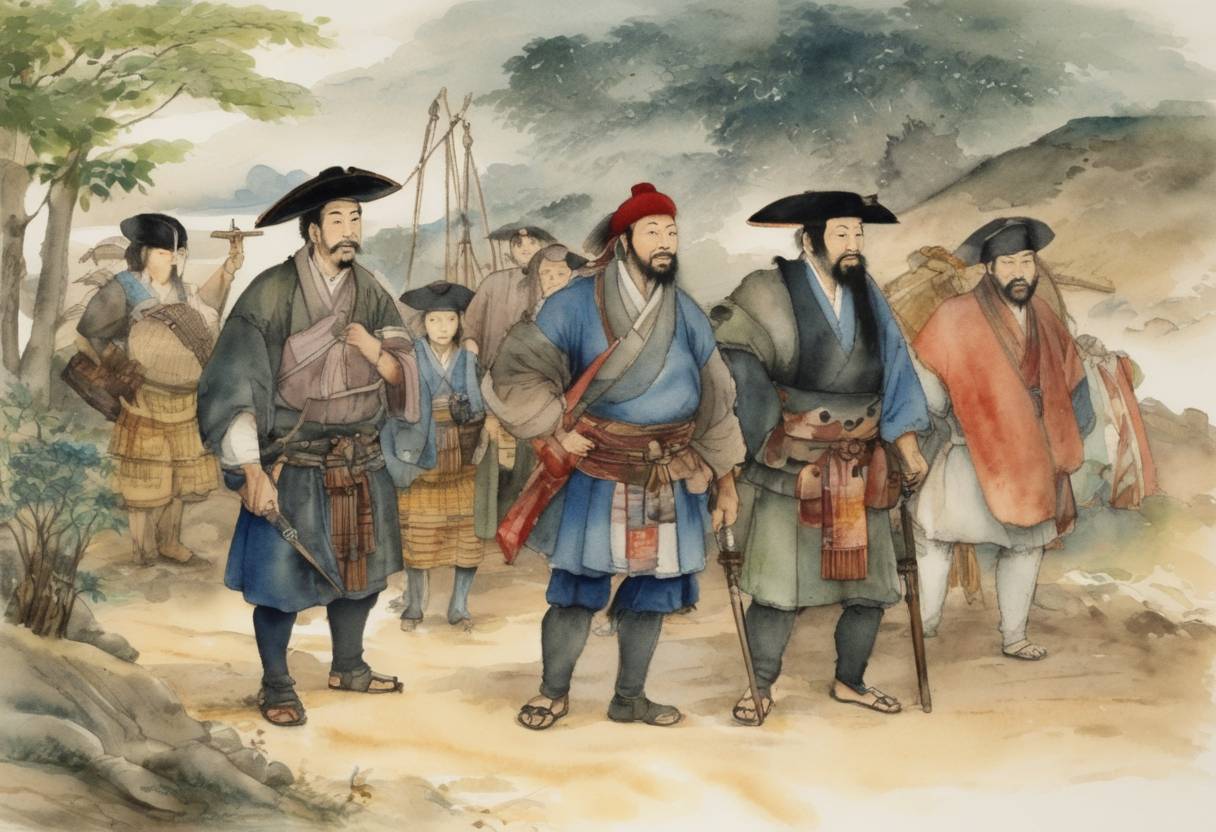
On July 1, 1543, a significant event in global history occurred when three Portuguese merchants landed on the island of Tanegashima, Japan. This day marked the first documented arrival of Europeans in Japan, a development that would have lasting implications for both Japanese society and European-Asian interactions.
In the early 16th century, European nations, driven by the age of exploration, were in constant search for new trade routes and opportunities in Asia. The Portuguese were pioneers in this exploration, establishing trade networks and colonies around the African coast, India, Southeast Asia, and China. Their voyages were often motivated by the desire to access and control the lucrative spice trade and to spread Christianity.
The Portuguese exploration received a pivotal boost with the support of Prince Henry the Navigator and continued through famous explorers like Vasco da Gama. By the 1540s, they had established themselves in India and were actively trading with various Asian entities.
The arrival of the Portuguese in Japan is commonly attributed to a shipwreck or an unplanned landing due to storms. The ship, carrying three Portuguese merchants, including one named Fernão Mendes Pinto (whose accounts contribute significantly to our understanding of the event), reached Tanegashima, an island in the Japanese archipelago.
One of the most crucial aspects of this encounter was the introduction of firearms to Japan. The Portuguese brought with them matchlock muskets, also known as “arquebuses,” which they demonstrated to the local Japanese lord, Tanegashima Tokitaka. The local populace was fascinated by these weapons and quickly saw their military potential.
Recognizing the transformative impact firearms could have, Tokitaka arranged for gunsmiths in his domain to replicate the weapons. This marked the beginning of the Japanese interest in and eventual mastering of gunpowder technology, leading to significant changes in Japanese warfare and power structures.
The arrival of the Portuguese and the subsequent introduction of firearms set off a series of cultural, technological, and economic exchanges that would have a profound impact on Japanese society. It initiated a period known as the Nanban trade, during which there was an influx of Western culture, including goods, religious ideas, and technology, into Japan.
The successful replication and widespread use of firearms eventually played a role in the unification of Japan under powerful warlords, most notably Oda Nobunaga and later Tokugawa Ieyasu.
The arrival of the Portuguese in Tanegashima on July 1, 1543, represents a critical point of contact between Japan and the West. It introduced new technologies and ideas, ultimately contributing to Japan’s evolution and its global interactions. This event marked the beginning of Japan’s complex relationship with European powers, a relationship that would evolve dramatically over the centuries.