The Foundation of the Institute of France
1802 · Paris, France
The Institute of France is founded in Paris, consolidating the Académie Française and four other learned societies.
January 3, 1368
Charles V of France decrees the establishment of the College of Navarre in Paris, an influential educational institution.
Paris, France | Kingdom of France
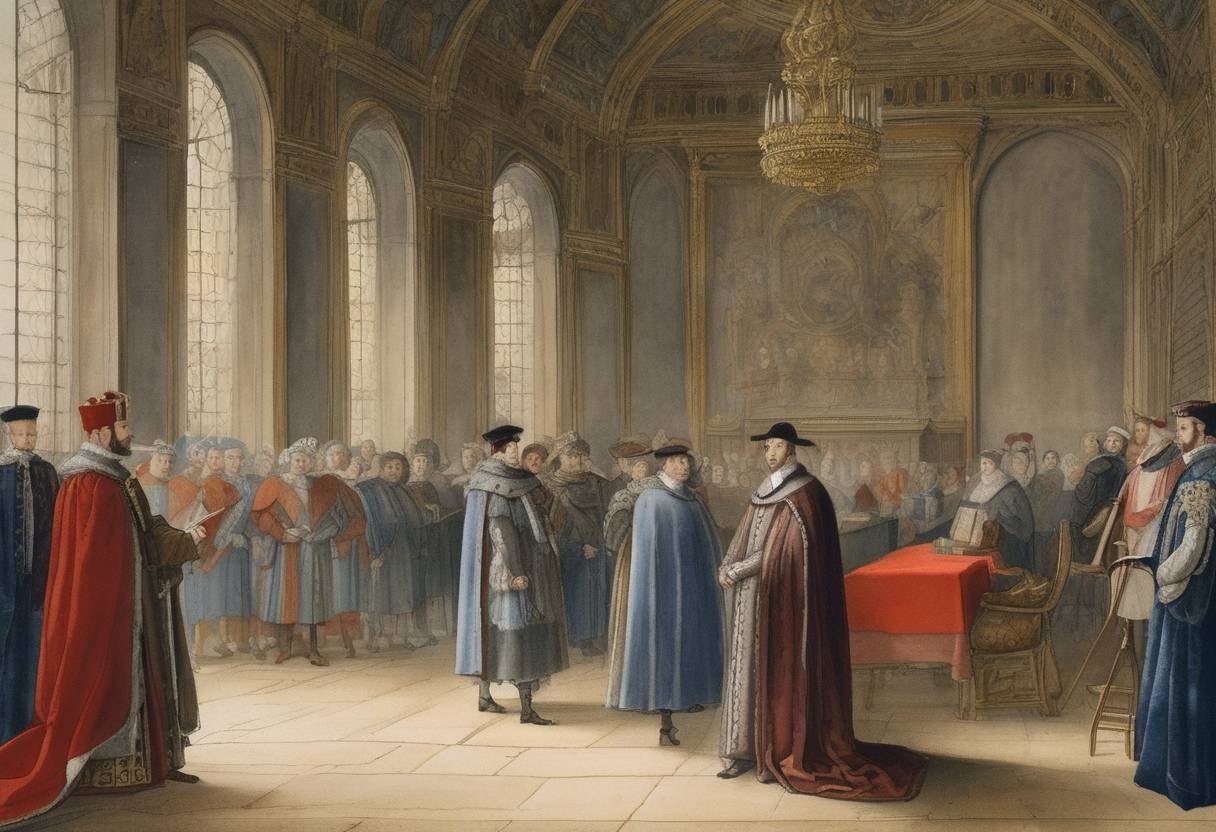
On March 1, 1368, Charles V of France decreed the establishment of the College of Navarre in Paris, marking a significant development in the domain of education in medieval France. This institution emerged as a leading center for learning and played a pivotal role in shaping intellectual discourse during the late Middle Ages.
The College of Navarre was founded at the behest of Queen Joan of France and Navarre, the wife of Philip IV of France and daughter of Louis X of France. The initiative was part of a broader effort to assert the intellectual and cultural superiority of the French crown and capital. The college was named in honor of Joan’s title as the Queen of Navarre.
At the time of its founding, Paris was a prominent hub of education, with the University of Paris being one of the most renowned centers of scholarship in Europe. However, access to quality education was limited and largely confined to clergy and the affluent. The establishment of the College of Navarre promised to broaden educational opportunities.
Curriculum: The College of Navarre was distinctive for its focus on a comprehensive curriculum that included the liberal arts, philosophy, theology, and law. This approach aimed to produce well-rounded scholars who could contribute significantly to the ecclesiastical and civil spheres of society.
Architecture and Facilities: Designed to accommodate several hundred students, the college’s architecture was reflective of the grandeur expected of royal-endowed establishments, featuring a library, chapel, dormitories, and lecture halls.
Endowment: A substantial financial endowment ensured the college’s sustainability and capability to attract some of the leading scholars and intellectuals of the era. This endowment covered operational costs and allowed the college to grant scholarships, making education accessible to a broader segment of the population.
The College of Navarre quickly gained a reputation for academic excellence and played a crucial role in the intellectual life of Paris and Europe. Scholars trained at the college significantly contributed to various fields, fostering advancements that resonated through subsequent generations.
The college’s establishment underlined the growing emphasis on education as a tool for social and political advancement, indicative of the changing landscape of European societies during the Late Middle Ages. Its influence endured until the French Revolution, highlighting its lasting legacy in the realm of education.
In summary, the decree by Charles V to establish the College of Navarre represented a strategic investment in the intellectual capital of France. It culminated in significant cultural and educational developments, reinforcing Paris’s status as a center of learning.
Source: en.wikipedia.org