Jesse Owens and the 1936 Berlin Olympics Long Jump
1936 · Berlin, Germany
Jesse Owens won the gold medal in the long jump at the 1936 Berlin Olympics, amid controversy over Nazi ideology.
August 1, 1936
The 1936 Summer Olympics opened in Berlin, Germany, noted for the Nazi propaganda and stunning performances by athletes like Jesse Owens.
Berlin, Germany | International Olympic Committee
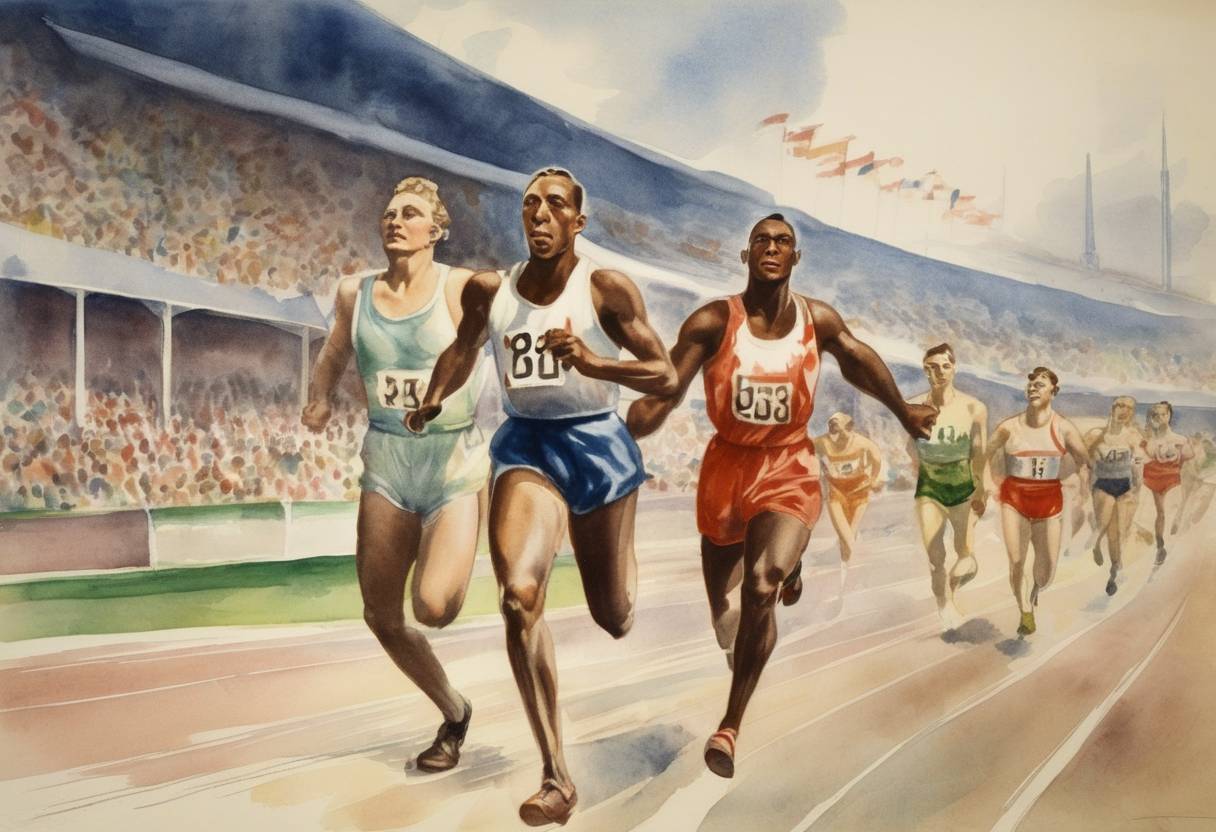
On August 1, 1936, the Summer Olympics officially opened in Berlin, Germany. This event was significant not only for its athletic competitions but also for its political context and the Nazi regime’s dissemination of propaganda. The 1936 Olympics were held amidst rising tensions in Europe as Adolf Hitler and the Nazi Party sought to showcase Germany’s resurgence post-World War I.
The Berlin Olympics were meticulously planned as a propaganda tool by the Nazis. The regime aimed to demonstrate Germany’s strength and unity under Nazi leadership to an international audience. The event was grandiose in its scale, featuring elaborate ceremonies and cutting-edge technologies, including the novel use of television and extensive radio broadcasts.
A key feature of the 1936 Olympics was the new traditions it introduced, including the torch relay from Olympia in Greece to the host city. This was the first time this ceremony took place, symbolizing a link between ancient and modern Games and emphasizing a narrative of continuity and cultural superiority promoted by the Nazis.
Jesse Owens, an African American track and field athlete, became a central figure at these Games. His spectacular performance, winning four gold medals in the 100 meters, 200 meters, long jump, and 4x100 meter relay, was a defining moment. Owens’ achievements challenged the Nazi ideology of Aryan racial superiority, underscoring the universal nature of athletic excellence.
The 1936 Olympics were a complex event, remembered for both their sporting achievements and their use as a propaganda tool by the Nazi government. Despite the oppressive regime’s attempts to highlight Aryan supremacy, athletes like Jesse Owens emerged as heroes, demonstrating the power of sport to transcend political boundaries and prejudice.
This Olympics highlighted the interconnectedness of athletics and politics, showcasing how global events can be shaped by and shape international relations. Despite the regime’s intentions, the Games also sowed seeds of resistance and international solidarity against racial discrimination, echoing through subsequent decades of Olympic history.
Source: www.history.com