The United States National Debt Reduced to Zero: January 8, 1835
1835 · Washington, D.C., United States
The United States national debt was reduced to zero for the only time in history under President Andrew Jackson.
October 27, 1838
Missouri governor Lilburn Boggs issues the Extermination Order, which orders all Mormons to leave the state or be exterminated.
Jefferson City, United States | Governorship of Missouri
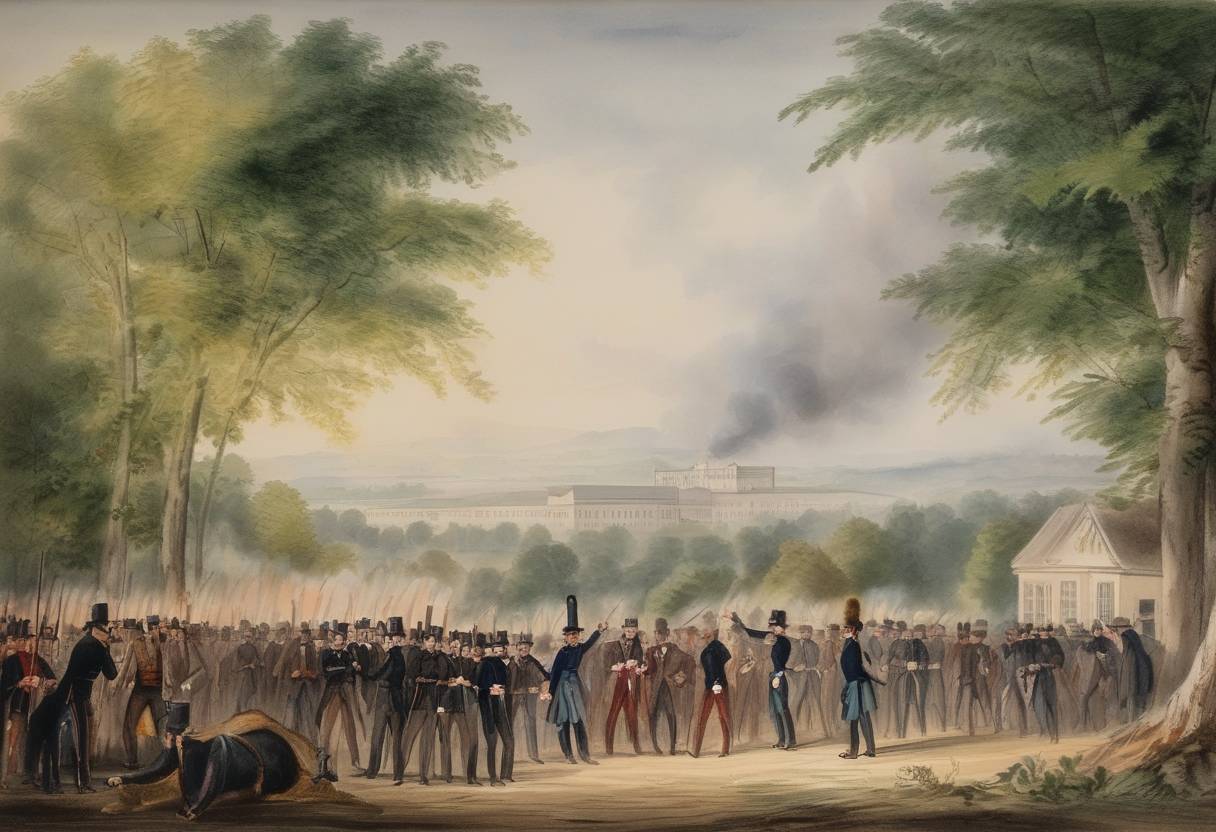
On October 27, 1838, Governor Lilburn W. Boggs of Missouri issued a chilling directive known as Missouri Executive Order 44, more commonly referred to as the “Extermination Order.” This decree aimed at the Church of Jesus Christ of Latter-day Saints, commonly known as the Mormons, required their expulsion from the state or threatened them with extermination.
The issuance of the Extermination Order came during a period of intense conflict known as the 1838 Mormon War. Tensions between Mormon settlers and local Missouri residents had been escalating due to differences in religious practices, economic competition, and cultural clashes. The situation deteriorated into violent skirmishes, including the Battle of Crooked River on October 25, 1838, where Latter-day Saint militias and Missouri state troops clashed, resulting in casualties on both sides.
Governor Boggs’ order was a response to the growing violence and unrest. It read:
“…the Mormons must be treated as enemies, and must be exterminated or driven from the state if necessary for the public peace – their outrages are beyond all description.”
The Extermination Order led to widespread repercussions for the Latter-day Saints and their settlements in Missouri. One of the most tragic episodes following the order was the Haun’s Mill massacre on October 30, 1838, where a group of Missouri vigilantes attacked a Mormon settlement, killing 17 men and boys.
Under extreme pressure and facing severe threats, many Mormons began to flee Missouri to neighboring states like Illinois, where they sought refuge. The order officially remained in effect, a symbol of religious intolerance and persecution, until it was formally rescinded in 1976 by Missouri Governor Kit Bond, who offered an apology acknowledging its violation of civil liberties.
The Extermination Order is a poignant example of religious persecution in early American history. It highlights the severe challenges minority religious groups faced in asserting their right to exist and worship freely within the United States. This decree and the events surrounding it played a significant role in shaping the future trajectory of the Latter-day Saints, leading to their eventual migration westward, most notably to the Utah Territory.
Source: en.wikipedia.org