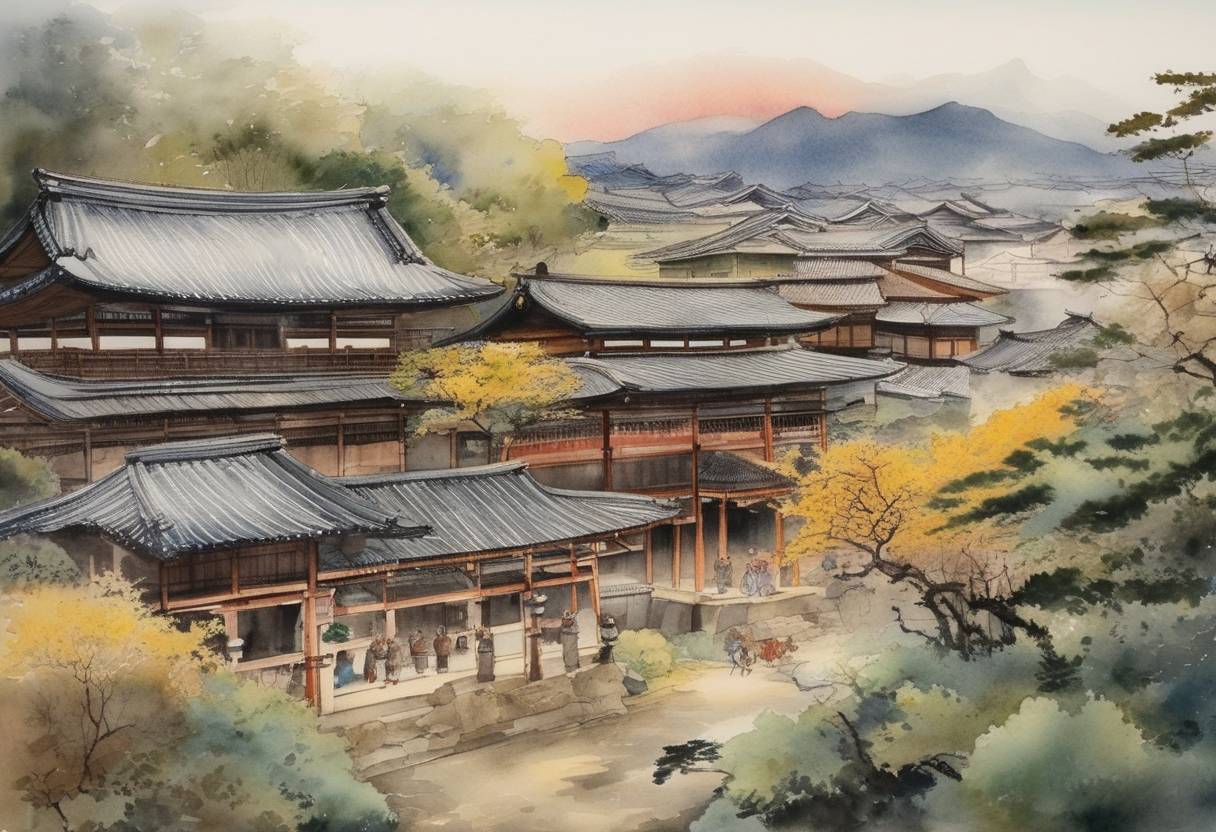
The Completion of “Rikkokushi” on November 14, 1152
“Rikkokushi” refers collectively to the first six national histories of Japan, encompassing chronicles that were compiled over the Nara and early Heian periods. However, it’s not entirely accurate to state that “Rikkokushi” was completed on November 14, 1152, as these works were compiled independently at earlier dates.
Overview of “Rikkokushi”
“Rikkokushi” is a collection of works that began with the “Nihon Shoki” in 720 and includes:
- Nihon Shoki (Chronicles of Japan) - Completed in 720, it is one of the most significant texts, influenced heavily by Chinese historiography, which records the mythic origins, history, and emperors of Japan up to the 8th century.
- Shoku Nihongi - Completed in 797, it continues from where the “Nihon Shoki” left off and chronicles the events up to 791.
- Nihon Kōki - Completed in 840, this work continues the historical record up to 833.
- Shoku Nihon Kōki - Finished in 869, accounts for events from 833 to 850.
- Nihon Montoku Tennō Jitsuroku - Completed in 879, covering the reign of Emperor Montoku.
- Nihon Sandai Jitsuroku - Finished in 901, it chronicles the events of the subsequent periods up to 887.
Historical Significance
The completion of each part of the “Rikkokushi” series was vital in Japan’s early historiography, setting a precedent for imperial historiography. These records provided insights into the political and social systems of early Japan, influenced subsequent historical works, and emphasized the divine origins and legitimacy of the imperial line.
Context and Impact
While the individual components were completed during their specific time frames in the early centuries, the compilation as a whole contributed to the centralization and consolidation of power under the imperial court. It also helped shape the perception of Japan’s past and identity in a distinctly structured narrative that emulated historical records found in Chinese tradition, showing cultural ties and influences.
The “Rikkokushi” remains a fundamental source for historians studying Japan’s early history, reflecting how the nation viewed itself and its place within the broader Asian context at the time.