Ingenuity's Survival: February 21, 2021
2021 · Jezero Crater, Mars
NASA's Mars helicopter Ingenuity survived its first night on Mars autonomously, a key milestone before its historic flight.
April 21, 2021
NASA's Ingenuity helicopter successfully performed its second flight on Mars, setting records for a higher and longer flight than its initial attempt.
Jezero Crater, Mars (planetary), | NASA
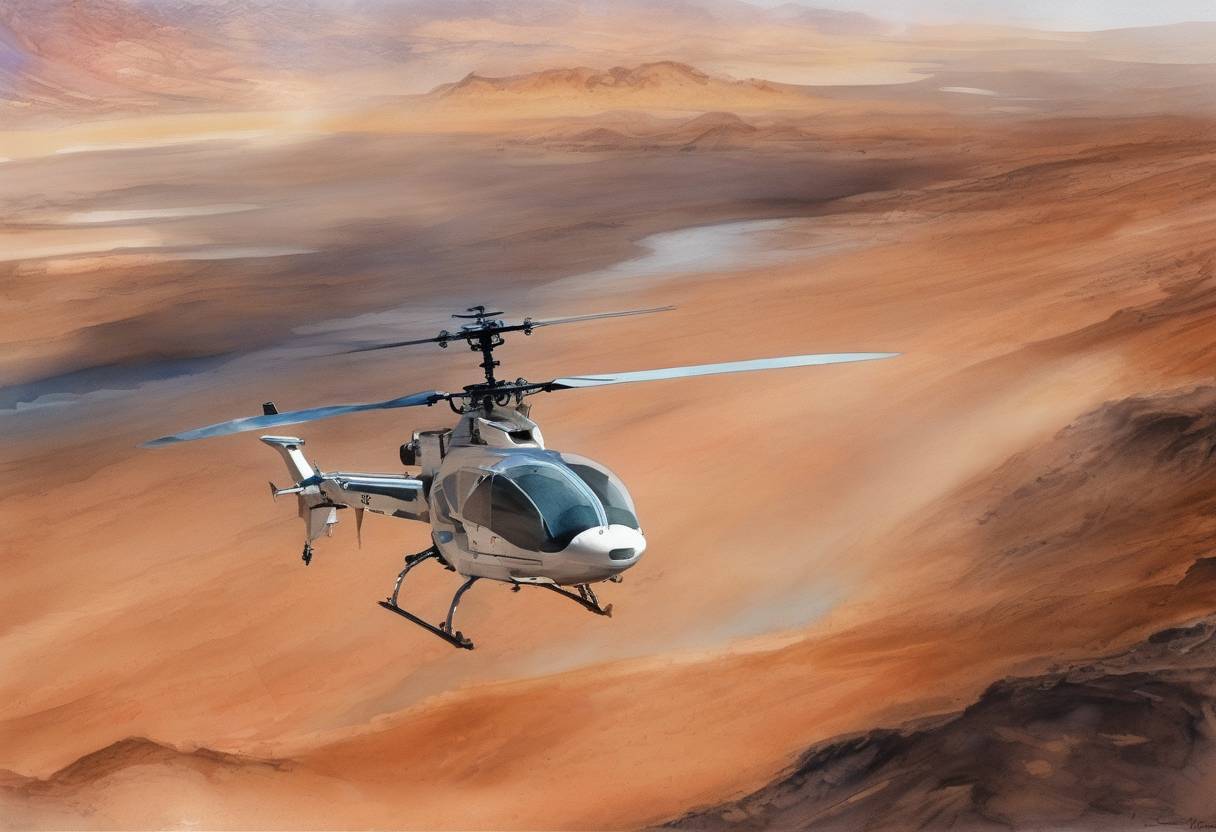
On April 21, 2021, NASA’s Ingenuity helicopter successfully completed its second flight on Mars, achieving significant milestones that extended the capabilities demonstrated during its maiden flight. Ingenuity, a technology demonstration project, is the first powered flight on another planet, marking a pivotal achievement in aerospace engineering and extraterrestrial exploration.
The successful second flight of Ingenuity reinforced several crucial aspects of rotorcraft dynamics in the thin Martian atmosphere, which is only about 1% as dense as Earth’s. The helicopter’s ability to achieve greater altitude and sustain longer flight duration opened the door for expanded reconnaissance roles, potentially aiding future rovers by scouting routes and identifying scientific targets from an aerial perspective.
By successfully navigating and adapting to the challenges of the Martian environment, Ingenuity’s flight represented not only a technological triumph but also a step forward in humanity’s quest to explore and study our solar system.
Source: mars.nasa.gov