Napoleon's Arrival at Elba: May 4, 1814
1814 · Portoferraio, Elba
Emperor Napoleon I of France arrives at Portoferraio on the island of Elba to begin his exile.
October 24, 1813
At the Battle of Leipzig, also known as the Battle of Nations, Napoleon's forces began a retreat after their defeat, which marked a turning point in the War of the Sixth Coalition.
Leipzig, Germany | French Empire
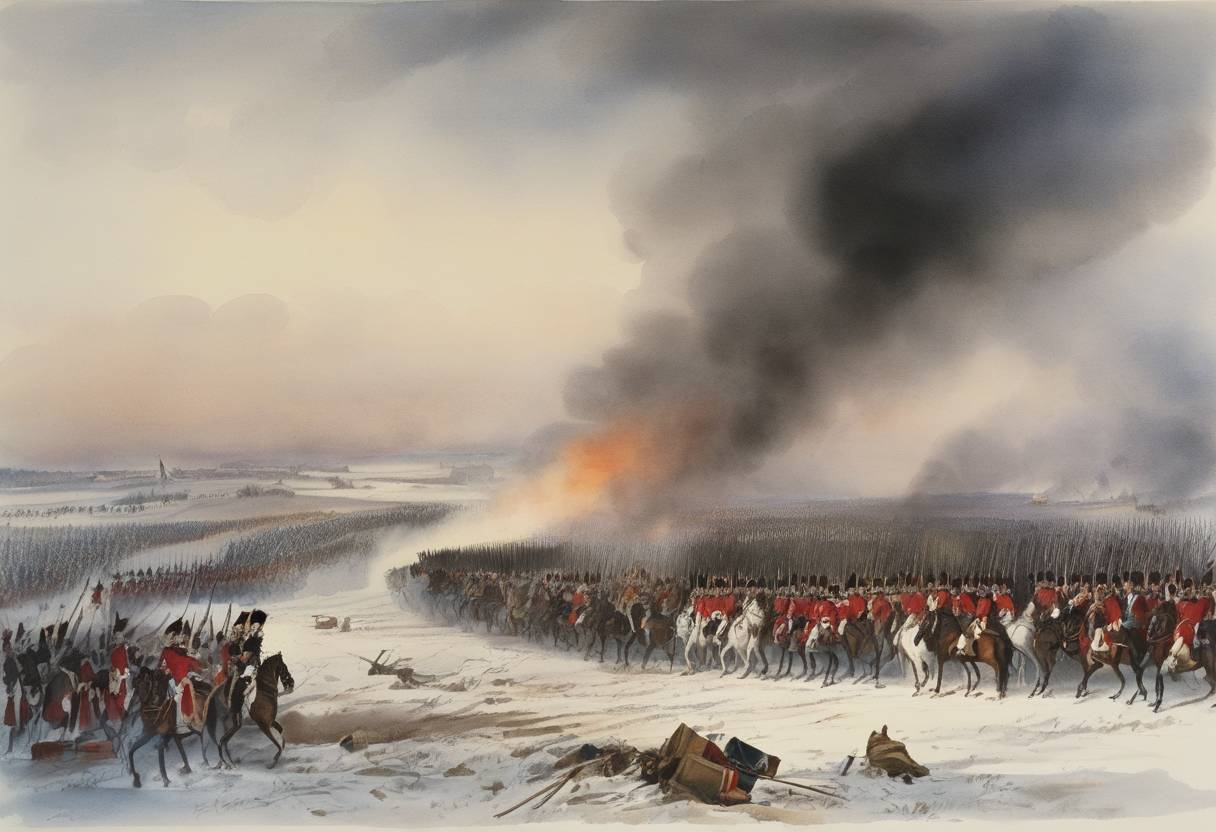
The Battle of Leipzig, also known as the Battle of Nations, was a pivotal conflict during the War of the Sixth Coalition, fought from October 16 to 19, 1813. This engagement marked a significant turning point against Napoleon Bonaparte’s forces in Europe.
In 1813, following a failed invasion of Russia and a subsequent weakening of his Grande Armée, Napoleon faced a coalition formed against him by several European powers, including Russia, Prussia, Austria, and Sweden. These nations, seeking to liberate Europe from French dominance, united after the disastrous campaign in Russia to remove Napoleon from power.
The battle commenced on October 16, 1813, with the convergence of allied forces around Leipzig. Napoleon’s army numbered approximately 198,000 troops, while the allied coalition brought together a force of about 350,000 soldiers from various nations. Over the next few days, intense fighting ensued around the city.
On October 19, the battle reached its climax, with the overwhelming numbers of coalition forces gaining the upper hand. Napoleon, recognizing the dire situation, ordered a strategic retreat from Leipzig, marking a turning point in his military career and the broader Napoleonic Wars. The retreat was chaotic and costly, with French forces suffering approximately 38,000 casualties, and leaving behind vital equipment and prisoners as they withdrew.
The defeat at Leipzig severely weakened Napoleon’s ability to maintain dominance in Europe. It paved the way for the invasion of France itself by coalition forces and eventually led to Napoleon’s abdication and exile to Elba in 1814.
The Battle of Leipzig is considered one of the largest engagements in Europe prior to the World Wars and symbolized a collective effort by multiple European nations to counter French hegemony. It demonstrated the effectiveness of allied coalitions against Napoleon’s once invincible military machine and heralded a new geopolitical landscape in Europe, ultimately influencing the re-drawing of the continent’s borders at the Congress of Vienna.
Source: en.wikipedia.org