George B. Selden and the First U.S. Automobile Patent
1895 · Washington, D.C., United States
George B. Selden was granted the first U.S. patent for an automobile.
June 27, 1895
The first U.S. patent for a gasoline-driven automobile is granted to Charles Duryea.
Springfield, United States | United States Patent Office
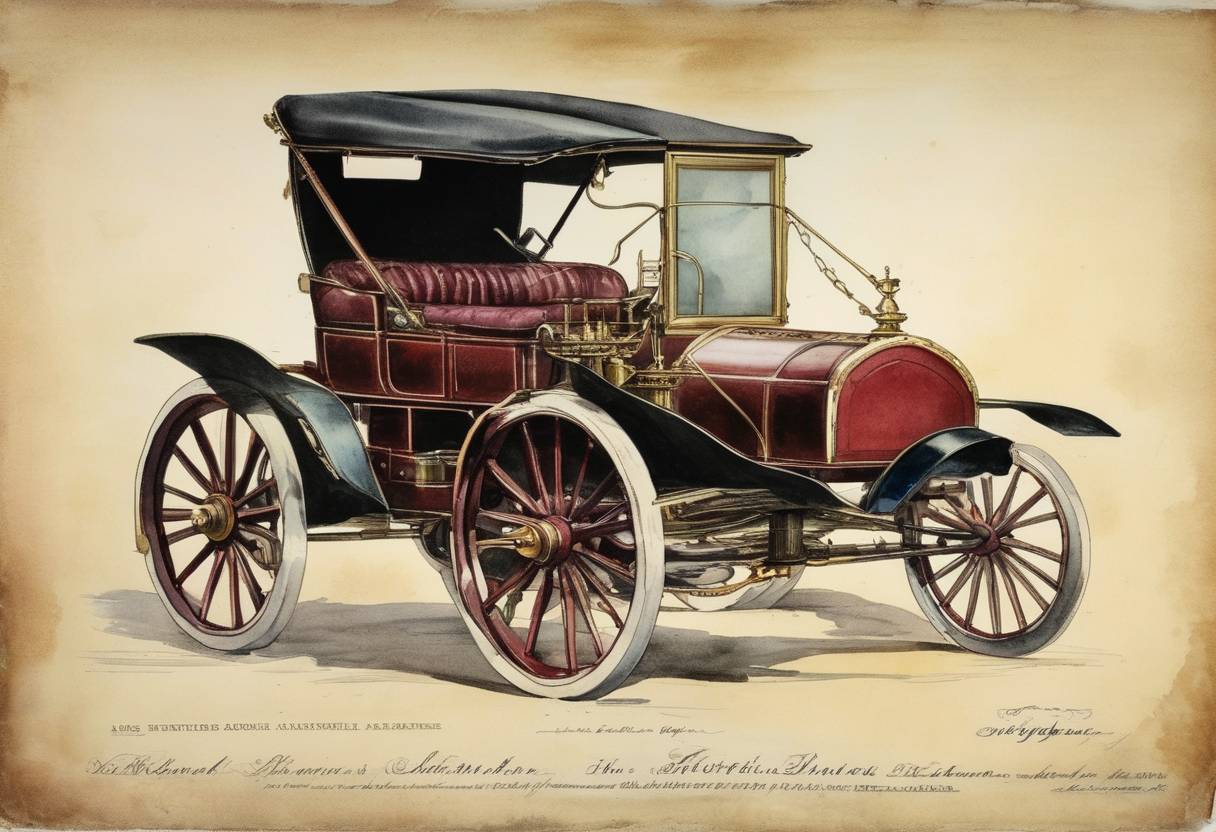
On June 27, 1895, Charles E. Duryea was granted the first U.S. patent for a gasoline-driven automobile, marking a pivotal moment in automotive history. The patent, registered as U.S. Patent No. 540,648, was pivotal in advancing the development and production of motor vehicles in the United States.
The latter half of the 19th century was an era of significant experimentation and innovation within the realm of personal transportation. Prior to Duryea’s breakthrough, numerous inventors had explored the potential of steam, electric, and combustion engines as power sources for vehicles. However, none had achieved the commercial success or widespread adoption that Duryea would help pioneer with gasoline-powered automobiles.
Charles Duryea, along with his brother, Frank Duryea, had been fascinated by the potential of automobiles powered by internal combustion engines. By the early 1890s, the Duryea brothers had started working on their prototypes in their workshop in Springfield, Massachusetts. Their collaboration would lead to the formation of the Duryea Motor Wagon Company, which would become the first American company to manufacture gasoline-powered automobiles commercially.
The Duryea vehicle, often referred to as a “motor wagon,” utilized a four-horsepower, single-cylinder gasoline engine. The transmission system was innovative for its time, and the vehicle could reach speeds of up to 7.5 miles per hour. This patent catalyzed the brothers’ further developments, culminating in successful public demonstrations and races that showcased the vehicle’s potential.
The granting of the patent was a crucial step in legitimizing and protecting the Duryea’s innovation. It also signaled the beginning of the automotive industry in the United States, paving the way for the country’s rapid adoption of automobiles and the eventual rise of major car manufacturers in the early 20th century.
The success of the Duryea motor wagon demonstrated the viability of gasoline-powered vehicles, which would eventually surpass steam and electric vehicles in popularity. The innovation also laid the groundwork for mass production techniques later perfected by Henry Ford. By highlighting the practicality and efficiency of gasoline engines, this patent contributed significantly to a transformative period in both American industry and society.
Overall, the issuance of the first U.S. patent for a gasoline-driven automobile to Charles Duryea on June 27, 1895, represents a foundational moment in the history of automotive engineering and innovation.
Source: www.loc.gov