The Great Chicago Fire: October 8, 1871
1871 · Chicago, United States
The Great Chicago Fire begins, lasting until October 10, 1871, and resulting in the destruction of a large portion of the city of Chicago, Illinois.
May 17, 1849
A large fire ravages St. Louis, Missouri, causing significant destruction and highlighting the burgeoning city's challenges with fire safety in its wooden structures.
St. Louis, United States | St. Louis Fire Department
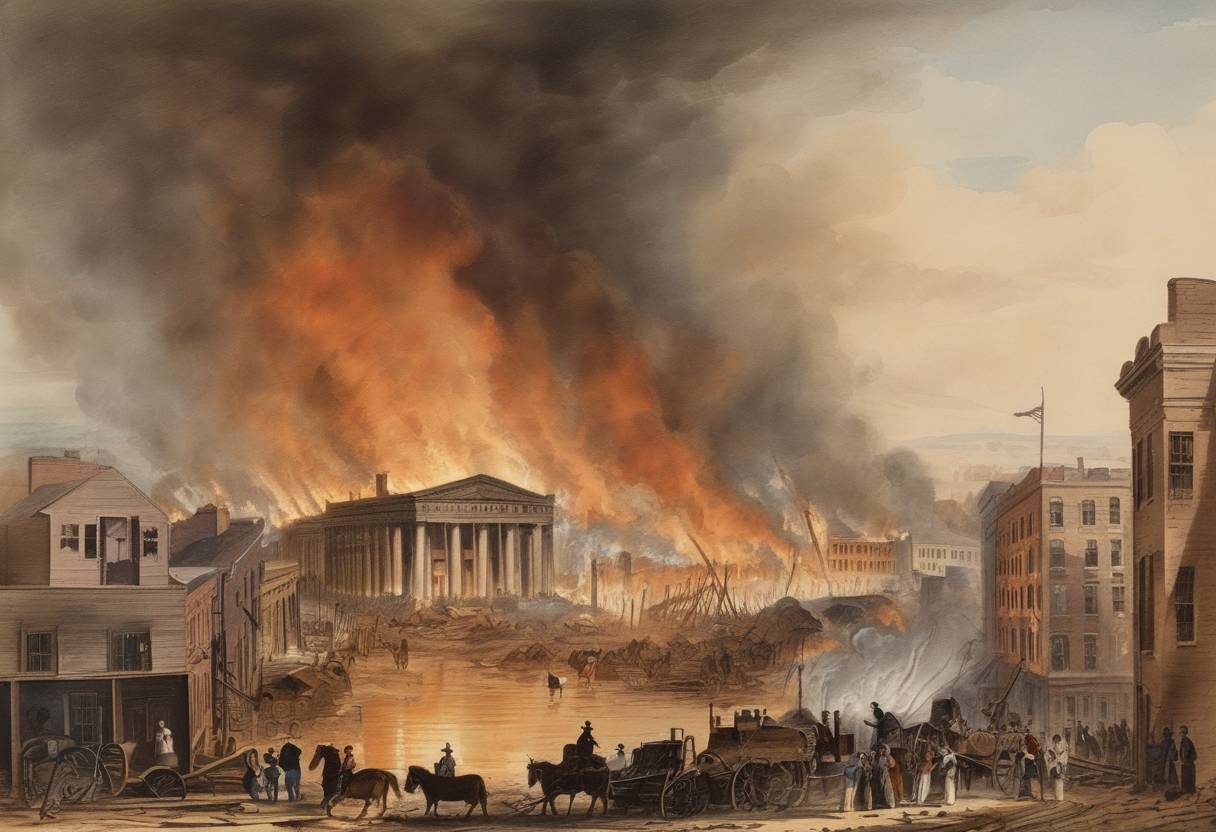
On May 17, 1849, a devastating fire broke out in St. Louis, Missouri, marking a pivotal moment in the city’s history of urban planning and fire safety. This catastrophic event resulted in widespread destruction, decimating a large portion of the city and emphasizing the dangers posed by its all-too-common wooden structures.
In the mid-19th century, St. Louis was a rapidly growing city, fueled by its strategic location along the Mississippi River, a vital artery for trade and movement. Constructed primarily from wood, the buildings in St. Louis represented a fire hazard common to thriving American frontier towns of the time. The city’s architecture, coupled with inadequate fire prevention measures, set the stage for potential disaster.
The fire began on the steamship White Cloud, docked on the bustling St. Louis levee. The fire quickly spread from the ship, igniting a chain reaction. Driven by high winds, the flames jumped from building to building, consuming homes, businesses, and warehouses along the riverfront.
Efforts to control the blaze were hindered by limited technology and resources. At the time, firefighting practices often involved bucket brigades and rudimentary equipment. This was no match for the inferno that had engulfed the city.
The Great Fire of St. Louis razed approximately 15 riverboats and destroyed over 400 buildings across 15 blocks. The financial cost was enormous, estimated at over $3 million (1849 USD) in damages. The devastation prompted a critical reassessment of the city’s infrastructure and fire safety regulations.
In the aftermath, St. Louis initiated significant urban changes. The city prioritized the expansion of its fire department and the adoption of more effective firefighting technologies. Moreover, new building codes were implemented, which mandated the use of fire-resistant materials like brick and stone for construction, particularly in the business district.
The Great Fire of St. Louis underscored the vulnerabilities of urban centers, spurring cities nationwide to reconsider their fire safety protocols. This disaster became a catalyst for change, propelling St. Louis into a period of architectural reform and modernization.
The rebuilding efforts set a precedent not only for St. Louis but also for other cities that would later face similar calamities. The lessons learned in 1849 influenced urban planning and construction methods, marking a turning point in the approach to fire prevention and safety in burgeoning American metropolises.
Source: www.history.com