Moscow Metro Bombing - February 6, 2004
2004 · Moscow, Russia
A suicide bombing on a Moscow metro train killed at least 41 people and injured over 100 others. The attack was attributed to Chechen rebels.
May 12, 2002
A series of explosions at the Kaspiysk Victory Day parade in Russia kills 44 people. The explosions targeted a crowded ceremony, marking a significant act of violence in the region.
Kaspiysk, Russia | Chechen insurgents (suspected)
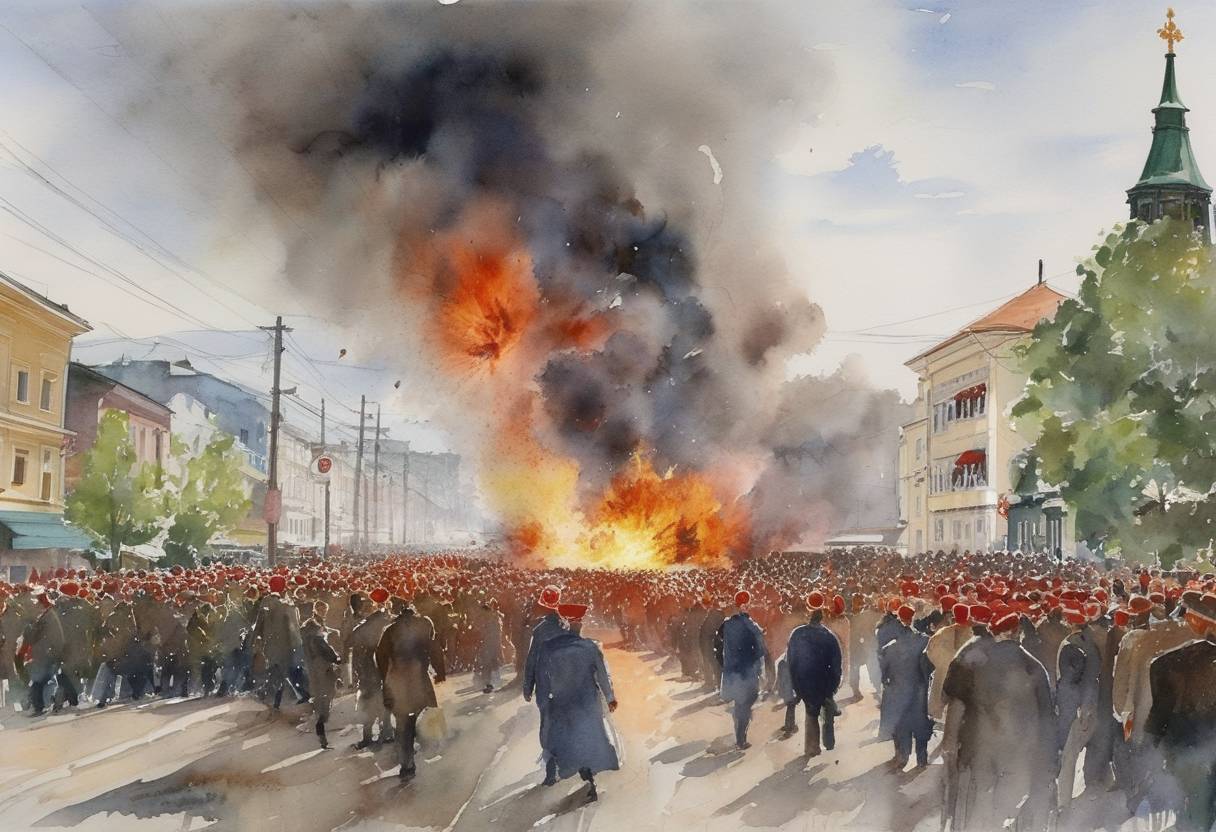
On May 9, 2002, a series of explosions targeted a crowded Victory Day parade in Kaspiysk, a city in the Republic of Dagestan, Russia, resulting in the deaths of 44 people. This tragic incident marked a significant act of violence amid the ongoing conflict in the North Caucasus region.
Victory Day, celebrated in Russia on May 9, commemorates the defeat of Nazi Germany in 1945 and is marked by military parades and ceremonies across the country. In 2002, Kaspiysk, a city near the Caspian Sea, organized a parade that included military personnel, veterans, and civilians.
During the parade, as participants and onlookers gathered to celebrate, explosive devices detonated, causing devastation and chaos. The explosion killed 44 individuals and injured over 100 others, including many children and military personnel. The nature of the attack indicated deliberate targeting to inflict maximum casualties during a significant national celebration.
The immediate aftermath saw a thorough investigation by Russian officials. The explosions were suspected to be the work of separatist militants involved in the regional conflict in the North Caucasus, where insurgency against Russian authority had been ongoing. Authorities believed the attack was carried out by a group seeking to destabilize the region and intimidate the Russian government.
The bombing intensified security measures in the region and prompted a robust response from Russian law enforcement and military agencies. President Vladimir Putin condemned the attack, pledging to find and punish those responsible.
The Kaspiysk bombing is part of a larger pattern of violence linked to conflicts in Chechnya and other parts of the North Caucasus, reflecting the complex socio-political dynamics and the terrorist threats facing Russia at the time. It highlighted the persistent instability in the area and underscored the challenges of countering insurgency and terrorism.
This attack is a grim reminder of the volatility in the Caucasus region during the early 21st century and the impact of separatist violence on civilians during nationally significant events.
Source: www.theguardian.com