Capture of Sidon - December 4, 1110
1110 · Sidon, Lebanon
The Crusaders captured Sidon during the First Crusade, expanding the Kingdom of Jerusalem's territory.
August 13, 1099
Battle of Ascalon marks a decisive engagement in the First Crusade, concluding with the Crusaders' victory over Fatimid forces.
Ascalon, Fatimid Caliphate (modern-day Israel) | Crusader forces
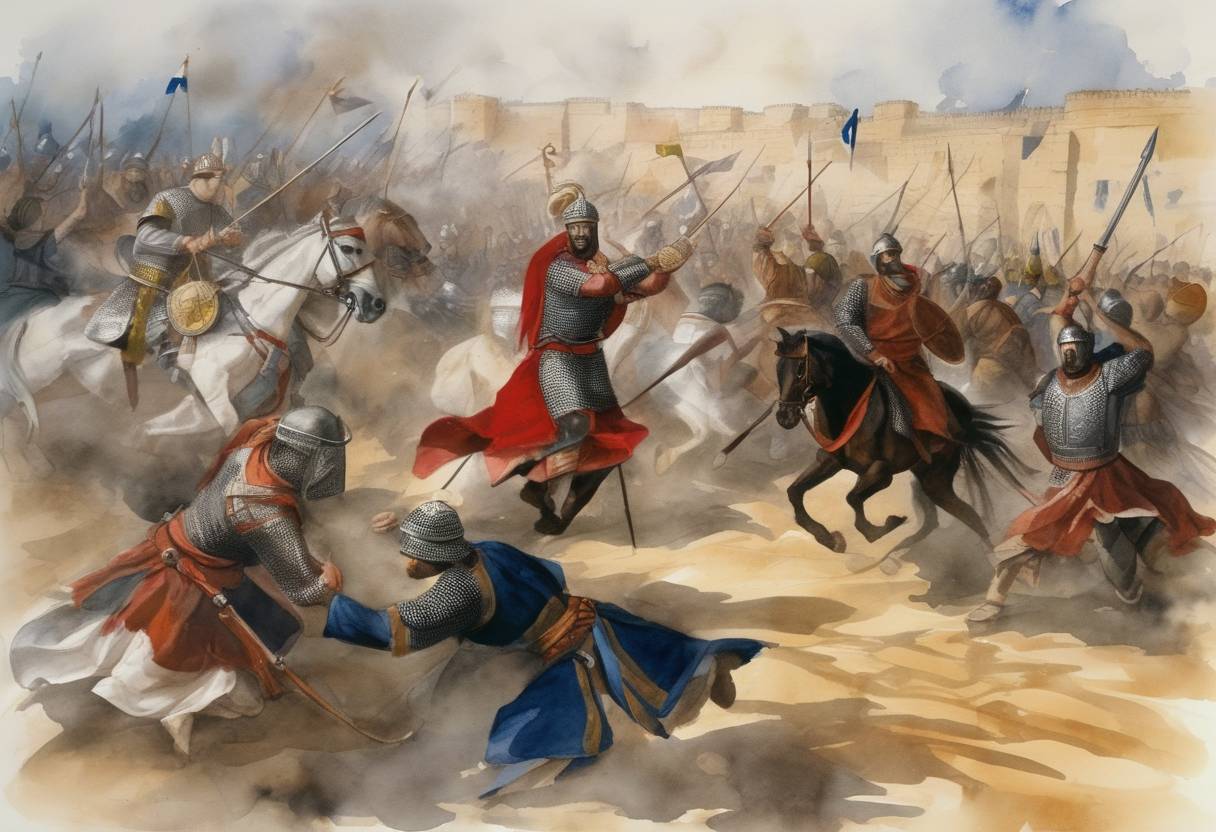
The Battle of Ascalon, fought on August 12, 1099, was the final major engagement of the First Crusade and marked a significant victory for the Crusaders over the Fatimid forces of Egypt. The battle took place near the coastal city of Ascalon, located in present-day Israel, just weeks after the Crusaders captured Jerusalem.
After the fall of Jerusalem on July 15, 1099, the Crusaders, led by Godfrey of Bouillon, received intelligence about an imminent attack by a large Fatimid army gathering in Ascalon. The Fatimid Caliphate, based in Egypt, sought to reclaim Jerusalem and dislodge the Crusaders from their newly-acquired territories.
Crusaders: Commanded by Godfrey of Bouillon, the Crusader forces consisted of approximately 10,000 soldiers, including knights and infantry. Key leaders included Tancred of Hauteville and Raymond IV of Toulouse.
Fatimid Forces: The Fatimid army, commanded by Vizier al-Afdal Shahanshah, was composed of around 20,000 men. This considerable force included a mix of infantry, cavalry, and a large contingent of war elephants intended to break the Crusader lines.
The Crusaders launched a surprise attack on the Fatimid camp at dawn. Having previously deliberated on how best to preemptively strike the Fatimid army, they chose to confront them before they could reach Jerusalem. The timing and suddenness of the assault caught the Fatimid forces off guard.
Crucially, the Crusaders exploited their superior tactics and battlefield unity. As the Fatimids attempted to organize their defense, the Crusaders pressed their advantage, causing panic and disarray among their ranks. The effective use of their cavalry charges shattered the enemy formations, while the infantry engaged the fleeing forces, leading to a decisive Crusader victory.
Immediate Aftermath: The success at Ascalon secured the immediate safety of Jerusalem from a counterattack. The Fatimids, suffering heavy casualties, retreated to Egypt, leaving the Crusaders in control of the region.
Long-term Impact: The victory solidified the establishment of the Kingdom of Jerusalem, a Crusader state that became a significant Christian foothold in the Levant. Additionally, it marked the completion of the First Crusade with a key strategic triumph for the Crusaders.
Legacy: Despite the victory, the Crusaders eventually failed to secure Ascalon itself due to political disputes among their leaders. The city remained under Fatimid control for decades until it was finally captured by the Crusaders in 1153.
The Battle of Ascalon exemplified the combination of strategic foresight and battlefield tactics that allowed the Crusaders to triumph in the First Crusade despite being frequently outnumbered by their adversaries.
Source: en.wikipedia.org