President James K. Polk's Request to Congress for a Declaration of War Against Mexico
1846 · Washington, D.C., United States
President James K. Polk asked Congress for a Declaration of War against Mexico, initiating the Mexican-American War.
January 16, 1883
The Pendleton Civil Service Reform Act was passed in the United States to establish the Civil Service Commission, marking federal employment based on merit rather than political affiliation.
Washington, D.C., United States | U.S. Congress
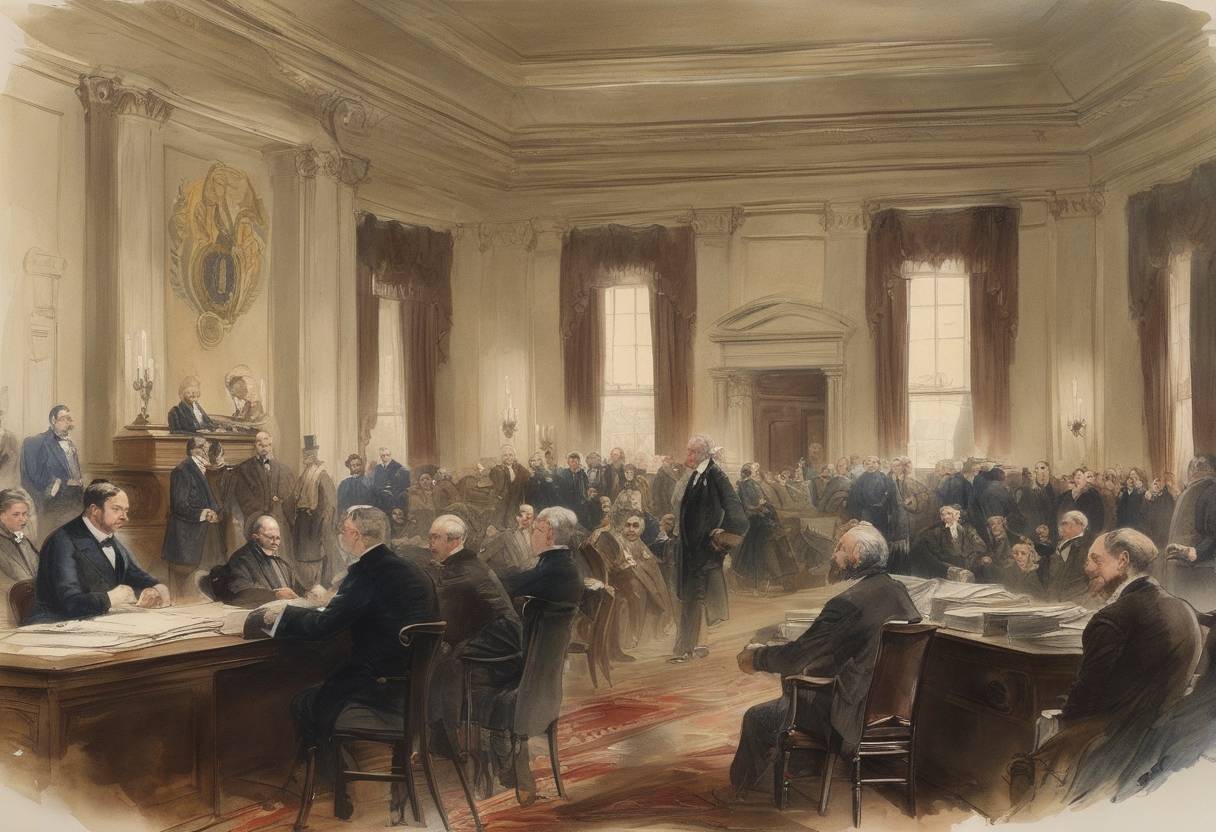
On January 16, 1883, the United States Congress passed the Pendleton Civil Service Reform Act, a landmark piece of legislation that fundamentally transformed the American federal workforce system. The Act aimed to dismantle the prevailing “spoils system,” wherein government jobs were awarded based on political connections rather than merit and competency. Sponsored by Senator George H. Pendleton of Ohio, the law sought to introduce a more equitable and efficient system for federal employment.
The movement for civil service reform gained momentum during the late 19th century, a period plagued by rampant patronage and inefficiency in government operations. The assassination of President James A. Garfield in 1881 by Charles J. Guiteau, a disgruntled office seeker, heightened public awareness of the need for reform. This tragic event galvanized political support and public demand for changes to the federal hiring process.
The Pendleton Act established several crucial elements:
Creation of the Civil Service Commission: A three-member bipartisan body was established to oversee the implementation of the new merit-based system.
Competitive Exams: The Act introduced competitive examinations for certain government positions, ensuring that selections were made based on qualifications rather than political loyalties.
Job Security: Civil servants were granted job security and were protected from being removed for political reasons. This provision aimed to create a more stable and professional federal workforce.
Expansion Over Time: Initially covering about 10% of federal jobs, the scope of the Act was designed to expand over time, gradually bringing more positions under its purview.
The Pendleton Civil Service Reform Act marked the beginning of the professionalization of the United States federal workforce. By shifting towards a merit-based system, it aimed to enhance the quality and integrity of government operations. Over the years, the principles established by the Pendleton Act have been expanded, reinforcing the foundations of modern civil service recruitment and administration in the United States.
The passage of the Act also signified a critical shift in public administration and laid the groundwork for future reforms that would continue to shape the landscape of American government. The notion of meritocracy, enshrined by the Pendleton Act, remains a guiding principle in public sector employment to this day.
Source: www.senate.gov