Christopher Columbus' Second Voyage: Departure on September 24, 1493
1493 · Cádiz, Spain
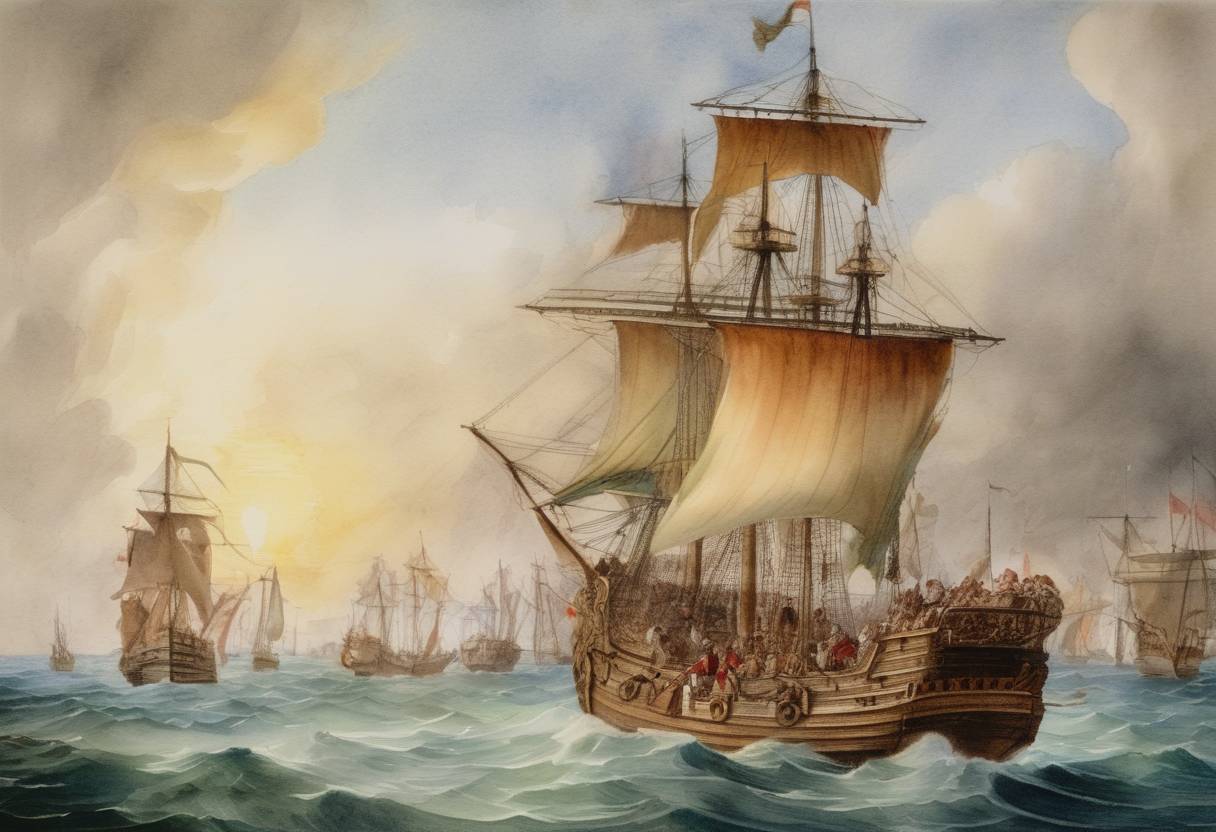
Christopher Columbus embarked on his second voyage to the New World, departing from Cádiz, Spain, with a fleet of 17 ships.
February 15, 1493
Christopher Columbus, returning from his first voyage to the Americas, writes a letter to the Spanish monarchy (Ferdinand and Isabella) describing his discoveries.
On route across the Atlantic to Spain, Spain | The Spanish Crown
On February 15, 1493, Christopher Columbus composed a letter addressed to the Spanish monarchs, King Ferdinand and Queen Isabella, detailing the outcomes of his maiden voyage across the Atlantic Ocean. This pivotal document served as Columbus’ report on his exploratory journey, which commenced in August 1492 and resulted in the famous encounter with what would later be known as the Americas.
Columbus set sail from Spain on August 3, 1492, with his three ships: the Santa María, the Pinta, and the Niña. His objective was to find a westward sea route to the lucrative markets of Asia. After a month of traversing the Atlantic Ocean, Columbus made landfall on October 12, 1492, on an island in the Bahamas, which he named San Salvador. Over the following months, Columbus explored parts of the Caribbean, including the present-day islands of Cuba and Hispaniola.
In his letter to Ferdinand and Isabella, Columbus detailed his discoveries and emphasized several key points:
New Lands: Columbus described the lands he had encountered as vast and fertile, rich with natural resources. He highlighted the potential for wealth extraction through gold, spices, and other valuable commodities.
Indigenous Peoples: Columbus wrote about the native populations, noting their physical appearance, lifestyle, and hospitality. He remarked on their simplicity and potential for conversion to Christianity, reflecting the religious motivations behind his voyage.
Strategic Importance: Columbus suggested that these new territories had considerable strategic importance for Spain. He recommended establishing settlements and proposed future expeditions to explore further and solidify Spain’s claim.
Success of the Journey: Columbus emphasized the success of the expedition by claiming the discovery of new lands that could be exploited for the benefit of the Spanish crown, aligning with the monarchs’ ambition for expansion and wealth.
The letter was intended to secure further support from the Spanish monarchy for subsequent voyages, which Columbus would eventually undertake. By communicating his findings, Columbus sought to validate the venture’s significance and assure the monarchs of its potential returns.
This letter is considered one of the earliest known accounts detailing the European discovery of the Americas. It was widely circulated throughout Europe, sparking interest among other European powers in exploration and colonization, thus marking a turning point in world history.
Columbus’ descriptions, although often inaccurate and romanticized, shaped European perceptions of the New World and contributed to the era of European exploration and imperial expansion that followed.
Columbus’ correspondence on February 15, 1493, not only reported the results of his first voyage but also played a crucial role in Europe’s burgeoning age of exploration. This letter to Ferdinand and Isabella stands as a testament to the historical moment when the Old World initiated its profound interaction with the New World, setting the stage for a dramatic reshaping of global history.
Source: en.wikipedia.org