Suicide Bombing in Baghdad - March 6, 2008
2008 · Baghdad, Iraq
A suicide bomber killed at least 68 people and injured more than 100 others in Baghdad, Iraq, during a crowded shopping event.
June 19, 2007
The Al Askari Mosque bombing occurred, which was a part of the sectarian violence occurring during the Iraq War.
Samara, Iraq | Terrorist groups
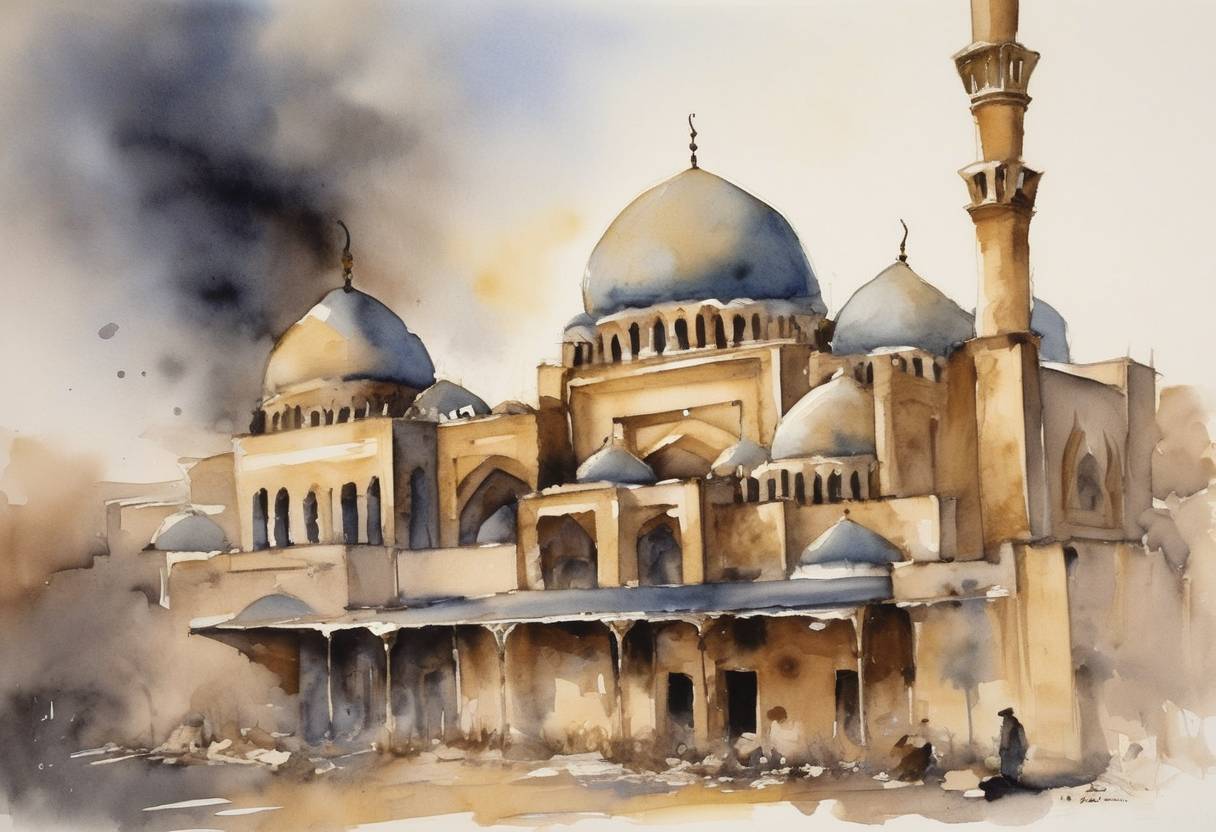
On June 19, 2007, the Al-Askari Mosque in Samarra, Iraq, was targeted in a violent attack that exacerbated sectarian tensions during the Iraq War. The mosque is one of the holiest sites in Shia Islam due to it being the burial site of the tenth and eleventh Shia Imams—Ali al-Hadi and Hasan al-Askari—as well as the location connected to the return of the twelfth and final Shia Imam, Muhammad al-Mahdi.
The bombing occurred during a period marked by intense sectarian violence following the U.S.-led invasion of Iraq in 2003 and the toppling of Saddam Hussein’s regime. The Iraq War had created a power vacuum, leading to deep ethnic and religious divisions, primarily between Iraq’s Sunni and Shia populations.
The Al-Askari Mosque had been previously attacked on February 22, 2006, where the main dome was destroyed, leading to widespread violence and retaliation between sectarian groups.
On this date, two minarets of the mosque were destroyed after militants planted explosives around the site. This attack did not cause any civilian casualties but significantly damaged the structure. It was seen as a deliberate attempt to inflame sectarian tensions further.
The 2007 bombing resulted in increased sectarian violence, not just in Samarra, but across Iraq. It led to numerous retaliatory attacks on both Sunni and Shia communities, worsening the cycle of violence in the nation.
The Iraqi government, along with international bodies, strongly condemned the attack, and a joint effort was made to restore and rebuild the significant religious site. This would become a part of a broader initiative to reduce sectarian divisions and attempt to bring some level of reconciliation among Iraq’s diverse religious and ethnic groups.
The repeated targeting of the Al-Askari Mosque underscored the intensity and complexity of the Sunni-Shia conflict within the Iraq War. It highlighted the vulnerability of religious sites during times of war and the profound impact their destruction can have on community relations and national stability. The events surrounding the mosque are often cited as pivotal in understanding the dynamics of sectarian violence in Iraq during the post-invasion period.
Source: www.globalsecurity.org