Cassius Clay Defeats Sonny Liston: February 25, 1964
1964 · Miami Beach, United States
Cassius Clay (later Muhammad Ali) defeated Sonny Liston to win the world heavyweight boxing title, marking the start of his legendary career.
October 29, 1960
Cassius Clay, later known as Muhammad Ali, wins his first professional fight in a six-round decision over Tunney Hunsaker.
Louisville, United States | boxing
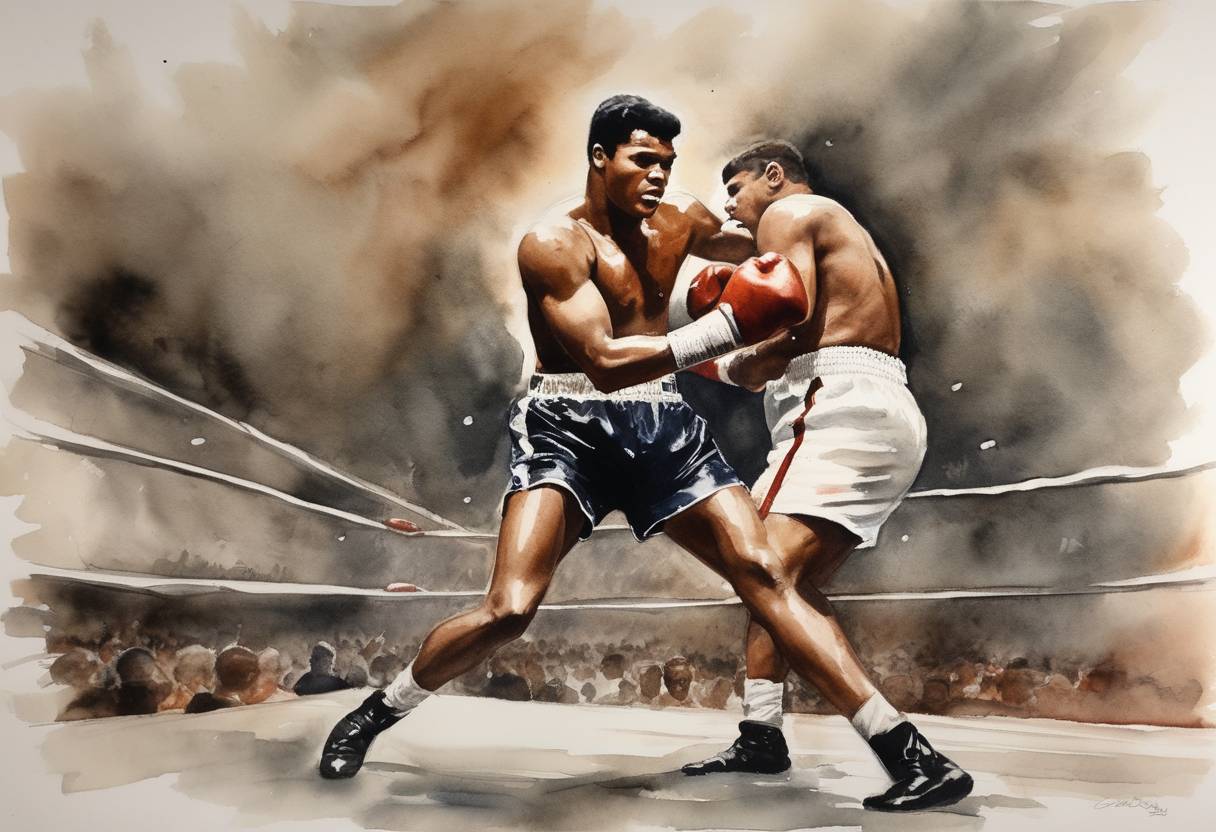
On October 29, 1960, Cassius Clay, who would later become known as Muhammad Ali, won his first professional boxing match. This marked the beginning of a storied boxing career that would see Ali become one of the most celebrated and influential sports figures in history.
Cassius Clay, then just 18 years old, had captured the world’s attention by winning a gold medal in the light heavyweight division at the 1960 Rome Olympics. This victory propelled him into the professional boxing scene with significant interest and expectations. Born and raised in Louisville, Kentucky, Clay was keen to establish his professional career with a strong performance in front of his hometown crowd.
The bout against Tunney Hunsaker was scheduled for six rounds. Despite his youth and relative inexperience in the professional arena, Clay dominated the fight with his speed, agility, and tactical prowess. Hunsaker, although more experienced, was unable to match the energy and skill of the young fighter. Judges scored the fight 60-48, 60-48, and 60-46 all in favor of Clay.
Cassius Clay’s victory over Tunney Hunsaker was not just the start of a boxing career; it marked the emergence of a global icon. Throughout his career and life, Muhammad Ali would challenge not only opponents in the ring but also societal norms, advocating for civil rights and becoming a symbol of courage and conviction.
This fight carved the path for Ali’s ascent to greatness, setting the stage for a journey that would transform sports, society, and the world.
Source: www.britannica.com