The Compromise of 1850: Introduction by Henry Clay
1850 · Washington D.C., United States
Henry Clay introduced the Compromise of 1850 to the U.S. Congress, a series of measures intended to ease tensions between slave and free states.
February 17, 1819
The United States House of Representatives passed the Missouri Compromise, which aimed to balance the power between slave and free states.
Washington D.C., United States | United States Congress
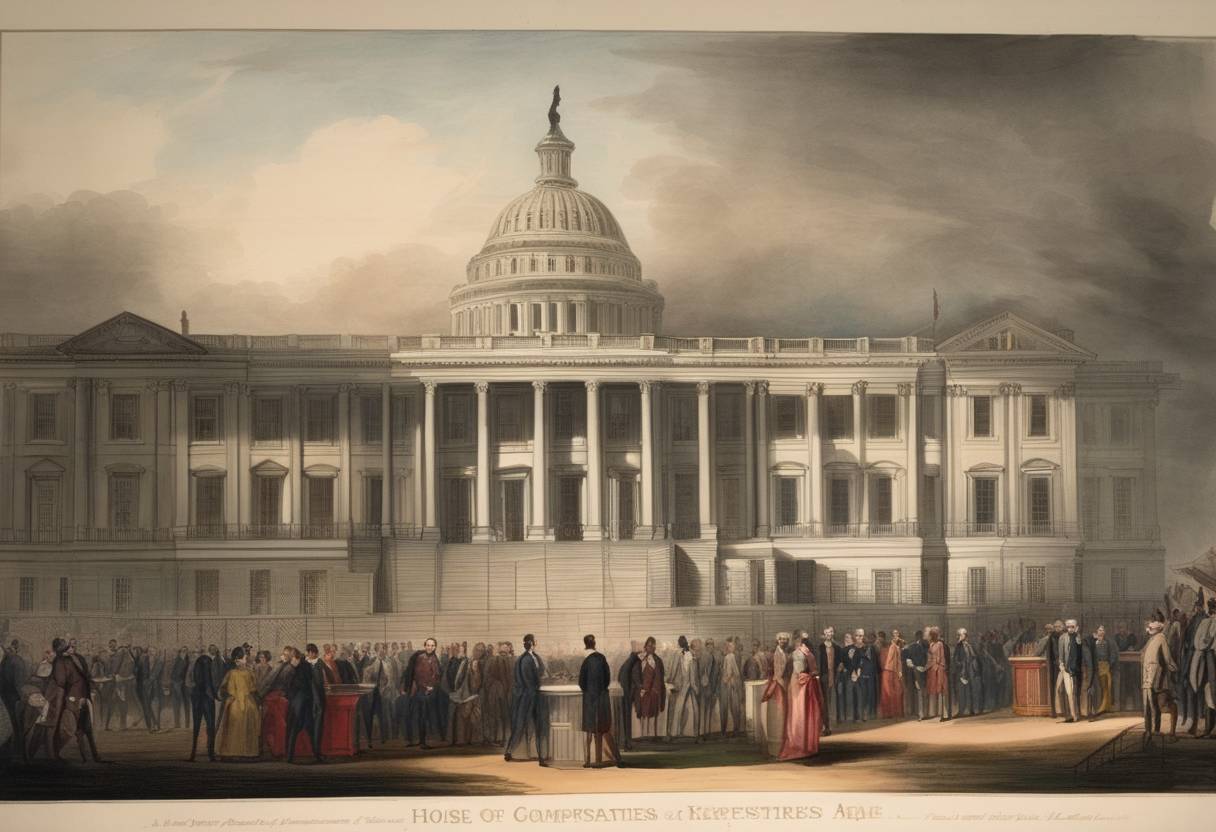
In the early 19th century, the United States grappled with the contentious issue of slavery as it expanded westward. The balance of power between slave and free states in the Union was a critical concern for legislators. Missouri’s application for statehood in 1818 brought the issue to the forefront, as admitting Missouri as a slave state would disrupt the balance, giving slave states greater power in Congress.
On February 17, 1819, the United States House of Representatives passed the Missouri Compromise, which was designed to address the sectional tensions regarding slavery. The proposal, initially brought forward by Henry Clay, known as the “Great Compromiser,” aimed to maintain the delicate balance of power in Congress. The key provision was to admit Missouri as a slave state while simultaneously admitting Maine as a free state, thus preserving the balance between slave and free states in the Senate.
Additionally, the compromise included a provision that prohibited slavery in the remaining territories of the Louisiana Purchase north of the 36° 30’ latitude line, with the exception of Missouri.
The Missouri Compromise was significant for several reasons:
The Compromise was eventually repealed by the Kansas-Nebraska Act of 1854 and declared unconstitutional by the Dred Scott decision in 1857. However, at the time, it was considered a critical measure in maintaining the Union’s stability.
The passage of the Missouri Compromise by the House of Representatives on February 17, 1819, represents an essential moment in American history. It demonstrated both the ability for political compromise and the profound challenges America faced with the institution of slavery—a challenge that would continue to shape the nation’s future.
Source: www.history.com