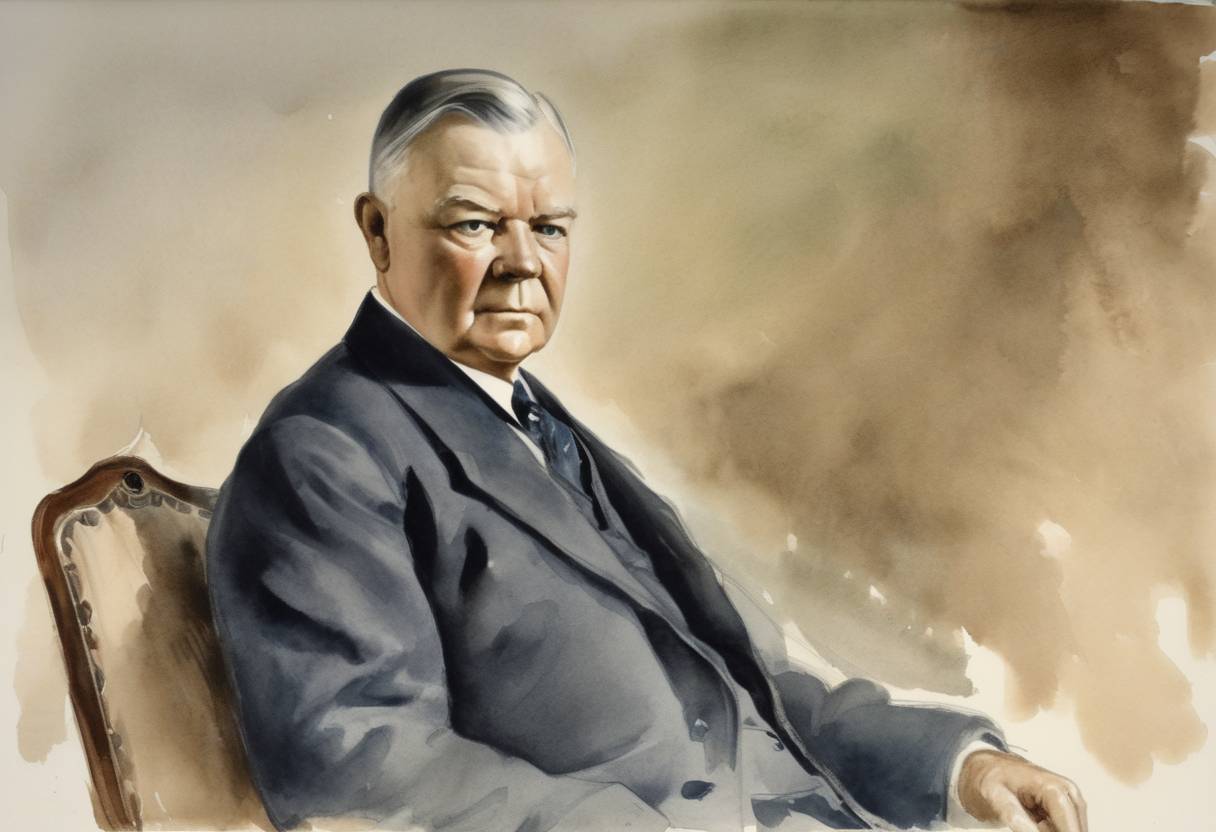
Herbert Hoover: Birth and Early Life
Herbert Hoover, the 31st President of the United States, was born on August 10, 1874, in West Branch, Iowa. He was the first U.S. president to be born west of the Mississippi River. This small town, his birthplace, was a tight-knit Quaker community, influencing Hoover’s early life and values, particularly emphasizing work ethic and humanitarianism.
Early Life and Education
Hoover was orphaned by the age of nine, which forced him to live with various relatives. Despite these early challenges, his academic abilities were evident, leading him to enroll at Stanford University in its inaugural class in 1891. He graduated with a degree in geology in 1895, laying the foundation for his career as a mining engineer.
Career Before Presidency
Before entering politics, Hoover became an internationally renowned mining engineer. His work took him to different parts of the world, including Australia and China, where he notably provided aid during the Boxer Rebellion. His global experiences and success in business established him as a wealthy and successful professional prior to his political career.
Political Career
Hoover’s entry into politics was marked by his effective leadership of humanitarian efforts during World War I, most notably organizing relief operations in Belgium. His success in these roles earned him recognition and popularity, leading to his appointment as Secretary of Commerce under Presidents Warren G. Harding and Calvin Coolidge. As Secretary, he promoted economic modernization and federal oversight of the economy.
Presidency
Herbert Hoover assumed the presidency in March 1929, just months before the stock market crash of October 1929, which heralded the onset of the Great Depression. Hoover’s presidency is often critiqued for his administration’s response to the economic crisis. Despite efforts to combat the depression through various programs and public works projects, including the famous Hoover Dam, the economy continued to suffer severe downturns, leading to widespread unemployment and poverty.
Legacy
Herbert Hoover’s legacy is a complex one. While his presidency is overshadowed by the Great Depression, his post-presidency years were spent in public service and humanitarian work. He chaired several commissions aimed at organization and reform of the executive branch of the government. Hoover’s life and career reflect both significant achievements and great challenges, spanning from engineering success and humanitarian efforts to the difficulties of leading a nation through one of its most trying times.