Jacques Chirac's Re-election on May 5, 2002
2002 · Paris, France
French President Jacques Chirac was re-elected for a second term, defeating far-right candidate Jean-Marie Le Pen in the presidential runoff election.
May 8, 1988
François Mitterrand was re-elected as President of France.
Paris, France | Government of France
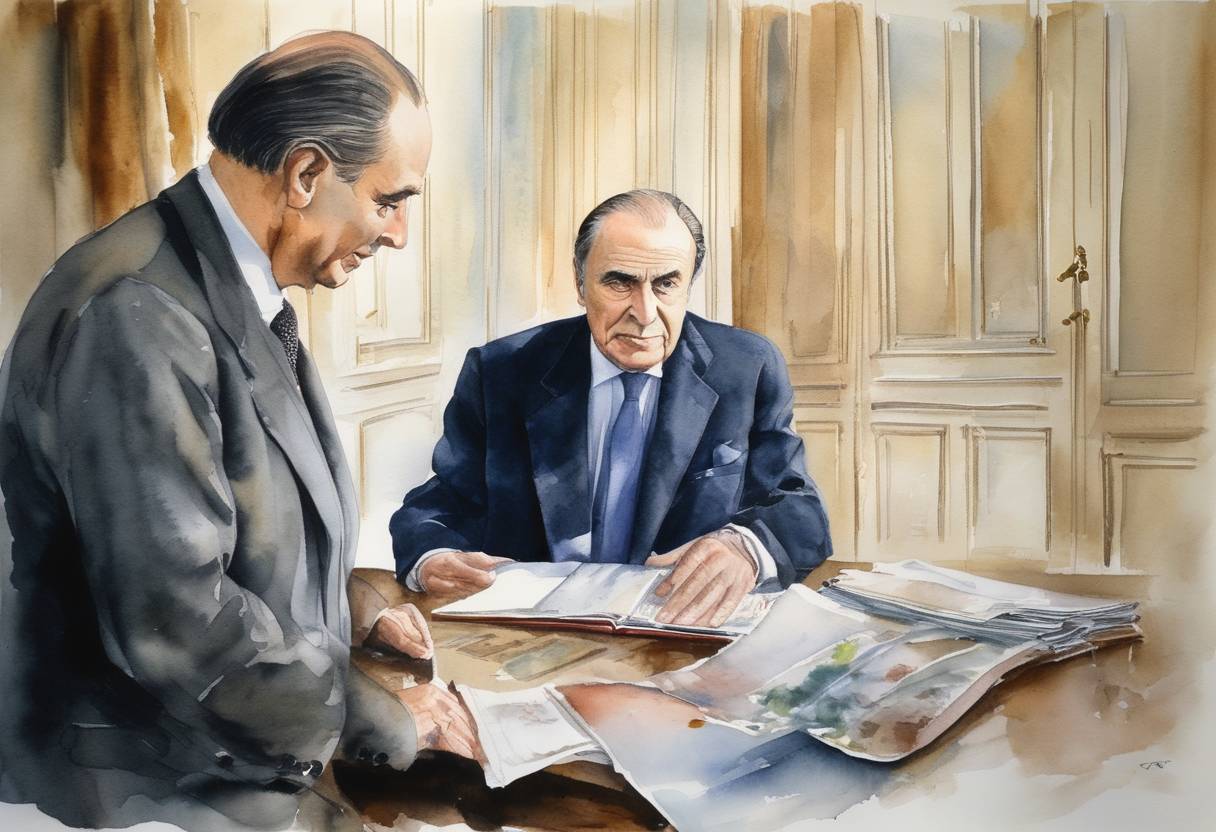
On May 8, 1988, François Mitterrand was re-elected as the President of France, marking a significant moment in French political history. Mitterrand, a member of the Socialist Party, won the presidency for a second seven-year term by defeating his Gaullist rival, Jacques Chirac, in the second round of the presidential election.
François Mitterrand’s re-election came after a first term marked by notable political shifts and reforms. He was first elected in 1981, becoming the first socialist president of the Fifth Republic. During his initial tenure, Mitterrand implemented a series of radical social and economic reforms, including nationalizing key industries and banks, increasing workers’ rights, and introducing progressive social policies. However, his administration faced challenges, including rising unemployment and economic difficulties, which led to a more moderate approach in later years.
In the first round of the presidential elections held on April 24, 1988, no candidate received an outright majority, leading to a runoff between the top two candidates: Mitterrand and Jacques Chirac, the leader of the Rally for the Republic (RPR) and then the serving Prime Minister. Mitterrand garnered 34.1% of the vote in the first round, while Chirac obtained 19.9%.
The differences in political ideology, leadership style, and visions for France set the stage for a highly competitive second round. Mitterrand, known for his charisma and statesman-like demeanor, positioned himself as a unifying figure capable of leading France into a new era of prosperity and social advancement.
On May 8, 1988, Mitterrand successfully secured his re-election with approximately 54% of the vote against Chirac’s 46%. His victory was largely attributed to his ability to appeal to a broad range of voters, including those beyond his traditional socialist base. Mitterrand’s campaign emphasized continuity, stability, and a vision for a modern, dynamic France.
Mitterrand’s second term in office allowed him to continue advocating for European integration, a process he strongly supported throughout his presidency. Domestically, his leadership further stabilized the socialist agenda, although he often adopted more pragmatic policies due to the prevailing economic conditions and pressure from a diverse political landscape.
The re-election of Mitterrand fortified the influence of the Socialist Party in French politics and had a lasting impact on the political landscape of both France and Europe. His presidency saw France navigating the complexities of the Cold War’s end, European Union developments, and domestic challenges, establishing a legacy of resilience and reform.
François Mitterrand remained in office until 1995, becoming the longest-serving President of the French Republic. His presidency is often remembered for its pivotal role in modernizing France and fostering a stronger European unity.
Source: en.wikipedia.org