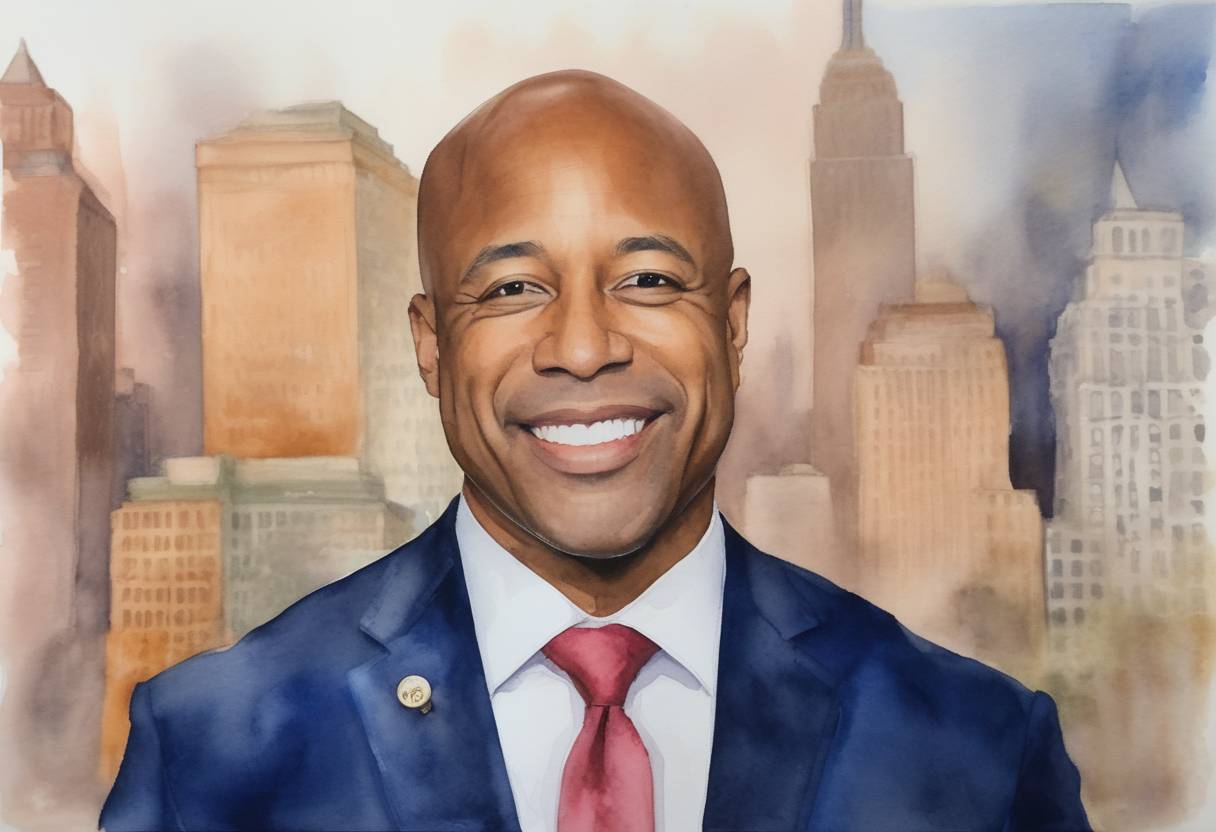
Eric Adams Elected as New York City Mayor
On November 2, 2021, Democrat Eric Adams was elected as the 110th Mayor of New York City, making a notable impact in the political landscape of the city by becoming the second African American to hold this prestigious position.
Background
Eric Adams, born in Brooklyn, New York, has had a long career in public service. He initially served for over two decades in the New York City Police Department, where he retired at the rank of captain. His political career began soon after, serving in the New York State Senate from 2006 to 2013. In 2013, Adams was elected Brooklyn Borough President, a role he held until his mayoral election. Throughout his career, he has been a vocal advocate for public safety, education reform, and economic growth.
Election Campaign
Adams’ mayoral campaign focused predominantly on issues that resonated deeply with New Yorkers: reducing crime, addressing affordable housing shortages, and recovering from the economic impacts of the COVID-19 pandemic. His extensive background in law enforcement and public service enabled him to cultivate a message of safety and stability, which appealed to a broad demographic in the city.
Historical Context
Eric Adams’ election is historically significant as he follows in the footsteps of David Dinkins, the first African American mayor of New York City, who served from 1990 to 1993. Adams’ victory marks a continuation and expansion of the diversity seen in the political leadership within New York City, reflecting broader social changes in urban American politics.
Aftermath and Implications
Assuming office in January 2022, Adams outlined an ambitious platform geared towards a comprehensive recovery from the pandemic. His election emphasized the growing demand for leadership that could address complex social challenges while fostering community growth and inclusivity. Adams’ leadership faced immediate challenges, including managing budgetary constraints and ensuring public safety amidst rising concerns about crime rates. His tenure was anticipated to shape the future of one of the world’s most influential cities significantly.
Broader Significance
Eric Adams’ election highlighted the progressive shift in New York City’s political landscape and underscored the importance of diverse representation in governance. It also suggested a potential model for other cities nationwide grappling with similar urban challenges, demonstrating the electorate’s preference for experience grounded in practical public service solutions.