Protests in Myanmar on February 8, 2021
2021 · Yangon, Myanmar
Protests erupted in Myanmar against the military coup that took place on February 1, 2021, with thousands of people taking to the streets in cities across the country.
September 18, 2007
Protests erupted in Myanmar as Buddhist monks began the Saffron Revolution, named after the color of their robes, marking the beginning of a series of demonstrations against the military junta.
Yangon, Myanmar | Sangha
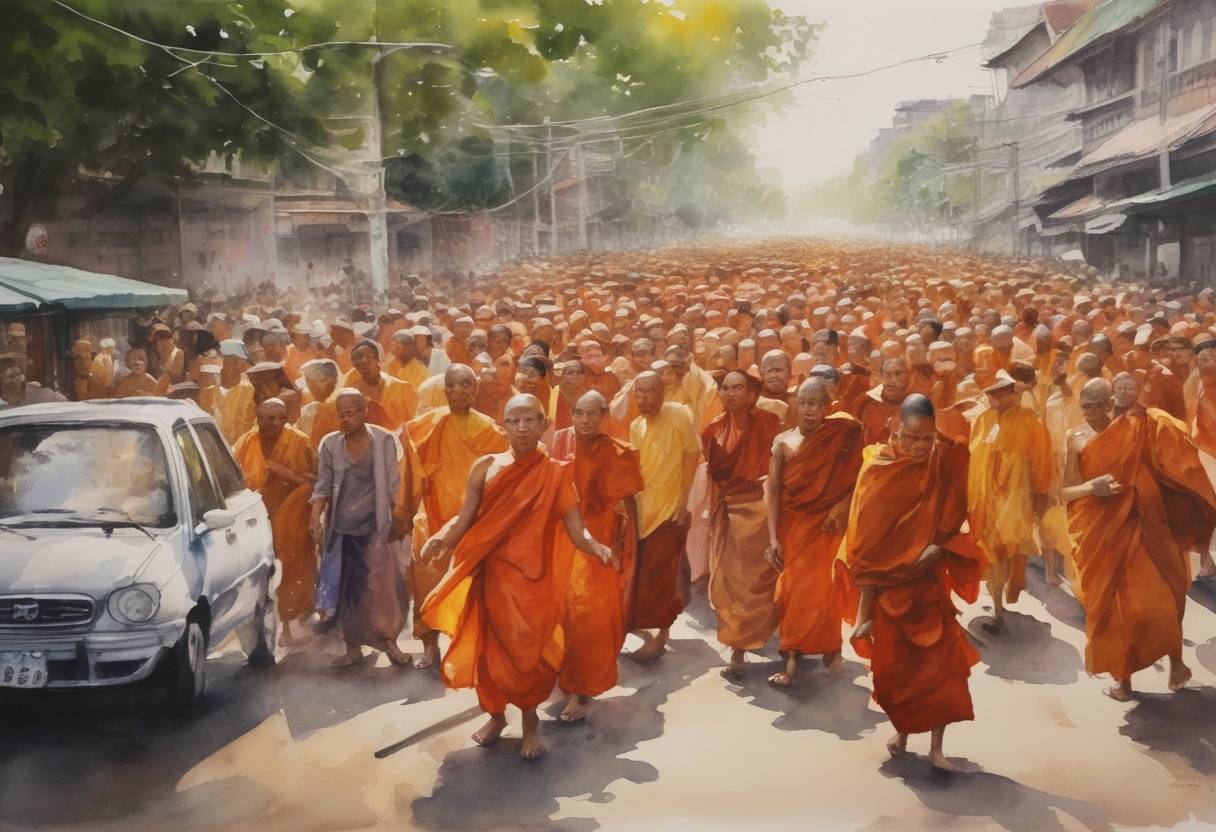
The Saffron Revolution refers to a series of protests and demonstrations in Myanmar that began on September 18, 2007, spearheaded by Buddhist monks who wore their traditional saffron-colored robes. These protests marked the most significant mass demonstrations in Myanmar since the 1988 uprisings.
Military Junta Rule: Since a military coup in 1962, Myanmar had been under strict military control, with a junta governing the country. Economic mismanagement and human rights abuses were prevalent.
Economic Hardships: In August 2007, the military government suddenly removed fuel subsidies, leading to a sharp increase in fuel prices—up to 500%—which drastically affected transportation costs and commodity prices, exacerbating the hardships faced by the population.
Role of Monks: Buddhist monks, revered in Myanmar society, began to organize and lead protests. Their involvement was significant because of their moral authority and the symbolic nature of their peaceful demonstrations.
Initial Protests: Beginning in Yangon (Rangoon), protests started with hundreds of monks marching through the streets, drawing attention and soon gaining the support of thousands of citizens. Their peaceful marches began from prominent Buddhist pagodas, such as the Shwedagon Pagoda, gathering momentum and media coverage.
Public Response: As monks marched chanting the Metta Sutta (a prayer for loving-kindness), they encouraged Myanmar’s citizens to join their peaceful protests against the oppressive military government.
Public Support: As the protests continued, the number of demonstrators swelled to tens of thousands, signaling widespread popular discontent with the military regime.
Repression and Aftermath: The protests were met with a brutal military crackdown, with reports of arrests, beatings, and even killings. Nonetheless, the Saffron Revolution brought international attention to Myanmar’s plight, eventually contributing to internal and external pressures for political reforms.
Long-term Impact: Although the immediate effects included severe repression, these events paved the way for subsequent political changes, including the gradual opening of Myanmar’s political system that began around 2010.
The Saffron Revolution remains a significant chapter in Myanmar’s quest for democracy, highlighting the role of religious and civilian collective action in opposing authoritarian rule.
Source: www.britannica.com