Coronation of Philip V of France
1322 · Reims, France
Philip V of France, also known as Philip the Tall, was crowned King of France at Reims Cathedral.
October 13, 1131
Philip, the son of King Louis VI of France, is crowned as co-king at Reims, securing the Capetian dynasty's continuation.
Reims, France | Capetian Dynasty
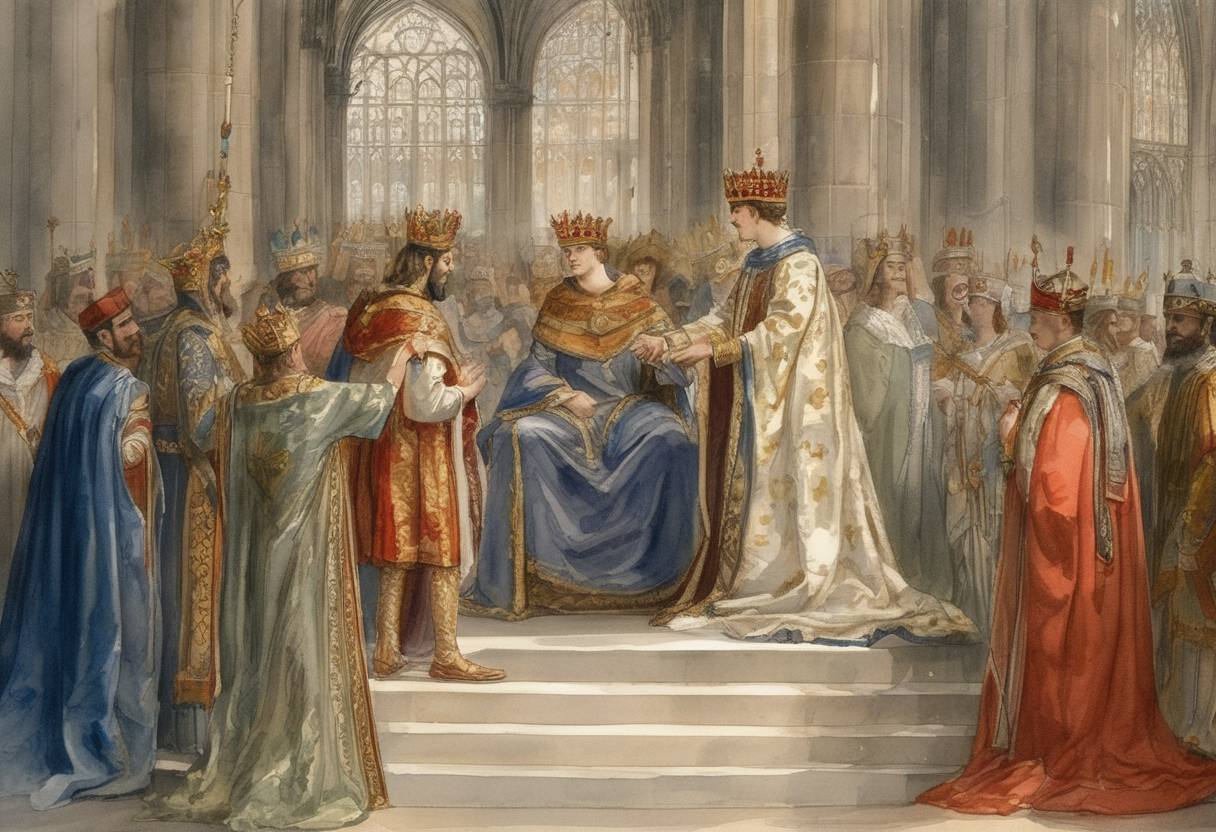
On October 13, 1131, Philip, the eldest son of King Louis VI of France, was crowned as co-king in Reims. This act was a strategic move by King Louis VI to secure the continued dominance and stability of the Capetian dynasty, which had been ruling France since 987.
The Capetian dynasty faced numerous challenges during King Louis VI’s reign, including external threats from neighboring territories and internal dissent from rebellious nobility. The coronation of his son as co-king was intended to stabilize the dynasty’s claim to the throne and cement its influence across the realm. By associating Philip with the kingship during his own lifetime, Louis VI sought to prevent disputes over succession and ensure an orderly transition of power.
The coronation took place at Reims Cathedral, a sacred site traditionally used for the crowning of French kings. The choice of Reims underscored the religious and political significance of the ceremony. By crowning his son while still alive, Louis VI followed a tradition known as Rex Junior, which helped demonstrate the continuity and legitimacy of his lineage.
The event gathered prominent nobles and church officials, lending Philip essential support from key power brokers of the time. This backing was vital for the young prince, given the turbulent political climate of 12th-century France.
Although Philip’s reign as co-king was short-lived due to his untimely death at the age of 14 in 1131, the practice of crowning a king’s heir during his lifetime set a precedent for future successions within the Capetian dynasty. This strategy was repeated with other heirs, such as Louis VII, to reinforce the dynasty’s stability and continuity.
The tradition of co-rulership solidified the Capetian approach to governance, which emphasized hereditary monarchy and dynastic continuity as a means to maintain order and control. Over time, this contributed to the long-lasting success of the Capetian line, which ultimately extended into several branches, establishing the foundation for modern France’s structure of monarchical succession.
The tragic loss of Philip underscored the fragility of life and the importance of securing a capable and recognized heir. His younger brother, who eventually became Louis VII, was crowned as his successor, thus ensuring the dynasty’s survival and further consolidation of power.
Source: www.britannica.com