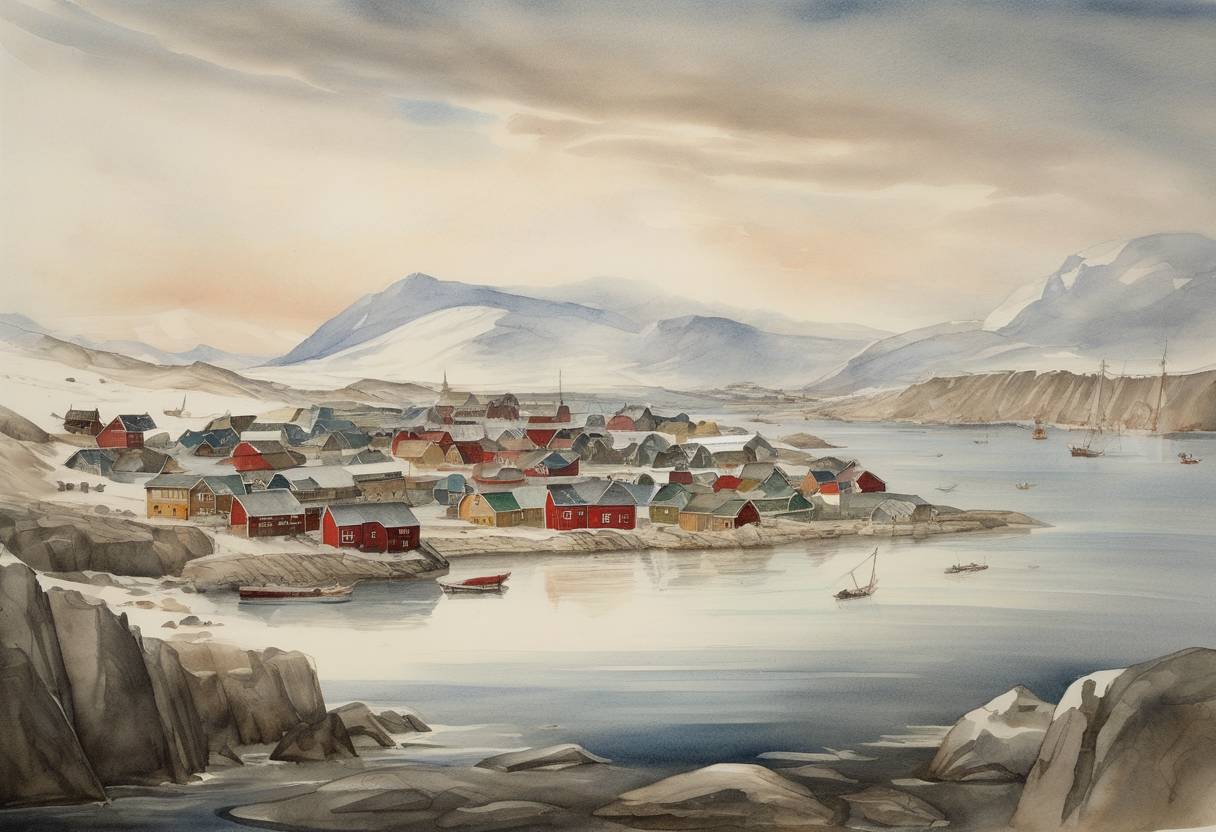
Founding of Godthåb (Nuuk) on August 26, 1728
On August 26, 1728, the city of Godthåb, which would later become known as Nuuk, the capital of Greenland, was founded by Norwegian missionary Hans Egede. Egede’s efforts were driven by his mission to spread Christianity among the indigenous Inuit peoples and establish a foothold for trade and colonial influence in the Arctic region.
Historical Context
- Hans Egede: Born in Norway, Egede was a Lutheran missionary deeply committed to spreading Christianity. He became interested in Greenland after learning about the Norse settlements that existed during the Middle Ages and the subsequent disappearance of these communities.
- Colonization Goals: Apart from religious missions, European powers at the time were keen on expanding their territories and trading networks. Greenland’s strategic position for whaling and other resources made it attractive for colonization.
Founding of Godthåb
- Location: Egede chose a site on the southwestern coast of Greenland. The area’s natural harbor and relatively mild climate compared to other parts of Greenland made it suitable for settlement.
- Community Development: Egede established a mission house and began building the community, which included the construction of a Lutheran church. The settlement comprised Europeans and some Inuit, whom Egede regarded as essential to integrate for the success of the mission.
Impact and Aftermath
- Cultural Exchange: The founding of Godthåb initiated significant cultural and religious exchanges between Europeans and the Inuit. While many Inuit adopted Christianity, the settlers also adapted to local customs and relied on indigenous knowledge for survival.
- Economic Activities: Godthåb became a center for trade, particularly in whale oil, which was a valuable commodity in Europe. The settlement served as a base for further exploration and trade in the Arctic region.
- Legacy: Over time, Godthåb evolved into Nuuk, which has grown to be the political and cultural center of Greenland. The city’s founding marked the beginnings of modern Greenland’s history, shaped by its colonial past and continuing evolution towards greater autonomy.
Broader Significance
The establishment of Godthåb is a key event in the history of Greenland, symbolizing the beginning of European attempts to settle in the Arctic and the complex interactions that ensued between indigenous peoples and European settlers. This founding illuminated the dynamics of cultural change and adaptation which continue to influence Greenlandic society today.