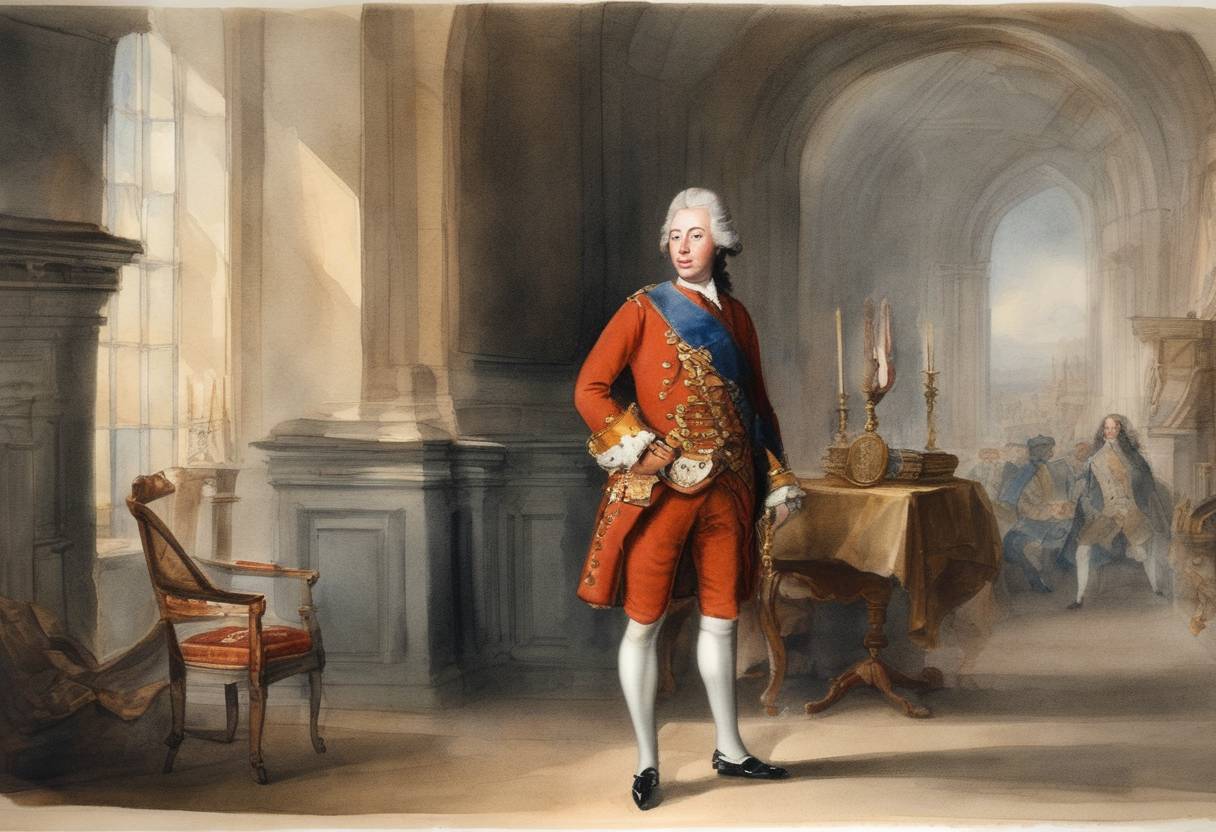
James Stuart, the Old Pretender, Lands at Petershead
On December 22, 1715, James Francis Edward Stuart, known as the Old Pretender, landed at Petershead in Scotland. This event marked a significant moment in the Jacobite uprisings, where James sought to reclaim the British throne for the House of Stuart.
Background
James Francis Edward Stuart, son of the deposed James II of England and VII of Scotland, was a claimant to the thrones of England, Scotland, and Ireland. The Glorious Revolution of 1688 had resulted in his father’s ousting, and James had been living in exile for much of his life. The political climate of the early 18th century, characterized by discontent with the Hanoverian succession, offered James an opportunity to assert his claim.
The 1715 Jacobite Uprising
The 1715 Jacobite uprising, rooted in opposition to George I of the House of Hanover, gained momentum with support primarily in Scotland. The Earl of Mar had raised the standard for James in September of that year, rallying many clans to the Stuart cause.
Landing at Petershead
James Stuart’s arrival at Petershead was strategic, choosing a remote point that offered relative safety and a foothold in supportive territory. His landing was intended to galvanize the Jacobite forces already in the field. However, his arrival was delayed, and by the time he set foot in Scotland, the momentum of the uprising had already waned significantly.
Consequences
Despite the initial promise, James’s presence in Scotland did not turn the tide in favor of the Jacobites. The lack of decisive leadership, along with a series of military setbacks, led to the failure of the uprising. By February 1716, facing inevitable defeat, James fled to France, marking the end of this particular attempt to regain the throne.
Historical Significance
The failure of the 1715 uprising did not mark the end of the Jacobite efforts but underscored the challenges faced by the House of Stuart in reclaiming power. It laid the groundwork for the later, more significant, 1745 uprising led by James’s son, Charles Edward Stuart, known as Bonnie Prince Charlie. James’s struggles and efforts remain a poignant chapter in the history of Jacobitism and the persistent dynastic disputes of the period.