Itō Hirobumi Becomes the First Prime Minister of Japan
1885 · Tokyo, Japan
Itō Hirobumi became the first Prime Minister of Japan.
September 3, 1868
The city of Edo, Japan, officially became Tokyo and designated as the imperial capital following the Meiji Restoration.
Tokyo, Japan | Meiji government
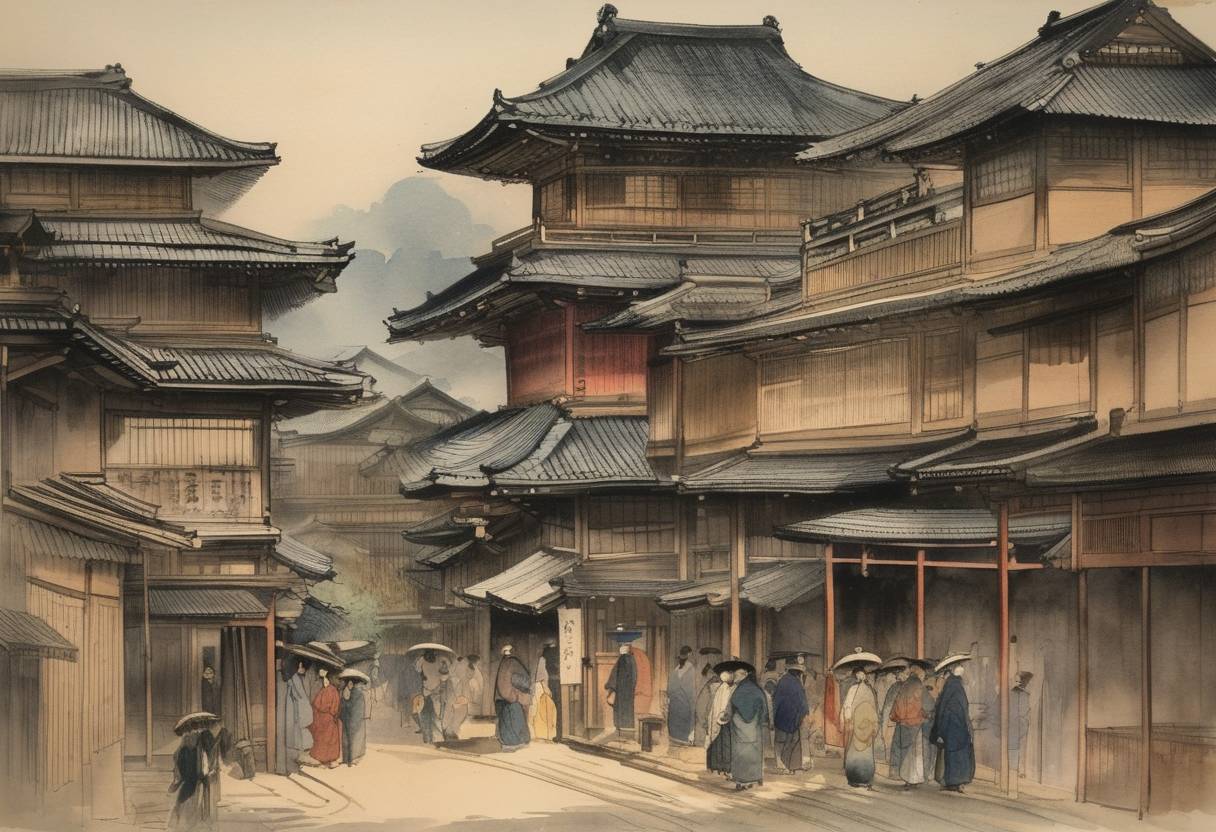
On September 3, 1868, the historic city of Edo officially became Tokyo, marking a pivotal moment in Japanese history. This change followed the monumental Meiji Restoration, a period characterized by rapid modernization and significant political transformation.
The Meiji Restoration began in 1868, initiating the end of over two centuries of Tokugawa shogunate rule. The restoration aimed to consolidate power under the young Emperor Meiji by dismantling the shogunate’s feudal system and embracing Western ideas, technology, and governance structures.
Edo had been the seat of power for the Tokugawa shogunate since the early 17th century. By the mid-19th century, Edo had grown into one of the largest cities in the world, becoming a bustling hub of political and economic activity. However, with the shogunate dissolved, the need for a new imperial capital became evident, a symbolic move to reflect the restored primacy of the emperor over the samurai class and the centralization of authority.
The renaming of Edo to Tokyo (東京), meaning “Eastern Capital,” was more than a mere change of title. It represented Japan’s commitment to modernity and central governance. The name itself signified a geographic and cultural shift; while Kyoto, meaning “Capital City,” was traditionally the imperial capital, the designation of Tokyo underscored the Meiji government’s intent to break from the past and forge a new path.
With Tokyo as the new imperial capital, the city became the epicenter of Japan’s transformation during the Meiji era. The emperor and his court moved from Kyoto to Tokyo, laying the groundwork for an extensive and well-documented period of cultural and industrial growth known as the Meiji period. Tokyo’s development was rapid, driven by Western-style infrastructure, education systems, and broader societal reforms.
The designation of Tokyo as the capital also facilitated Japan’s emergence as a global power, shifting its socio-economic landscape. The city’s modernity symbolized Japan’s break from its isolationist past and its integration into the global community.
The transition from Edo to Tokyo on September 3, 1868, was more than just a name change. It was a crucial step in Japan’s journey from a feudal society to a modern nation-state, embodying the spirit and ambitions of the Meiji Restoration. This remarkable transformation underpinned the foundation of contemporary Japan, positioning Tokyo as both the political heart and a symbol of the country’s dynamic progression into the 20th century and beyond.
Source: en.wikipedia.org