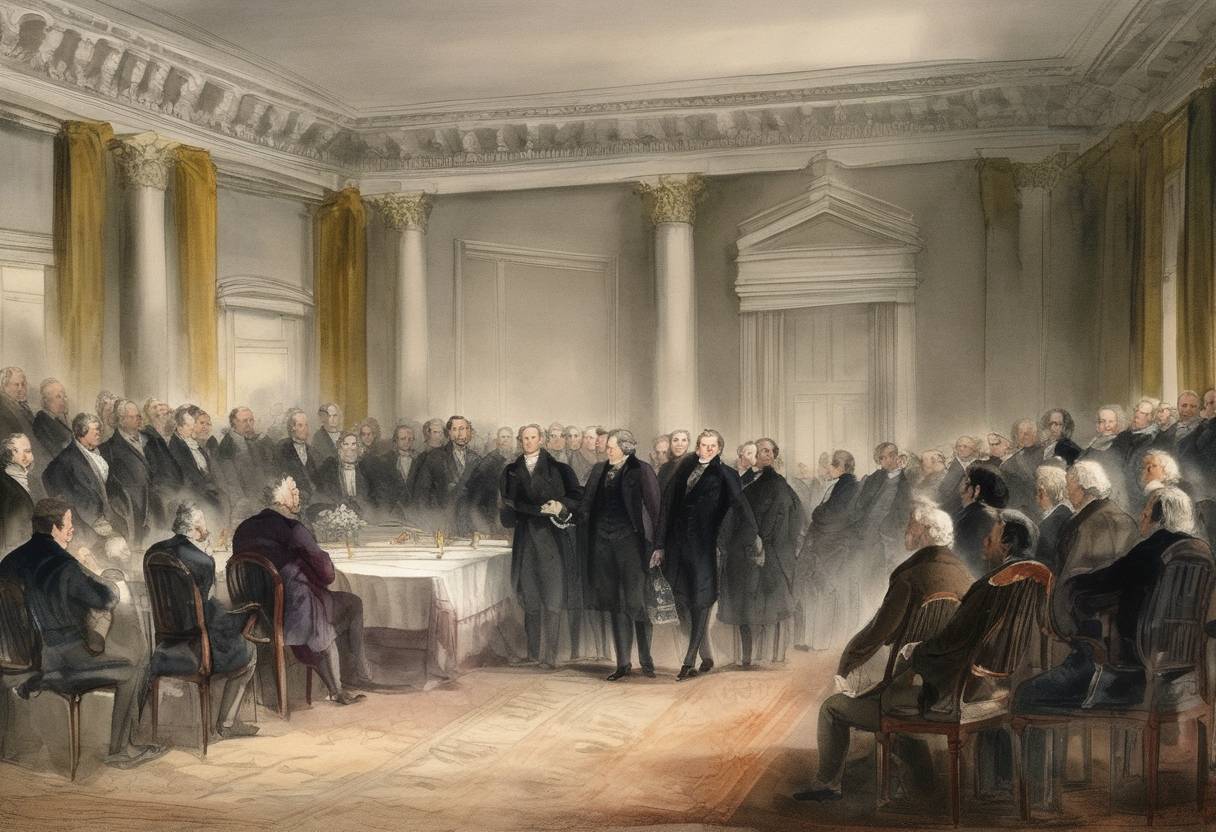
Congressional Resolution to Move James Monroe’s Remains - December 5, 1831
On December 5, 1831, a significant resolution was passed by the U.S. Congress honoring James Monroe, the fifth President of the United States and a Founding Father. This resolution called for the relocation of Monroe’s remains from New York City, where he had been interred after his death on July 4, 1831, to his home state of Virginia. Monroe, renowned for his role in the “Era of Good Feelings” and the Monroe Doctrine, was a critical figure in American history.
Context
Monroe served as President from 1817 to 1825 and was a popular leader who presided over a period of national unity. His presidency was marked by significant events such as the Missouri Compromise and the acquisition of Florida from Spain. After leaving office, Monroe faced financial difficulties but remained a respected statesman until his passing.
The Resolution
The resolution on December 5, 1831, demonstrated the nation’s respect and admiration for Monroe’s contributions. The idea was to honor Monroe by ensuring that his final resting place was in Virginia, the state he represented and where he held deep personal and political ties.
Execution and Significance
Monroe’s remains were eventually reinterred in Hollywood Cemetery in Richmond, Virginia, in 1858, following the Congressional resolution’s intentions. This move not only honored Monroe’s legacy but also reflected the respect held for founding leaders by ensuring they rest among the lands they impacted deeply.
Having Monroe’s remains reinterred in Virginia has cemented his role in the state’s rich history and provided a place of remembrance for a leader whose actions helped shape the early years of the United States.