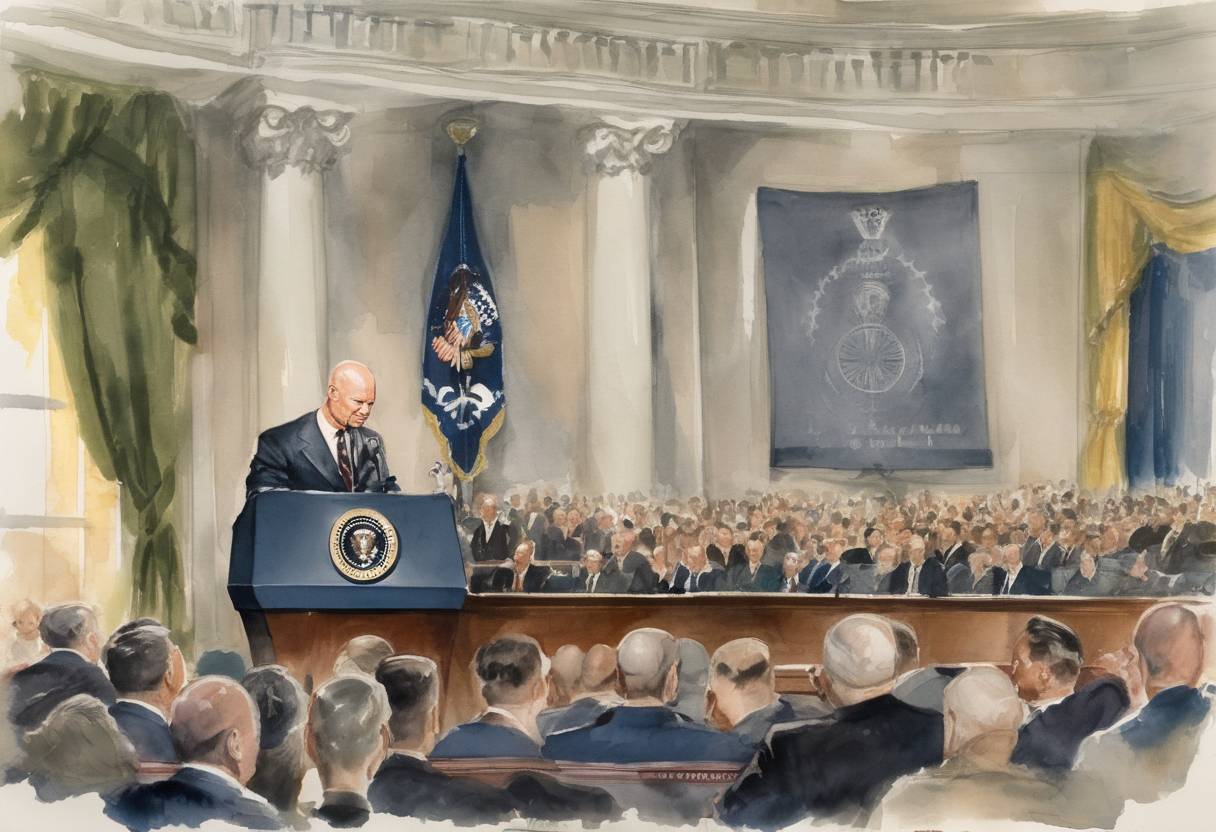
President Dwight D. Eisenhower’s Farewell Address
On January 17, 1961, President Dwight D. Eisenhower delivered his farewell address to the nation, a speech that has since become one of the most significant in American history. As he prepared to leave office after two terms as the 34th President of the United States, Eisenhower used this opportunity to reflect on his presidency and to issue a cautionary message about the future.
Context and Background
Eisenhower, a five-star general in the United States Army during World War II and the Supreme Commander of the Allied Expeditionary Forces in Europe, was acutely aware of the military’s role in national security. His presidency, from 1953 to 1961, was marked by the Cold War tensions between the United States and the Soviet Union, which had led to a significant buildup of military forces and defense industries.
Key Themes of the Address
The Military-Industrial Complex
Eisenhower’s address is most remembered for his warning about the “military-industrial complex.” He cautioned that the United States must “guard against the acquisition of unwarranted influence, whether sought or unsought, by the military-industrial complex.” This term referred to the relationship between the military, government, and defense contractors, which had grown significantly during the Cold War.
Eisenhower expressed concern that this powerful alliance could lead to excessive government spending on defense and potentially influence national policy in ways that might not align with the public interest. He emphasized the need for balance and vigilance to ensure that the military establishment did not overshadow democratic processes and civil liberties.
Balance and Restraint
In addition to his warning about the military-industrial complex, Eisenhower advocated for balance and restraint in national affairs. He urged future leaders to consider the broader implications of their decisions, particularly in terms of fiscal responsibility and the allocation of resources. Eisenhower believed that maintaining a strong economy was essential for national security and that overreliance on military solutions could be detrimental.
Scientific and Technological Advancements
Eisenhower also addressed the rapid advancements in science and technology, acknowledging their potential to improve society but also warning of their possible misuse. He encouraged the responsible use of scientific progress to benefit humanity and cautioned against allowing technological advancements to outpace ethical considerations.
Aftermath and Historical Significance
Eisenhower’s farewell address has had a lasting impact on American political discourse. His term “military-industrial complex” has become a critical lens through which scholars and policymakers analyze the relationship between the military and industry. The speech is often cited in discussions about defense spending, government transparency, and the influence of special interests in politics.
Eisenhower’s address remains a poignant reminder of the need for vigilance in preserving democratic values and ensuring that national security measures do not compromise the freedoms and principles upon which the United States was founded. His insights continue to resonate in contemporary debates about the balance between security and liberty.
In summary, Eisenhower’s farewell address was a prescient warning about the potential dangers of unchecked military and industrial power, advocating for a balanced approach to national security and governance that remains relevant to this day.