Recognition of Portuguese Independence by Spain - February 13, 1668
1668 · Lisbon, Portugal
Spain recognized Portugal as an independent nation, ending the Portuguese Restoration War.
August 8, 1709
Bartolomeu de Gusmão demonstrated the lifting power of hot air in an early precursor to the hot air balloon, in front of King John V of Portugal.
Lisbon, Portugal | Portuguese Royal Court
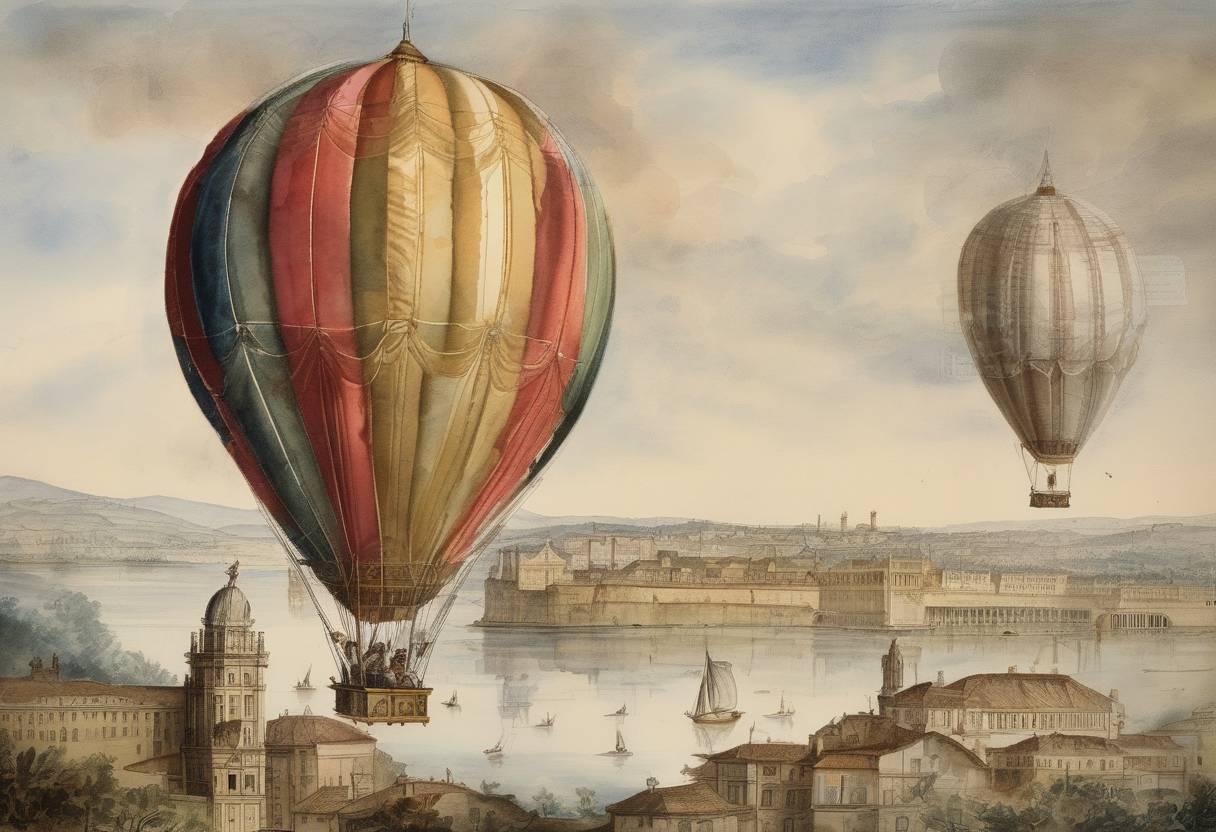
On August 8, 1709, Bartolomeu de Gusmão, a Brazilian-born priest and inventor, conducted a remarkable demonstration in the court of King John V of Portugal. This event marked an early exploration into the principles of aerostation, which would later lead to the development of the hot air balloon.
Bartolomeu de Gusmão was born in 1685 in Santos, Brazil, and later moved to Portugal to pursue his studies. He was a man of diverse interests, particularly in the fields of science and invention. Inspired by the idea of flight, Gusmão began experimenting with lighter-than-air devices.
The demonstration took place in the Casa da Índia in Lisbon, a significant venue for showcasing innovations and discoveries. In the presence of King John V and his court, Gusmão presented a small-scale model of his invention, which he called the “Passarola” (Portuguese for “big bird”).
Despite the success of his demonstration, Gusmão faced skepticism and challenges, including opposition from the Inquisition, which viewed his work with suspicion. He continued his scientific pursuits but faced difficulties in gaining widespread acceptance for his ideas.
Bartolomeu de Gusmão’s demonstration on August 8, 1709, remains a significant milestone in the history of aviation, showcasing the potential of human ingenuity and the quest for flight. His pioneering efforts are remembered as a testament to the spirit of innovation that characterized the Age of Enlightenment.
Source: www.britannica.com