Execution of Anne Boleyn: May 19, 1536
1536 · London, England
Anne Boleyn, the second wife of King Henry VIII of England, was executed on charges of adultery, treason, and incest.
May 19, 1568
Queen Elizabeth I of England ordered the arrest of Mary, Queen of Scots.
London, England | English monarchy
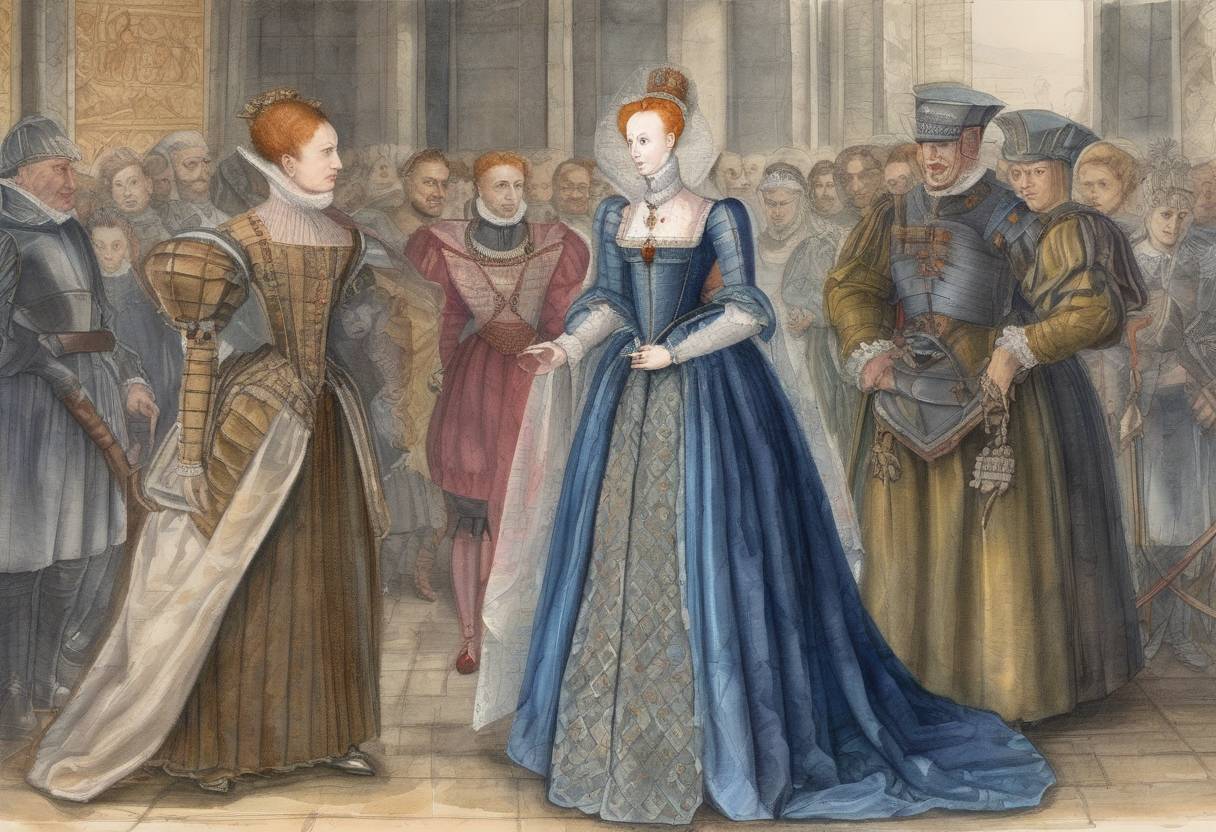
On May 19, 1568, Queen Elizabeth I of England ordered the arrest of Mary, Queen of Scots, marking a significant moment in the complex relationship between the two queens and the political landscape of the time.
Mary, Queen of Scots, was a Catholic monarch who had been forced to abdicate the Scottish throne in favor of her infant son, James VI, in 1567. Her abdication followed a series of tumultuous events, including her controversial marriage to James Hepburn, 4th Earl of Bothwell, who was implicated in the murder of her previous husband, Lord Darnley. Facing rebellion and unrest in Scotland, Mary fled to England seeking protection from her cousin, Elizabeth I.
Elizabeth I faced a delicate situation upon Mary’s arrival. As a Protestant ruler, Elizabeth was wary of Mary’s Catholic claim to the English throne, which was supported by many English Catholics. However, Elizabeth was also reluctant to set a precedent of deposing a fellow monarch, which could undermine her own authority.
Mary’s presence in England posed a significant threat to Elizabeth’s reign. After crossing into England, Mary was initially placed under protective custody. However, as her presence continued to incite plots and conspiracies among English Catholics, Elizabeth’s advisors urged her to take decisive action. On May 19, 1568, Elizabeth ordered Mary’s arrest, effectively placing her under house arrest.
Mary remained in captivity for nearly 19 years, during which time she was implicated in several plots to assassinate Elizabeth and restore Catholic rule in England. The most notable of these was the Babington Plot of 1586, which ultimately led to Mary’s trial and execution in 1587.
The arrest and eventual execution of Mary, Queen of Scots, had profound implications for Elizabeth’s reign and the future of the British Isles. It eliminated a significant Catholic threat to Elizabeth’s rule and solidified Protestant dominance in England. Additionally, it set the stage for the eventual unification of the English and Scottish crowns under Mary’s son, James VI of Scotland, who became James I of England in 1603.
Mary’s arrest and execution remain pivotal events in the history of the Tudor period, illustrating the intricate interplay of religion, politics, and personal rivalry that characterized the era.
Source: en.wikipedia.org