The Egyptian Revolution of 2011: January 25th
2011 · Cairo, Egypt
The Egyptian Revolution of 2011 begins with mass protests demanding the end of President Hosni Mubarak's regime, part of the wider Arab Spring movement.
January 28, 2011
The Egyptian Revolution of 2011, part of the Arab Spring, intensifies as tens of thousands of protesters gather in Cairo and other cities, demanding the resignation of President Hosni Mubarak.
Cairo, Egypt | Egyptian Government
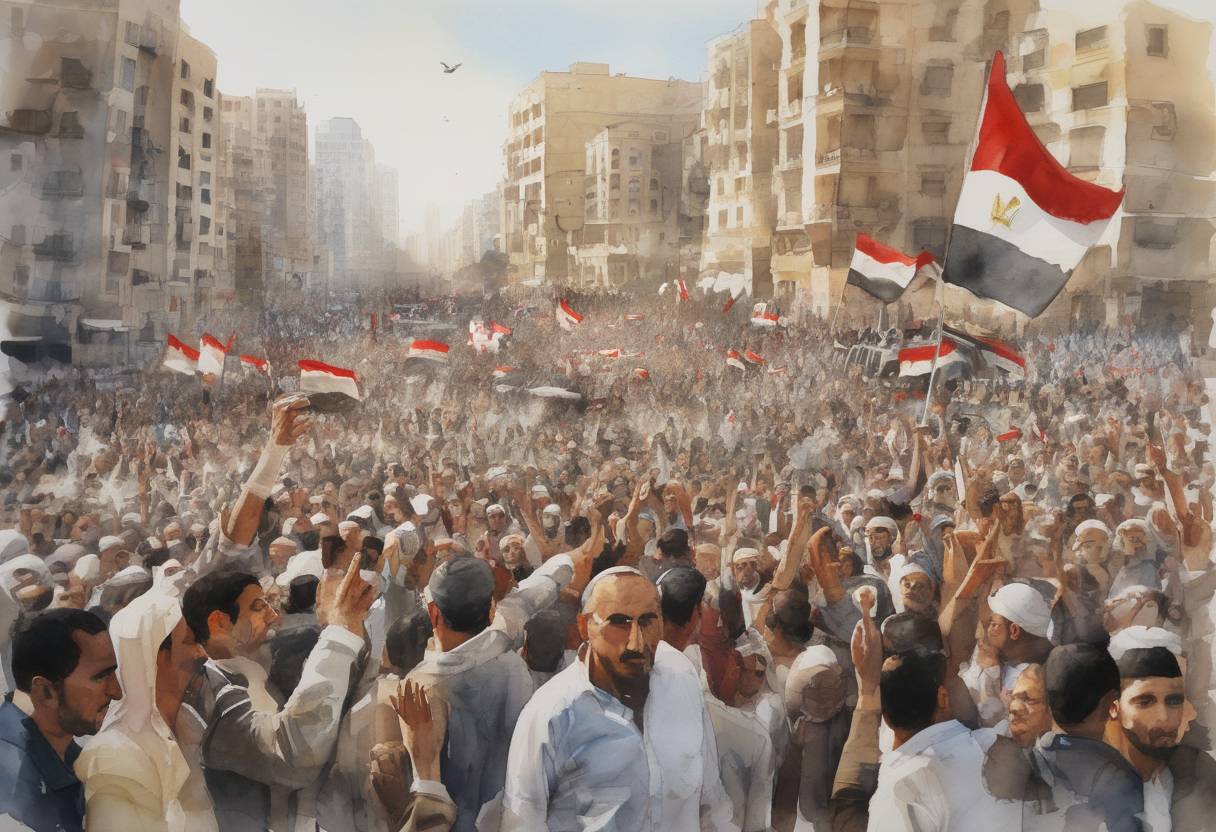
On January 28, 2011, a pivotal moment in the Egyptian Revolution unfolded as tens of thousands of protesters took to the streets in Cairo and other major cities, demanding the resignation of President Hosni Mubarak. This day, often referred to as the “Day of Rage,” marked a significant escalation in the protests that were part of the broader Arab Spring movement sweeping across the Middle East and North Africa.
The Egyptian Revolution was fueled by widespread discontent with President Hosni Mubarak’s regime, which had been in power since 1981. Key grievances included:
Inspired by the successful revolution in Tunisia, Egyptian activists began organizing protests through social media platforms, calling for a day of mass demonstrations on January 25, 2011, which marked National Police Day in Egypt. The protests quickly gained momentum, leading to the events of January 28th.
Mass Mobilization: On January 28th, protesters gathered in unprecedented numbers across Egypt, with Cairo’s Tahrir Square becoming the epicenter of the demonstrations. The protests were marked by a diverse cross-section of Egyptian society, including young people, labor activists, and political opposition groups.
Government Response: In an attempt to quell the unrest, the Egyptian government implemented a nationwide internet blackout and disrupted mobile phone services. Despite these efforts, the protests continued to grow.
Clashes with Security Forces: The day saw intense clashes between protesters and security forces. The police used tear gas, rubber bullets, and water cannons to disperse the crowds, but the demonstrators remained resolute.
Curfew and Military Deployment: In response to the escalating situation, the government imposed a curfew and deployed the military to enforce order. However, the military’s presence was largely seen as neutral, and in some cases, soldiers were welcomed by the protesters.
The events of January 28th marked a turning point in the Egyptian Revolution. The scale of the protests and the inability of the police to control the crowds forced President Mubarak to make concessions, including appointing a vice president for the first time in his presidency and promising political reforms.
However, these measures failed to satisfy the protesters, who continued to demand Mubarak’s resignation. The sustained pressure eventually led to Mubarak stepping down on February 11, 2011, after 18 days of mass protests.
The Egyptian Revolution of 2011 was a significant chapter in the Arab Spring, highlighting the power of popular movements to challenge entrenched authoritarian regimes. It also set the stage for a complex and tumultuous period in Egypt’s political landscape, with ongoing debates about democracy, governance, and human rights.
Source: en.wikipedia.org