Dissolution of the Warsaw Pact: July 1, 1991
1991 · Prague, Czechoslovakia
The Warsaw Pact was officially dissolved.
May 14, 1955
The Warsaw Pact was signed by the Soviet Union and seven other Eastern Bloc socialist republics of Central and Eastern Europe during the Cold War.
Warsaw, Poland | Warsaw Pact
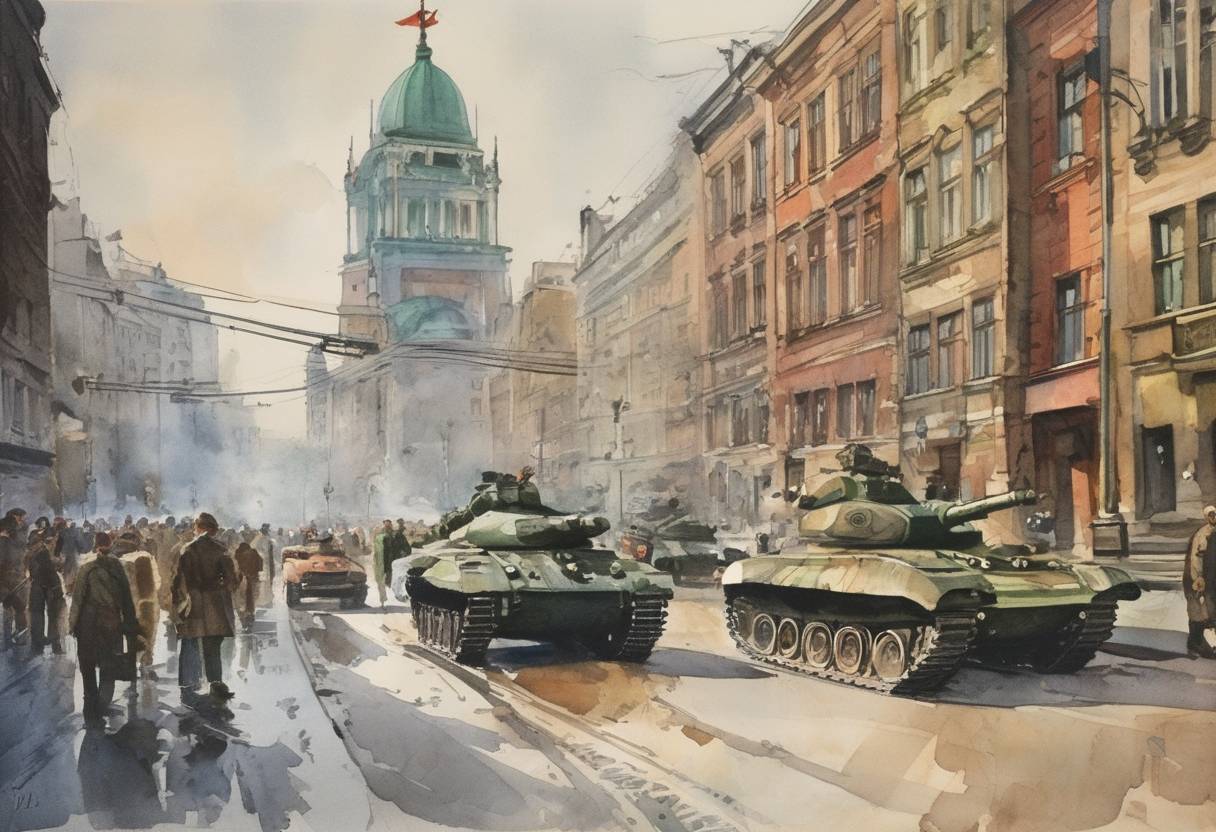
On May 14, 1955, the Warsaw Pact was signed in Warsaw, Poland, marking a significant development in the geopolitical landscape of the Cold War. This treaty established a collective defense alliance between the Soviet Union and seven other Eastern Bloc socialist republics of Central and Eastern Europe. The signatory nations included:
The formation of the Warsaw Pact was largely a response to the integration of West Germany into the North Atlantic Treaty Organization (NATO) earlier that year. The inclusion of West Germany in NATO was perceived as a threat by the Soviet Union, which sought to consolidate its influence over Eastern Europe and counterbalance the Western alliance.
The Warsaw Pact served as a political and military alliance that aimed to solidify the Soviet Union’s control over its satellite states and provide a unified military command under Soviet leadership. It was also intended to promote mutual defense and cooperation among the member states.
The treaty established a unified military command and stipulated that member states would come to each other’s defense in the event of an external attack. It also emphasized the principles of non-interference in internal affairs and respect for sovereignty, although, in practice, the Soviet Union maintained significant control over the alliance.
The Warsaw Pact played a crucial role in the Cold War dynamics, symbolizing the division of Europe into Eastern and Western blocs. It was involved in several key Cold War events, including:
The Warsaw Pact remained in effect until the end of the Cold War. With the collapse of communist regimes across Eastern Europe in 1989 and the subsequent dissolution of the Soviet Union, the relevance of the Pact diminished. It was officially dissolved on July 1, 1991, marking the end of an era of Soviet dominance in Eastern Europe.
The dissolution of the Warsaw Pact paved the way for the integration of former Eastern Bloc countries into Western institutions, including NATO and the European Union, significantly altering the political landscape of Europe.
In summary, the signing of the Warsaw Pact on May 14, 1955, was a pivotal moment in Cold War history, reflecting the deep ideological and military divisions of the time and shaping the course of European geopolitics for decades.
Source: en.wikipedia.org