Succession of Justin II as Byzantine Emperor
565 · Constantinople, Byzantine Empire
The Byzantine Emperor Justin II succeeds his uncle Justinian I as Emperor of the Byzantine Empire.
June 28, 0548
Theodora, the influential Byzantine Empress and wife of Emperor Justinian I, passed away. She was known for her significant role in the politics of the Byzantine Empire and her efforts in advancing women's rights.
Constantinople, Byzantine Empire | Byzantine Empire
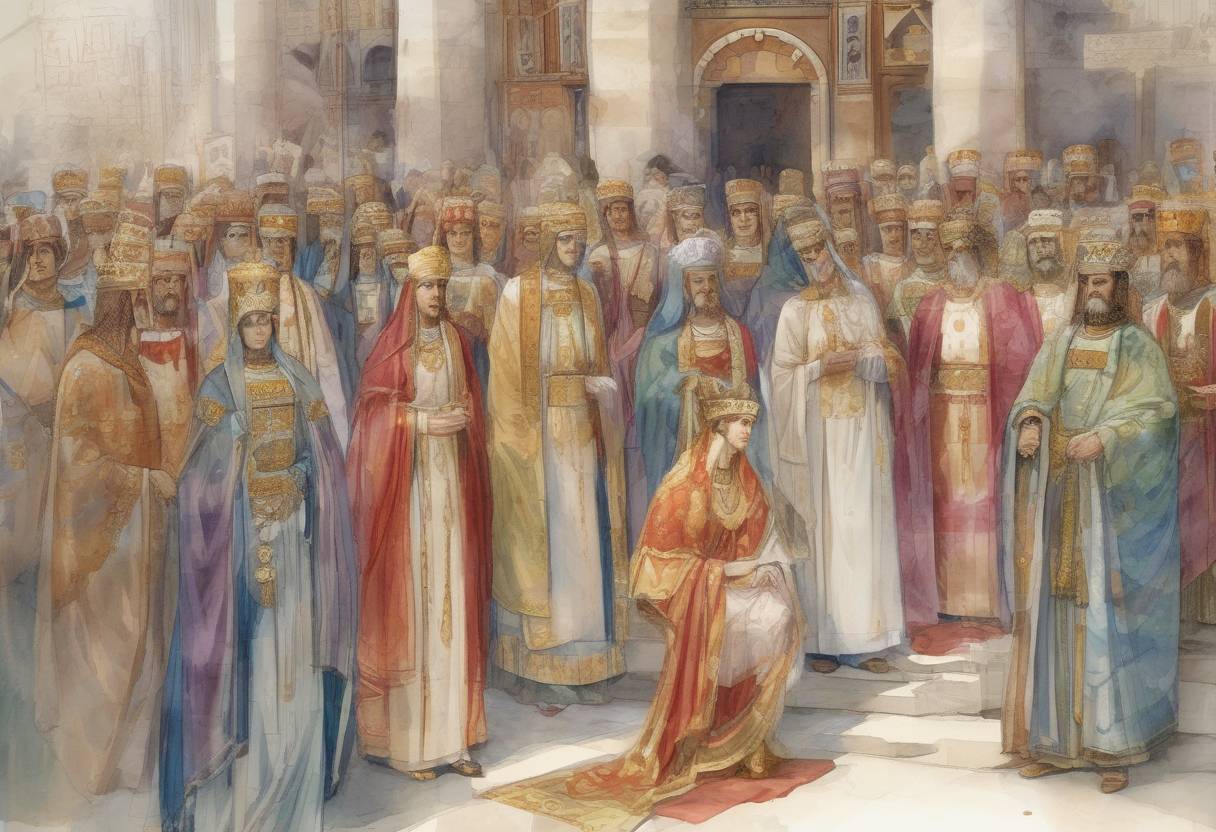
On June 28, 548, Theodora, the powerful and influential Byzantine Empress, passed away. She was the wife of Emperor Justinian I and played a crucial role in the politics and administration of the Byzantine Empire. Her life and legacy are marked by her significant contributions to the empire, particularly in advancing women’s rights and social reforms.
Theodora was born around 500 AD, likely in Constantinople. Her early life was humble; she was the daughter of a bear trainer in the Hippodrome and worked as an actress, a profession that carried a stigma at the time. Despite her modest beginnings, Theodora’s intelligence and charisma caught the attention of Justinian, who was then the heir to the Byzantine throne. They married in 525 AD, after Justinian convinced his uncle, Emperor Justin I, to change the law that prohibited marriage between actresses and men of senatorial rank.
As Empress, Theodora was not merely a consort but an active co-ruler with Justinian. She was deeply involved in the political and religious affairs of the empire. Theodora was known for her strong will and political acumen, often advising Justinian and participating in decision-making processes.
One of the most notable events during her reign was the Nika Riots in 532 AD. This violent uprising threatened Justinian’s rule, but Theodora’s resolve was instrumental in quelling the rebellion. Her famous speech, urging Justinian to stay and fight rather than flee, demonstrated her courage and determination. Her influence helped stabilize the empire during this critical period.
Theodora is celebrated for her efforts to improve the status of women in Byzantine society. She advocated for and implemented several legal reforms that enhanced women’s rights, including:
Theodora’s impact on the Byzantine Empire was profound. Her partnership with Justinian led to a period of significant architectural, cultural, and legal achievements, including the construction of the Hagia Sophia and the codification of Roman law in the Corpus Juris Civilis. Her efforts in advancing women’s rights set a precedent for future reforms and highlighted her as a pioneering figure in the history of women’s advocacy.
Theodora’s death in 548 marked the end of a remarkable life, but her legacy continued to influence the Byzantine Empire and beyond. Her story remains a testament to her resilience, intelligence, and the enduring power of her contributions to society.
Source: en.wikipedia.org