Hosni Mubarak's Resignation: February 11, 2011
2011 · Cairo, Egypt
Egyptian President Hosni Mubarak resigned after 18 days of mass protests, ending his 30-year rule.
February 1, 2011
In Egypt, amid the Arab Spring, massive protests continued against President Hosni Mubarak's regime, with demonstrations concentrated in Tahrir Square attracting global attention.
Cairo, Egypt | Egyptian Government
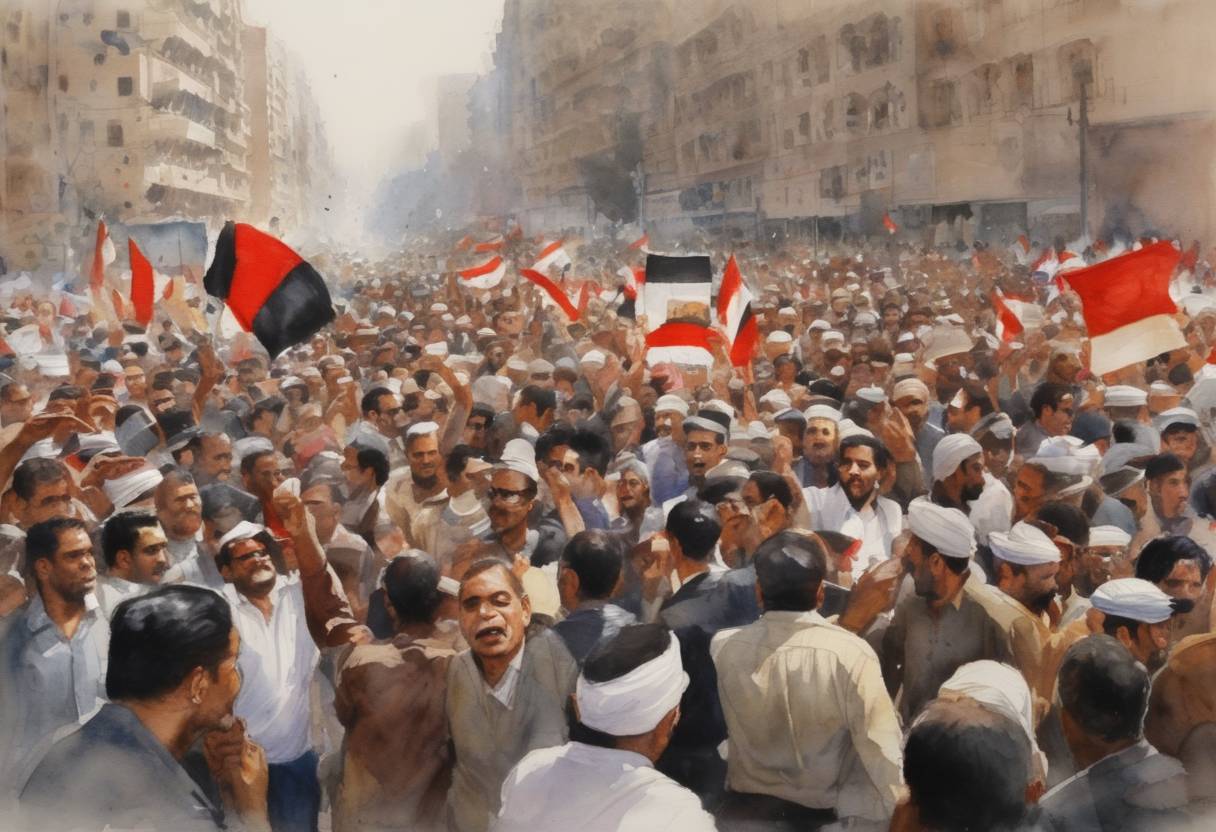
On February 1, 2011, one of the most significant days of the Egyptian revolution, mass protests continued against President Hosni Mubarak’s regime in Cairo’s Tahrir Square. This upsurge was a crucial part of the broader Arab Spring movement that swept across the Middle East and North Africa, demanding political reform and greater freedoms.
The protests that began on January 25, 2011, marked Egypt’s National Police Day, quickly escalated into a widespread movement against Mubarak’s nearly 30-year rule. The grievances fueling the protests included police brutality, state corruption, political repression, economic distress, and lack of free elections.
February 1st saw what was called the “March of Millions,” with demonstrators from various walks of life converging on Tahrir Square. This show of solidarity and peaceful protest drew significant global attention and media coverage. The protestors carried banners and chanted slogans, calling for Mubarak’s immediate resignation.
Mubarak addressed the nation for the first time since the protests began, stating his intention not to seek another term in the upcoming September elections. However, the promise was deemed insufficient by the protesters, who maintained their demand for his immediate departure.
The February 1st protests solidified Tahrir Square’s role as the heart of the Egyptian revolution. Mubarak’s speech only temporarily calmed tensions, and demonstrations continued to build in the days following.
The events of February 1st and the broader Egyptian revolution highlighted the power of collective action and the significant role of social media in modern protests. This day underscored the demand for political reform and democracy that reverberated across the Arab world during this transformative period.
Source: www.bbc.com