The Berlin Airlift Begins: June 26, 1948
1948 · Berlin, Germany
The Berlin Airlift began as the Western Allies organized a massive airlift to supply West Berlin amidst a Soviet blockade.
June 20, 1948
The Deutsche Mark becomes the official currency in the Western Allies' sectors of Germany, replacing the Reichsmark.
West Germany, Germany | Western Allies
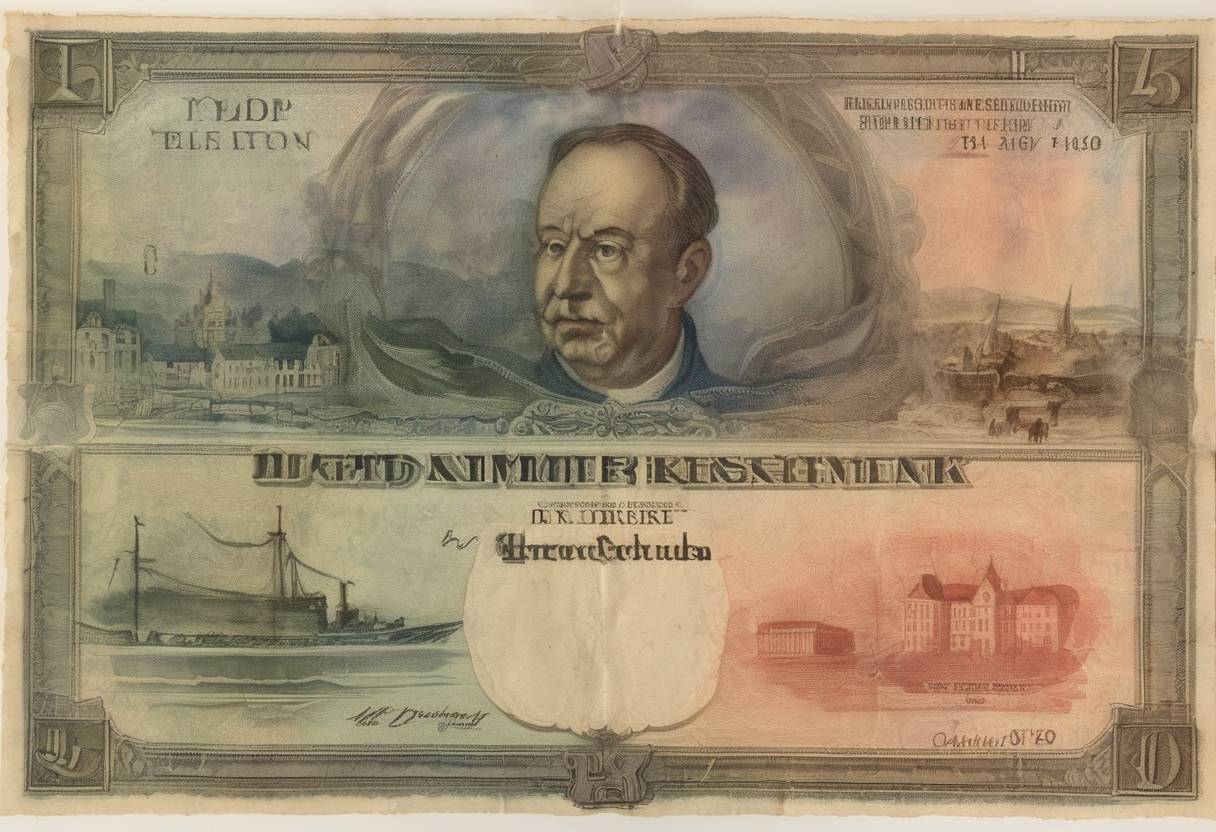
On June 20, 1948, a significant monetary reform took place in post-war Germany when the Deutsche Mark (DM) was introduced as the official currency in the Western Allies’ sectors. This monumental shift replaced the Reichsmark, which had become heavily devalued and was rendered inefficient in the devastated German economy after World War II.
After the conclusion of World War II, Germany was in economic disarray, with its currency, the Reichsmark, suffering from hyperinflation, shortages, and a lack of public confidence. The Western Allies, consisting of the United States, the United Kingdom, and France, sought to create economic stability in their zones to foster recovery and resist the spread of communism.
The currency reform was carefully planned and secretly developed to minimize disruptions and potential Soviet interference. The decision to introduce a new currency was influenced by the need to halt inflation, encourage production, and establish a stable economic environment.
Introduction of the Deutsche Mark: On June 20, 1948, the Deutsche Mark was officially introduced, replacing the Reichsmark in the Western sectors of Germany.
Exchange Rate: The initial exchange set the Deutsche Mark at a rate of one DM for ten Reichsmarks, significantly reducing the money supply and removing large amounts of the old currency from circulation.
Distribution: Each citizen received a certain amount of DM as a starting allocation, with businesses compensated to a degree based on their needs, kickstarting the flow of the new currency.
The currency reform was a pivotal moment in the economic recovery of West Germany. The introduction of the DM restored confidence in the currency, curbed hyperinflation, and revitalized the market economy. This led to what became known as the “Wirtschaftswunder” or economic miracle, characterized by rapid economic growth in the 1950s.
The currency reform and subsequent economic recovery deepened the divide between the Western and Eastern zones of Germany. The Soviet Union responded with its measures in the Eastern zone, culminating in the Berlin Blockade (June 24, 1948 – May 12, 1949). This event was one of the early confrontations of the Cold War, highlighting the ideological and economic rifts between East and West.
The introduction of the Deutsche Mark on June 20, 1948, was a cornerstone of post-war reconstruction efforts in Western Germany. It marked the beginning of a prosperous era that positioned West Germany as a leading European economy and was a critical step in the bifurcation of Germany into distinct Eastern and Western entities during the Cold War.
Source: en.wikipedia.org