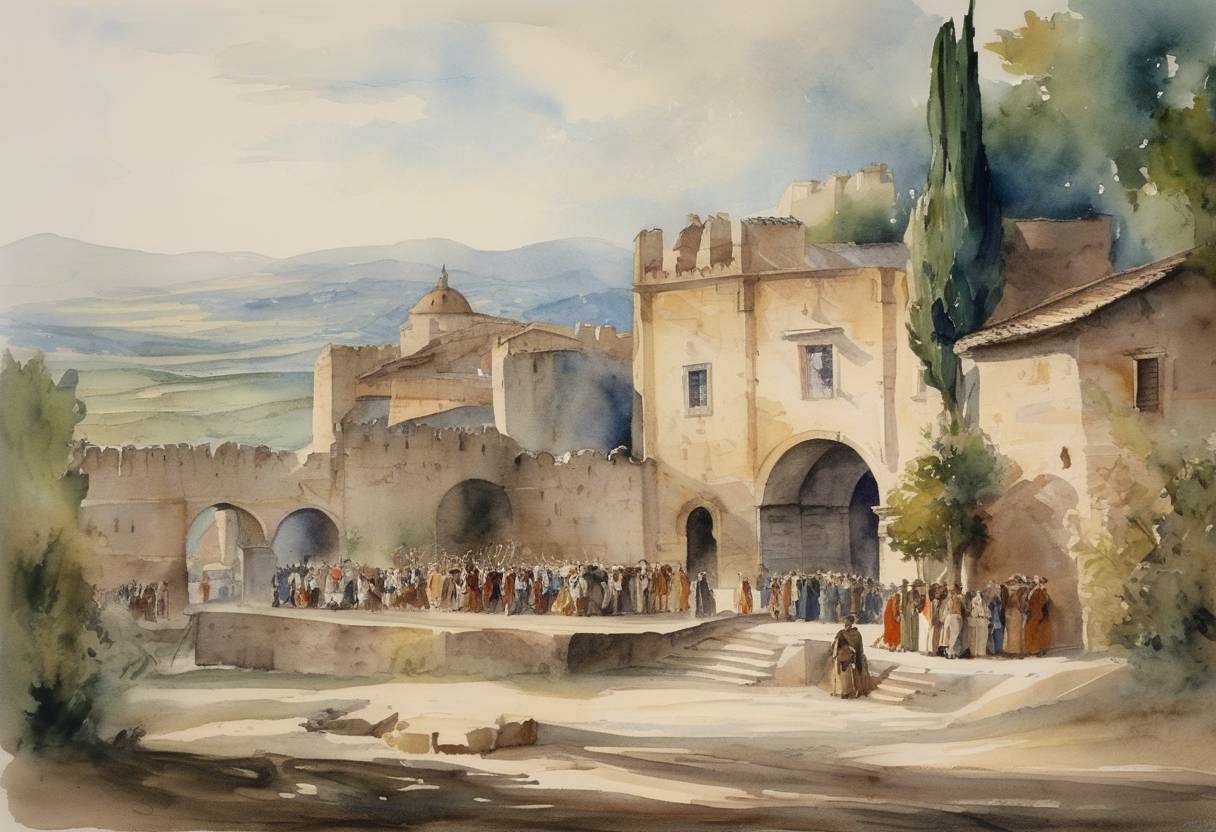
The Treaty of Tarascon (1291)
The Treaty of Tarascon was signed on March 10, 1291, marking a significant attempt to resolve tensions between the Kingdom of Aragon and the Papal States following the War of the Sicilian Vespers. This agreement sought to address the conflicts that arose during and after this tumultuous period in Mediterranean history.
Context and Background
The War of the Sicilian Vespers began in 1282 as a revolt against King Charles I of Anjou, who ruled Sicily. The uprising was instigated by local Sicilians dissatisfied with Angevin rule, leading to the intervention of Peter III of Aragon, who claimed the Sicilian throne. This involvement drew the Kingdom of Aragon into conflict with the Papal States, which supported the Angevins in maintaining their hold over Sicily.
As a result, the Papacy declared a crusade against Aragon, escalating the conflict to a broader scale. The war significantly strained relations, affecting the balance of power in the Mediterranean.
Key Provisions of the Treaty
Acknowledgment of Claims: The treaty sought to reconcile differences by having Aragon abandon its claims over Sicily in exchange for more favorable relations with the Papacy. This agreement required James II of Aragon to renounce his rights to Sicily.
Papal Sanctions: In return for these concessions, the Papal States lifted ecclesiastical censures and military sanctions against Aragon, restoring more amicable diplomatic ties.
Restoration of Peace: The treaty was intended to solidify a lasting peace by clarifying territorial rights and ensuring mutual recognition between the conflicting parties.
Aftermath and Historical Significance
The Treaty of Tarascon marked a crucial step towards restoring stability in the region after years of warfare. Although it did not resolve all territorial disputes—since Sicily continued to be a point of contention—it did pave the way for subsequent negotiations and offered a momentary reprieve from continuous conflict.
The significance of the treaty lay in its demonstration of diplomacy overcoming warfare, setting a precedent for future negotiations in the region. However, the dispute over Sicily would resurface in later years, ultimately leading to further conflicts that shaped the political landscape of the Mediterranean.
The Treaty of Tarascon stands as a pivotal moment in medieval European history, illustrating the complexities of political alliances, territorial ambitions, and the powerful role of the Papacy in secular conflicts.