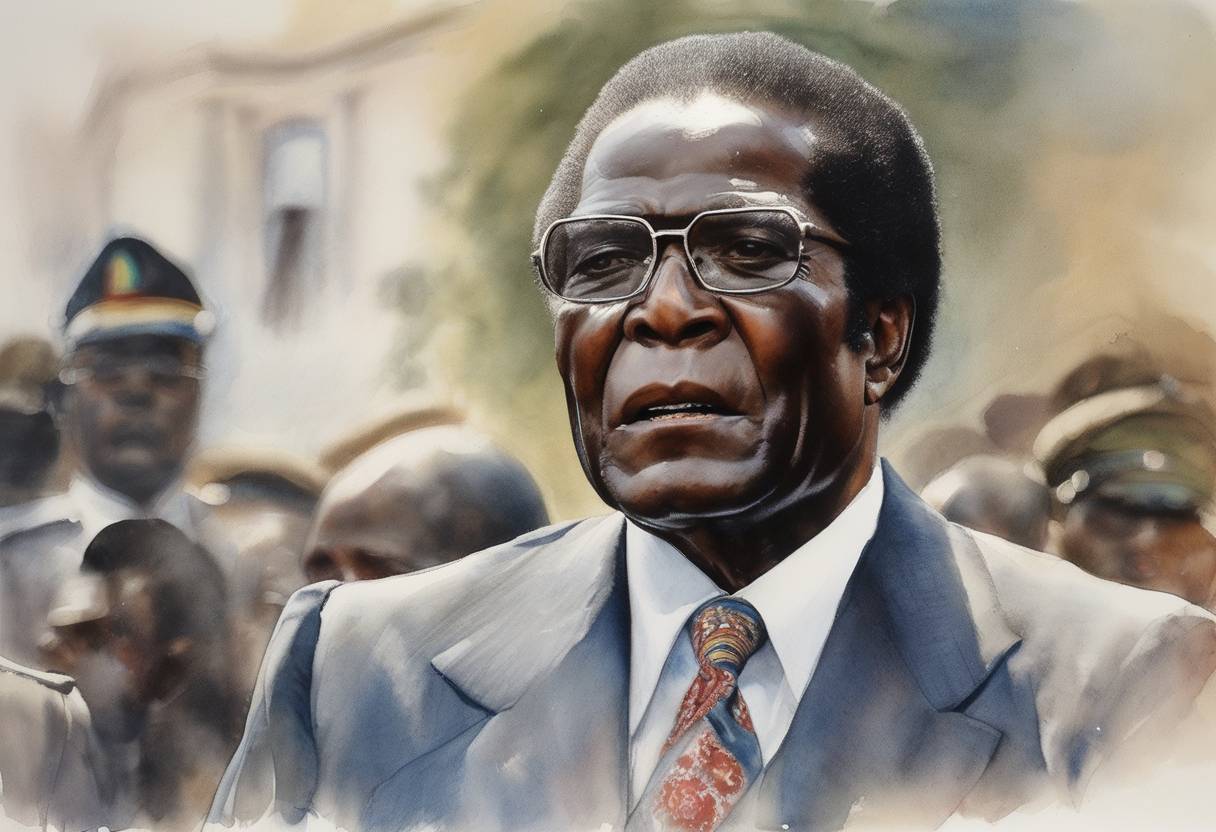
Robert Mugabe Becomes Zimbabwe’s First Black Prime Minister
On March 4, 1980, Robert Mugabe was elected as the first Black Prime Minister of Zimbabwe following the country’s landmark transition to independence from British colonial rule. This significant event was the culmination of decades of political struggle and armed resistance against the colonial government of what was then known as Rhodesia.
Background
- Colonial History: Zimbabwe, formerly known as Southern Rhodesia, was a British colony from the late 19th century. In the early 20th century, the area became a self-governing colony with a predominantly white minority government.
- Unilateral Declaration of Independence (UDI): In 1965, the white minority government, led by Prime Minister Ian Smith, declared independence unilaterally, refusing to transition power to the Black majority. This led to international isolation and sanctions.
- Liberation Struggle: The 1960s and 1970s saw rising tensions and the establishment of liberation movements, primarily the Zimbabwe African National Union (ZANU) and the Zimbabwe African People’s Union (ZAPU). These movements engaged in a protracted guerrilla war against the Rhodesian government, demanding majority rule and independence.
1980 Elections
- Lancaster House Agreement: In late 1979, the Lancaster House Agreement was brokered, leading to a ceasefire and paving the way for democratic elections. The agreement included a new constitution and an arrangement for majority rule.
- Election Campaigns: Robert Mugabe led the ZANU-PF party in the electoral process, promoting policies of reconciliation and development. Despite skepticism and tensions, Mugabe campaigned effectively, gaining widespread support among the Black majority.
- Election Results: The elections were held from February 28 to March 2, 1980. Mugabe’s ZANU-PF won a decisive victory, securing 57 of the 80 Black-contested seats. On March 4, 1980, Mugabe was declared the winner, setting the stage for him to become Prime Minister.
Significance and Aftermath
- Independence: Robert Mugabe’s victory marked the end of a tumultuous colonial era and the beginning of majority rule in Zimbabwe. It was a significant turning point not only for Zimbabwe but also for the African liberation movements.
- Government Policies: Mugabe’s initial government was characterized by attempts at national reconciliation and economic improvement. However, the future would see significant challenges including economic issues and political controversies under his lengthy rule.
- International Relations: His election was widely noted as an important moment in African decolonization, symbolizing a shift towards self-determination across the continent.
Mugabe remained a central figure in Zimbabwean politics for several decades, with his leadership continuing to evoke complex discussions on governance, policy, and human rights.