Liberation of Rome: June 5, 1944
1944 · Rome, Italy
Allied forces liberate Rome during World War II, marking the first Axis capital to fall to the Allies.
July 19, 1943
The Allies launch the first large-scale bombing raid from Sicily's airfields against Rome, aiming to disrupt Axis communications and military infrastructure.
Rome, Italy | Allied Forces
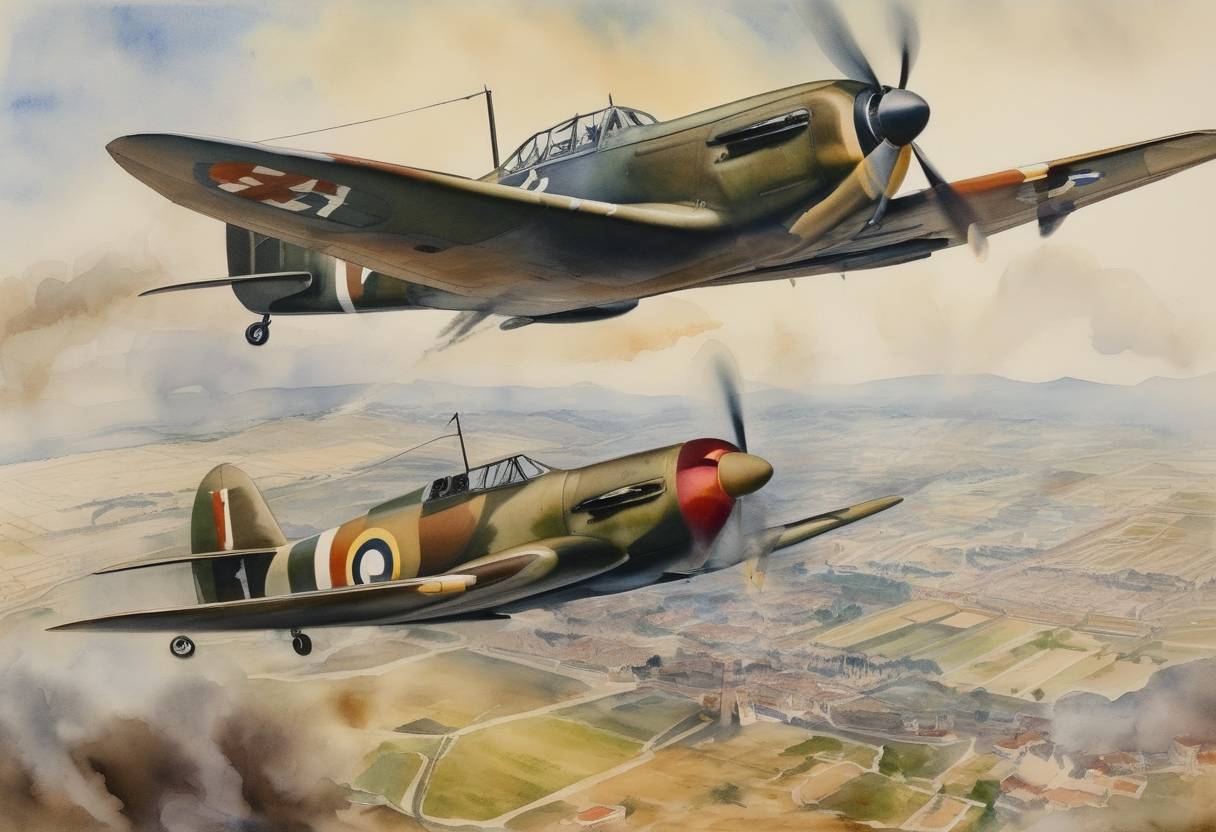
On July 19, 1943, the Allies executed their first large-scale bombing raid from bases in Sicily targeting Rome, Italy. This operation marked a significant tactical undertaking in the Mediterranean theatre during World War II. The primary objective was to disrupt Axis communications and military infrastructure, a strategic move designed to weaken Rome’s support for the Axis forces and undermine Italian Fascism under Mussolini.
The raid was part of the broader Allied campaign in the Mediterranean following the successful Allied invasion of Sicily, known as Operation Husky, which began on July 9, 1943. By capturing Sicily, the Allies gained critical airfields and a strategic position to launch assaults on mainland Italy. The fall of Mussolini’s government was imminent, and the bombing of Rome helped intensify pressure on the Axis powers.
Conducted by the United States Army Air Forces (USAAF), particularly the 9th and 12th Air Forces, the raid involved more than 500 bombers, including B-17 Flying Fortresses and B-24 Liberators. Targets included railway yards, key infrastructure, and military-related industrial sites in and around Rome. The aim was not to inflict civilian casualties but to cripple the logistical capabilities of the Axis.
The raid had several immediate and long-term effects:
The bombing of Rome on July 19, 1943, demonstrated the strategic importance of air power in World War II. It underscored the Allies’ resolve to dismantle Axis capabilities by targeting not just military forces but the infrastructure supporting them. This raid significantly contributed to the weakening of Mussolini’s regime and set the stage for subsequent Allied advances in Italy.
Source: books.google.com