Xi Jinping's Appointment as General Secretary of the Communist Party of China
2012 · Beijing, China
Xi Jinping was appointed as the General Secretary of the Communist Party of China, marking the beginning of his leadership in China.
March 15, 2003
Hu Jintao was formally elected as President of the People's Republic of China by the National People's Congress, succeeding Jiang Zemin.
Beijing, China | National People's Congress
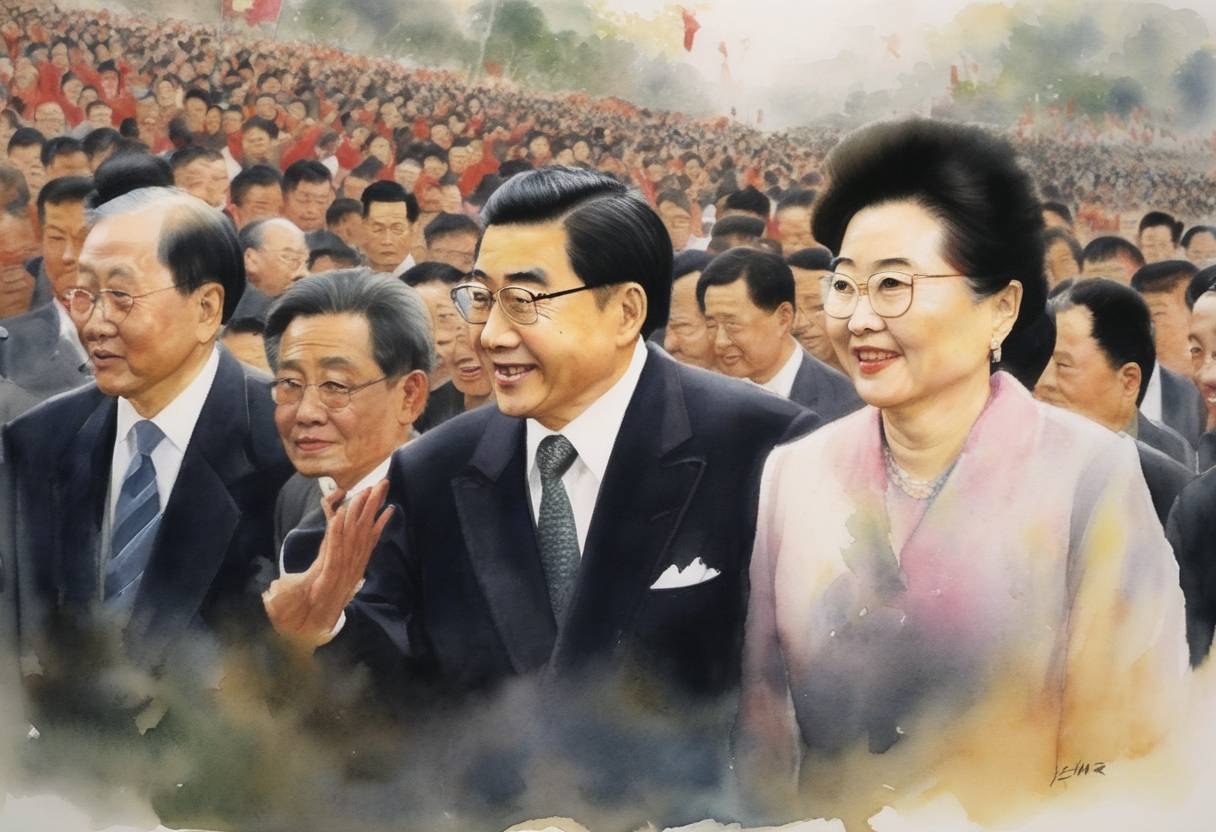
On March 15, 2003, Hu Jintao was formally elected as the President of the People’s Republic of China by the National People’s Congress (NPC), marking a significant moment in Chinese political history. This event solidified Hu’s rise within the Chinese political hierarchy and represented a leadership transition aiming to reflect both continuity and change in the country’s governance.
Hu Jintao’s ascent to the presidency was the result of a carefully orchestrated transition within the Chinese Communist Party (CCP). He first emerged as a significant figure in Chinese politics in the late 1990s, becoming the Vice President of China in 1998 and a member of the CCP’s Politburo Standing Committee. By 2002, Hu had already succeeded Jiang Zemin as the General Secretary of the Communist Party, indicating his future role as China’s top leader.
The National People’s Congress, China’s top legislative body, played a ceremonial yet constitutionally significant role in the process. The Congress convened to approve Hu’s presidency after the Central Committee of the Communist Party nominated him for this position. On March 15, 2003, with an overwhelming majority, Hu was elected, succeeding Jiang Zemin who had held the presidency since 1993.
Hu’s presidency marked the beginning of the fourth generation of leadership within the People’s Republic of China. The transition illustrated a continuation of market-oriented reform policies initiated under Deng Xiaoping and expanded under Jiang Zemin. Moreover, Hu’s leadership was expected to emphasize stability, internal economic development, and cautious political reform.
Hu Jintao’s tenure as President and General Secretary was characterized by a conservative and collective style of leadership, emphasizing a harmonious socialist society. He focused on reducing the socioeconomic disparities within China, promoting sustainable development, and enhancing China’s position on the global stage. Significant events and policies during his tenure included dealing with issues like environmental degradation, rapid urbanization, and the growth of China’s middle class.
Hu Jintao served two terms as CCP General Secretary and President until 2012 and 2013, respectively, when Xi Jinping was elected as his successor. Under Hu’s leadership, China experienced substantial economic growth and enhanced its geopolitical influence. His presidency laid the groundwork for many policies and challenges that persisted into Xi Jinping’s era.
Hu Jintao’s election as President in 2003 was a pivotal moment signaling continuity in leadership strategy with a focus on internal stability and economic development in China. His legacy is viewed through the lens of maintaining the economic growth trajectory while balancing reform and stability.
Source: www.britannica.com