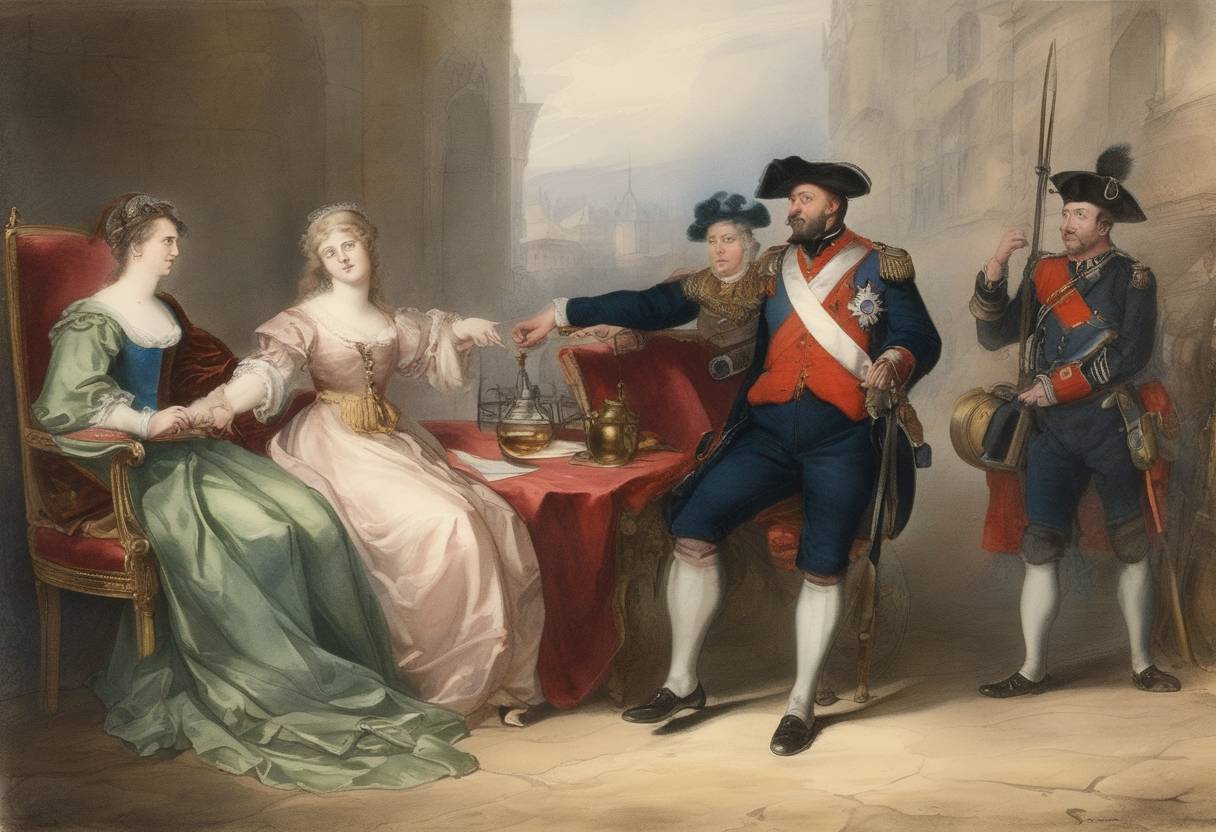
The Auld Alliance: Scotland and France Treaty on July 5, 1295
On July 5, 1295, one of the most enduring diplomatic partnerships in European history was formalized between the Kingdom of Scotland and the Kingdom of France. Known as the Auld Alliance, this treaty was crafted primarily as a strategic measure against the common rival of both nations: the Kingdom of England. The accord established a mutual support system wherein both countries vowed to assist one another in the event of English aggression.
Context and Prelude
Political Climate
- England’s Expansion: In the late 13th century, England, under King Edward I, was aggressively expanding its influence across the British Isles. Scotland faced growing pressure as Edward asserted his overlordship over the Scottish crown.
- French Concerns: Simultaneously, France under the Capetian king, Philip IV, was in conflict with England over territories such as Gascony, leading to tensions that would later fuel the Hundred Years’ War.
Previous Interactions
Scotland and France, though geographically distant, had previously engaged in trade and had a history of occasional diplomatic interactions. Nevertheless, the Auld Alliance marked a significant shift towards formalized military and political solidarity.
Key Provisions of the Treaty
- Military Support: The alliance stipulated that if either France or Scotland was attacked by England, the other would invade English territories or open a second front to divide English military efforts.
- Economic Ties: Provisions for trade agreements were included to foster economic ties, enhancing the commercial interests and mutual prosperity of both nations.
- Dynastic Bonds: The treaty paved the way for future dynastic marriages between the noble families of Scotland and France, thereby reinforcing the alliance through familial bonds.
- Strategic Positioning: For Scotland, the Auld Alliance provided crucial international legitimacy and support at a time when King Edward I’s ambitions threatened Scottish sovereignty.
- Counterbalance to English Power: The alliance served as a counterweight to English dominance, enabling France and Scotland to coordinate military efforts against a common adversary effectively.
Long-term Consequences
- Cultural Exchange: Over the centuries, the alliance fostered a rich cultural exchange, influencing everything from military tactics to cuisine and education, evident in Scottish and French societies.
- Persistence Through Centuries: The Auld Alliance persisted well into the 16th century, enduring various political upheavals and remaining a cornerstone of Franco-Scottish relations until the Treaty of Edinburgh in 1560 began to deconstruct it amidst changing geopolitical realities.
The signing of the Auld Alliance on July 5, 1295, was a decisive moment in European history, symbolizing a potent fusion of defiance and hope against English hegemony, and laying the groundwork for deep-seated ties between two traditionally hostile nations.