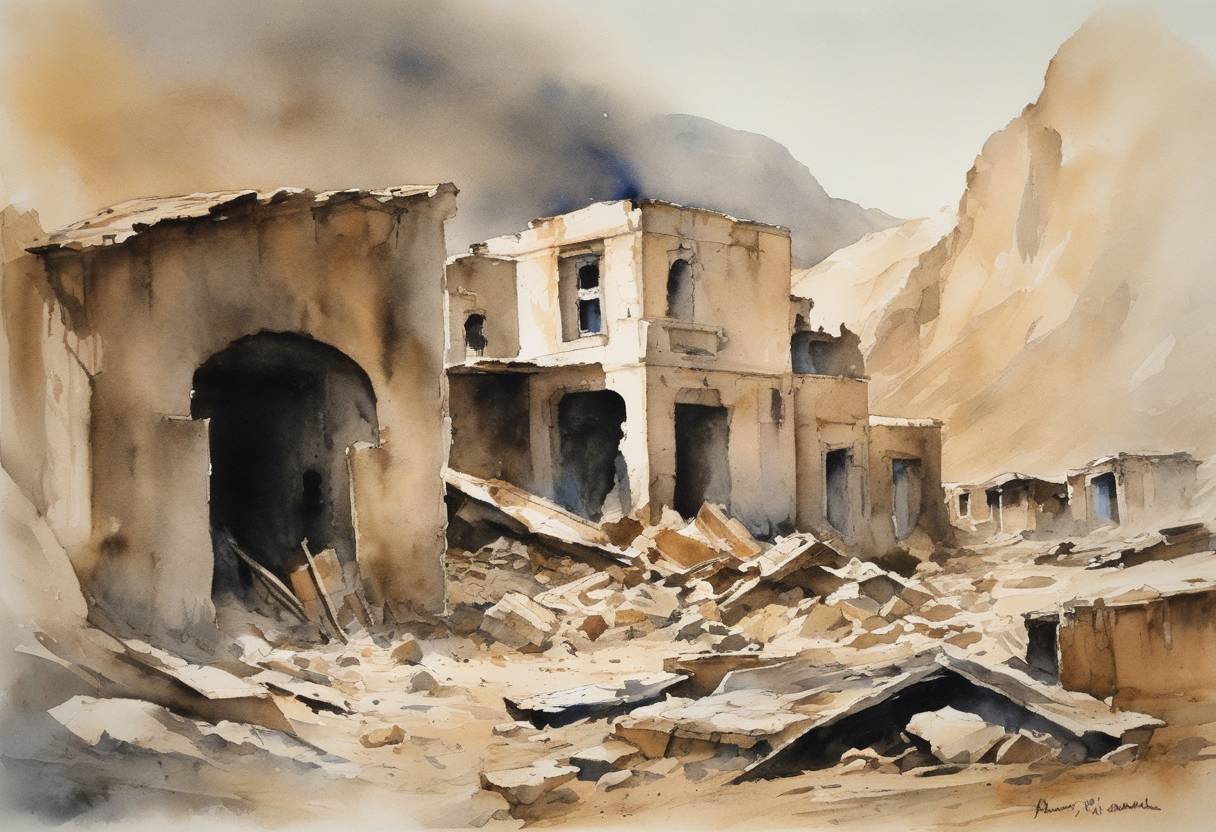
Earthquake in Golbaf, Iran (July 16, 1981)
On July 16, 1981, a devastating earthquake struck the Golbaf region in Kerman Province, Iran. This seismic event had significant ramifications, marking one of the most destructive earthquakes in the region during the early 1980s.
Seismic Details
- Magnitude: The earthquake registered a magnitude of 7.1 on the Richter scale.
- Epicenter: The epicenter was located near Golbaf, a town in southeastern Iran.
- Depth: The tremor occurred at a shallow depth, which typically exacerbates the extent of surface damage.
Impact and Damage
- Casualties: The earthquake resulted in substantial loss of life, with approximately 3,000 people reported dead.
- Injuries: Thousands more were injured, overwhelming local medical facilities.
- Destruction: Over 85% of buildings in the affected area were damaged or destroyed, rendering more than 20,000 people homeless. Many traditional mud-brick homes in the region lacked the structural integrity to withstand such intense seismic activity.
Response and Aftermath
- Immediate Response: Rescue operations were hindered by the remote location and the lack of immediate access to heavy machinery required for clearing debris and conducting effective search and rescue missions.
- Foreign Aid: The Iranian government requested international aid to cope with the disaster. Several countries and international organizations provided assistance, including medical supplies, tents, and financial help.
- Reconstruction: The disaster highlighted the need for better construction standards and earthquake preparedness in Iran, prompting discussions on improving building codes.
Historical Context
Iran is situated on major seismic fault lines and has historically been prone to earthquakes. The 1981 Golbaf earthquake reiterated the need for robust disaster management strategies and infrastructural resilience in seismically active regions.
This calamity remains a poignant reminder of the region’s vulnerability to natural disasters and the ongoing challenge of earthquake preparedness and response.