Mariner 4 Launch: November 28, 1964
1964 · Cape Canaveral, United States
Mariner 4 is launched by NASA, the first spacecraft to successfully fly by Mars and send back images.
July 13, 1962
The Mariner 1 space probe, part of NASA's interplanetary exploration program, was launched but veered off course shortly after lift-off and was destroyed by range safety.
Cape Canaveral, United States | NASA
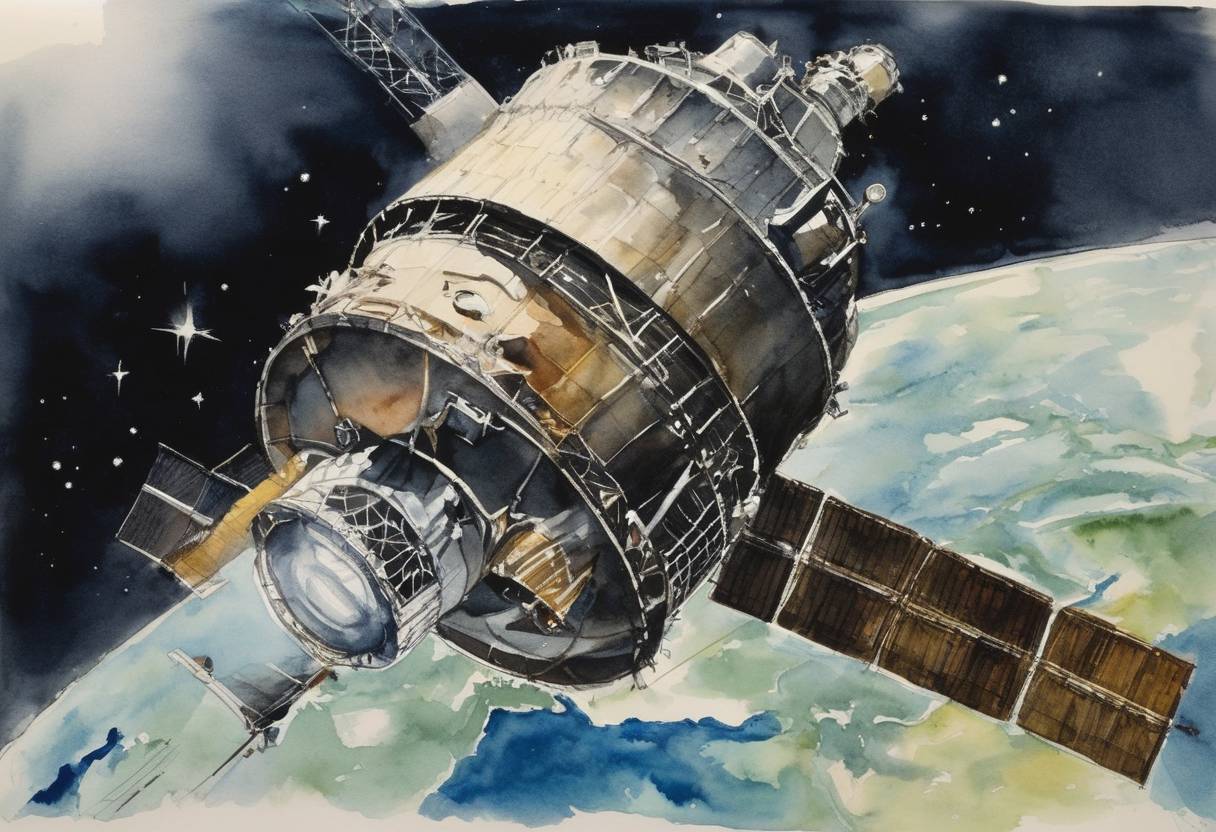
On July 13, 1962, NASA’s Mariner 1, an interplanetary space probe intended for a mission to Venus, was launched from Cape Canaveral, Florida. This mission was part of the broader Mariner program, which aimed to explore neighboring planets and gather critical scientific data about the solar system.
Launch Attempt: The spacecraft was launched atop an Atlas-Agena rocket early in the morning. The initial phase of the launch seemed successful, but shortly after liftoff, complications arose.
Deviation from Course: Within seconds, the trajectory of the probe started to deviate significantly from the planned course. This veering off was due to a guidance system malfunction.
Destruction Decision: To mitigate the risks posed by the wayward trajectory, especially concerning the potential for the rocket to endanger populated areas, mission control decided to destroy Mariner 1 by remote command. This decision was executed approximately 293 seconds after launch.
The failure of Mariner 1 was primarily attributed to a flaw in the guidance system. The root cause was traced to a software programming error involving a missing hyphen (or “overbar”) that led to incorrect guidance commands being sent to the rocket, resulting in its erratic path.
Technological Lessons: The incident highlighted the critical importance of software reliability and meticulous testing in space missions. It showcased the complex challenges faced in the emerging field of computerized spacecraft guidance.
Impact on Future Missions: Although the Mariner 1 mission ended in failure, the lessons learned contributed to the success of subsequent missions. Mariner 2, which launched later in 1962, successfully completed its mission to Venus, becoming the first spacecraft to conduct a successful flyby of another planet.
The Mariner 1 incident occurred during the early years of space exploration when the U.S. and the Soviet Union were in a fierce competition known colloquially as the “Space Race.” Each mission carried not just scientific, but significant geopolitical stakes. Despite its failure, the commitment to learning from such incidents helped propel NASA and its partners toward greater successes in the exploration of our solar system.
Source: nssdc.gsfc.nasa.gov