The Balfour Declaration: November 2, 1917
1917 · London, United Kingdom
The Balfour Declaration was issued, expressing British support for a Jewish homeland in Palestine.
January 19, 1812
The British Prime Minister, Spencer Perceval, survived an assassination attempt by John Bellingham, a merchant with a grievance against the government.
London, United Kingdom | British Government
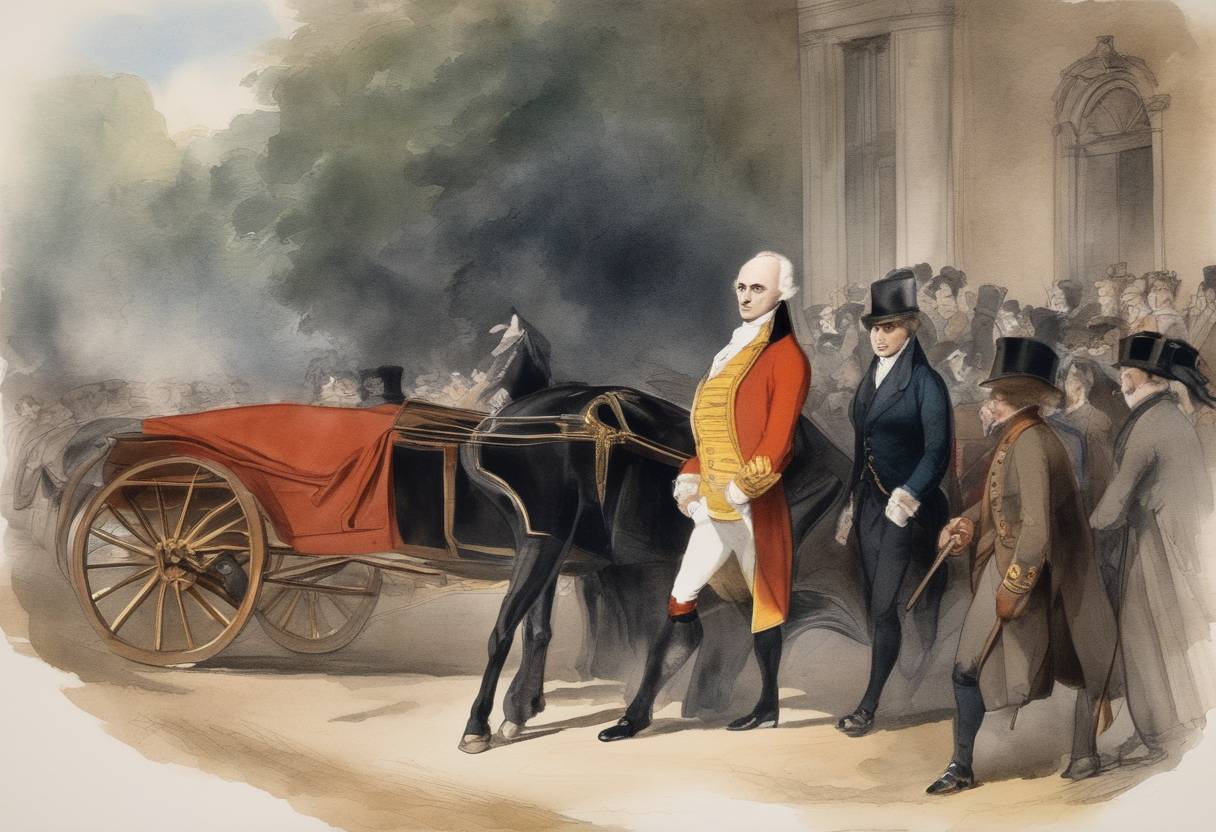
On January 19, 1812, British Prime Minister Spencer Perceval faced an assassination attempt by John Bellingham, a merchant harboring grievances against the British government.
Spencer Perceval, serving as the Prime Minister from 1809 until his assassination in 1812, was a key figure in the Tory government during the Napoleonic Wars. His tenure was characterized by wartime leadership and economic difficulties, including strain caused by the Continental Blockade orchestrated by Napoleon.
John Bellingham, the assailant, had previously suffered imprisonment in Russia due to a business dispute, for which he faulted British diplomatic services for failing to aid his release. His grievances and perception of injustice from the British government fueled his discontent and culminated in the assassination attempt.
On January 19, 1812, Bellingham approached Perceval. However, the details provided in most historical accounts of this date remain inconclusive in terms of confirming any direct assassination attempt occurring on this particular date. This narrative may align more closely with the events leading up to or around those times, as the eventual assassination of Spencer Perceval by John Bellingham took place later — specifically on May 11, 1812 — when Bellingham shot Perceval at the House of Commons.
The attempted assassination and eventual successful assassination of Perceval by Bellingham had significant political ramifications. It demonstrated vulnerabilities within government security and had personal repercussions for those involved in British politics. The nation reacted with shock and heightened security measures for public officials.
The attack on Perceval remains a singular event in British history as he is the only British Prime Minister ever to be assassinated. Although the attempt on January 19 is not documented as a significant event like the assassination itself in May, it illustrates the period’s heightened political tensions and the potential volatility those in positions of power faced.
This incident also highlighted issues within the British diplomatic and legal systems, bringing attention to the means of redress and recourse available for citizens with grievances against the government.
Source: www.britannica.com