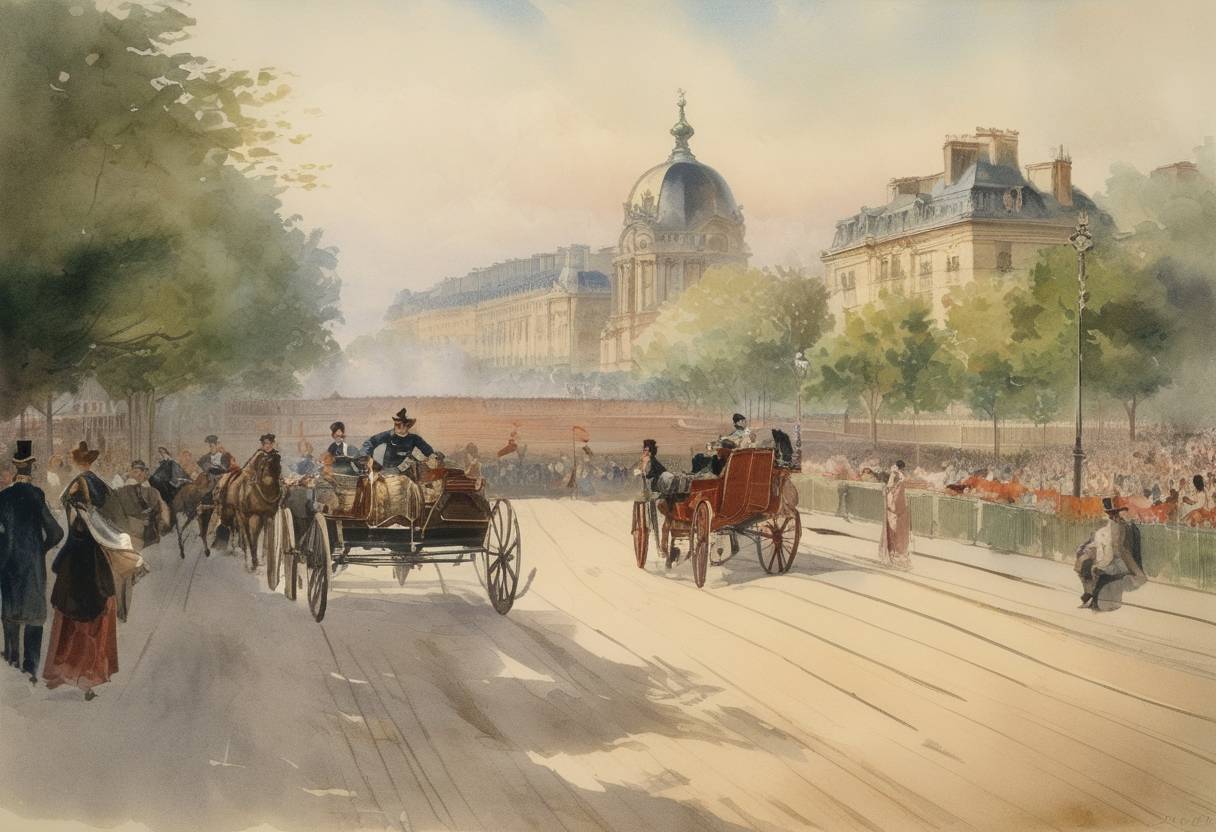
The 1900 Summer Olympics: Games of the II Olympiad
The 1900 Summer Olympics, officially known as the Games of the II Olympiad, opened on May 14, 1900, in Paris, France. Hosted as part of the 1900 World’s Fair, the Exposition Universelle, these Games marked a significant moment in Olympic history as they were only the second instance of the modern Olympic Games, following the inaugural Athens Games in 1896.
Context and Background
- Pierre de Coubertin, the founder of the International Olympic Committee (IOC), was instrumental in bringing the Games to Paris. The French capital was selected with the hope of attracting more international attention by coinciding with the Exposition Universelle.
- Unlike the structured format of today’s Olympics, the 1900 Games spanned over five months, from May 14 to October 28, and were characterized by a lack of organization, often overshadowed by the exposition.
Key Features and Events
- Participants: Approximately 997 athletes (22 women and 975 men) from 24 nations competed. This was the first Olympic event to include female competitors.
- Sports Program: 19 different sports disciplines, featuring events like athletics, rowing, rugby, and tennis. Notably, golf and cricket made their only Olympic appearances in 1900.
- New Events: This Olympics introduced events such as swimming, cycling, sailing, and more.
- Venues: Various locations in and around Paris served as venues, including the Bois de Boulogne for cycling and the River Seine for rowing.
Notable Achievements
- William Milligan Sloane: An American, served as a key figure in organizing the Games alongside the French.
- Charlotte Cooper, a British tennis player, became the first female Olympic champion.
- Several athletes won more than just medals: they received art objects such as works by reputed artists, reflecting the integration of culture with sport, a unique characteristic of the 1900 Games.
Aftermath and Historical Significance
- Coordinated Infrastructure: The blend of Olympic events with the World’s Fair led to challenges in scheduling and accommodation, prompting future Games to be more tightly organized.
- Legacy of Inclusivity: The successful inclusion of female athletes paved the way for broader gender participation in future Olympics.
- The 1900 Paris Games were not initially considered highly successful due to logistical issues, but they crucially contributed to the establishment of the Olympics as a recurring global event.
The Games of the II Olympiad fostered a spirit of international competition and laid the groundwork for the Olympic traditions followed today, despite the challenges and underwhelming recognition they initially faced.