Italian Troops Enter Rome: The Unification of Italy
1870 · Rome, Italy
Italian troops entered Rome, completing the unification of Italy and marking the end of the Papal States.
February 13, 1861
In Italy, the Parliament of Piedmont-Sardinia under the rule of King Victor Emmanuel II proclaimed the unification of Italy, which laid groundwork for the formal creation of the Kingdom of Italy in March 1861.
Turin, Italy | Parliament of Piedmont-Sardinia
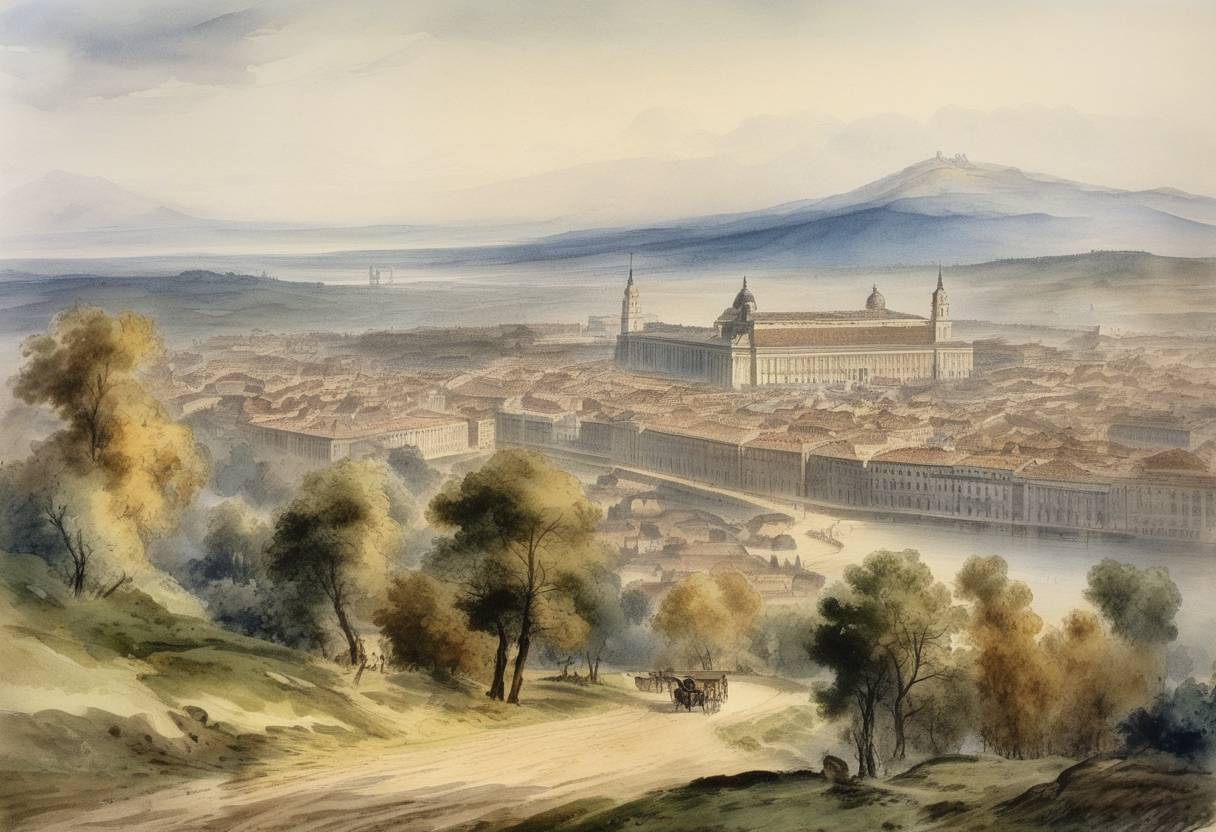
On February 13, 1861, a pivotal event in the history of Italian unification took place within the Parliament of Piedmont-Sardinia. Under King Victor Emmanuel II, the parliament proclaimed the unification of the various states on the Italian Peninsula, setting the stage for the official formation of the Kingdom of Italy in March 1861.
The proclamation was a significant milestone in the Risorgimento, the 19th-century movement for Italian unification. The Risorgimento was driven by the desire to consolidate various independent states and kingdoms across the Italian Peninsula into a single nation-state. This period was marked by numerous political, military, and diplomatic efforts as well as popular uprisings and wars.
Piedmont-Sardinia, led by King Victor Emmanuel II and his astute Prime Minister Count Camillo di Cavour, played a crucial role in these efforts. By 1861, the kingdom had expanded its influence significantly, incorporating other Italian regions through a combination of strategic alliances, military campaigns, and plebiscites.
On February 13, 1861, amid these developments, the Parliament of Piedmont-Sardinia made a historic proclamation of Italy’s unification, effectively laying the groundwork for the formal establishment of the Kingdom of Italy.
The proclamation and the subsequent formation of the Kingdom of Italy marked the culmination of decades of nationalist and liberal agitation. It represented a transformative shift in the geopolitical landscape of Europe, leading to the dissolution of multiple sovereignties and laying the foundations for modern Italy.
The unification of Italy did not immediately resolve internal divisions or external disputes. The annexation of Venetia and the Papal States would follow in subsequent years, leading up to the full territorial unification completed in 1871 with the capture of Rome. Nonetheless, the events of February 13, 1861, were a definitive declaration of Italy’s national identity and sovereignty, influencing European political developments for decades to come.
Source: en.wikipedia.org