The Death of Wat Tyler: The Peasants' Revolt of 1381
1381 · London, England
During the Peasants' Revolt in England, Wat Tyler, the leader of the revolt, was killed at Smithfield by officers loyal to King Richard II.
June 14, 1381
On June 14, 1381, during the Peasants' Revolt in England, insurgents led by Wat Tyler stormed the Tower of London, resulting in the execution of the Archbishop of Canterbury, Simon Sudbury.
London, England | Rebels of the Peasants' Revolt
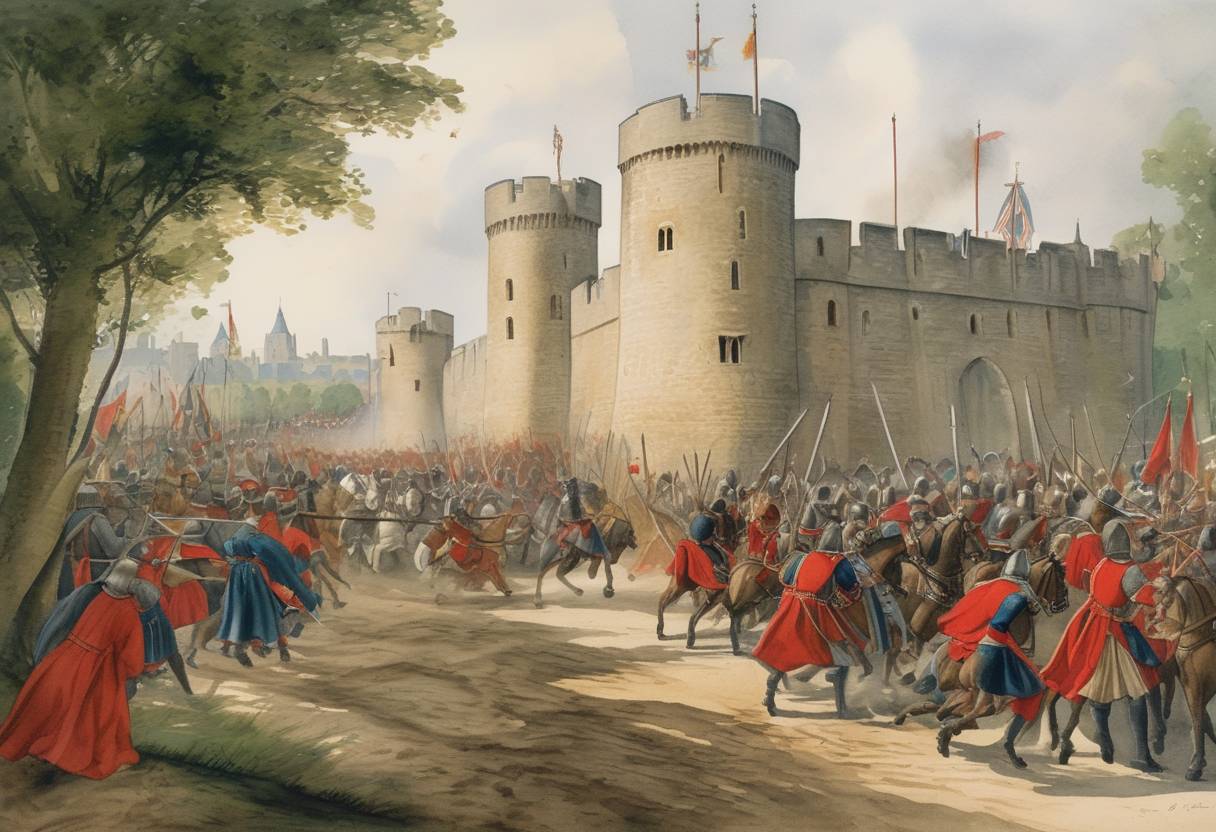
On June 14, 1381, during the widespread civil unrest known as the Peasants’ Revolt, insurgent forces led by Wat Tyler took decisive action in the heart of England’s government. This dramatic episode unfolded amidst growing dissatisfaction among the common populace, primarily fueled by oppressive taxation and social inequities exacerbated by the aftermath of the Black Death.
The Peasants’ Revolt was triggered by the imposition of the Third Poll Tax in 1380, which was perceived as yet another heavy burden on a population already reeling from economic hardship and social turmoil. The discontent among peasants and laborers escalated into organized resistance, particularly in southeastern England, where the push for systemic reform gained significant traction.
On June 14, the insurgent group, distinguished by its diverse coalition of rural laborers, artisans, and lower-tier urban dwellers, reached a pivotal moment by attacking the Tower of London. Their actions were emblematic of their broader demands for justice, the abolition of serfdom, and rectification against oppressive landowners and royal officials.
The storming of the Tower led to the brutal execution of several prominent figures associated with the detested royal policies. Chief among them was Simon Sudbury, the Archbishop of Canterbury and Lord Chancellor of England. His execution symbolized the revolt’s bold rejection of traditional authority, as Sudbury was both a spiritual leader and a key architect of the poll tax.
While the Peasants’ Revolt ultimately did not achieve many of its immediate goals due to the subsequent quelling of the rebellion and the death of Wat Tyler, it marked a significant moment in English history. The revolt highlighted the latent power and resolve of the common people, presaging future challenges to feudal systems and influencing later reform movements. It also exposed the vulnerabilities of the reigning regime, forcing a reevaluation of the relationship between England’s ruling class and its subjects.
This event remains a poignant illustration of the age-old struggle for equity and justice, manifesting in a direct confrontation against entrenched power structures.
Source: en.wikipedia.org