Bulgaria Joins the Axis Powers: March 1, 1941
1941 · Sofia, Bulgaria
The Bulgaria officially joined the Axis Powers by signing the Tripartite Pact.
November 20, 1940
Hungary joins the Axis Powers by signing the Tripartite Pact, aligning itself with Germany, Italy, and Japan during World War II.
Vienna, Austria | Axis Powers
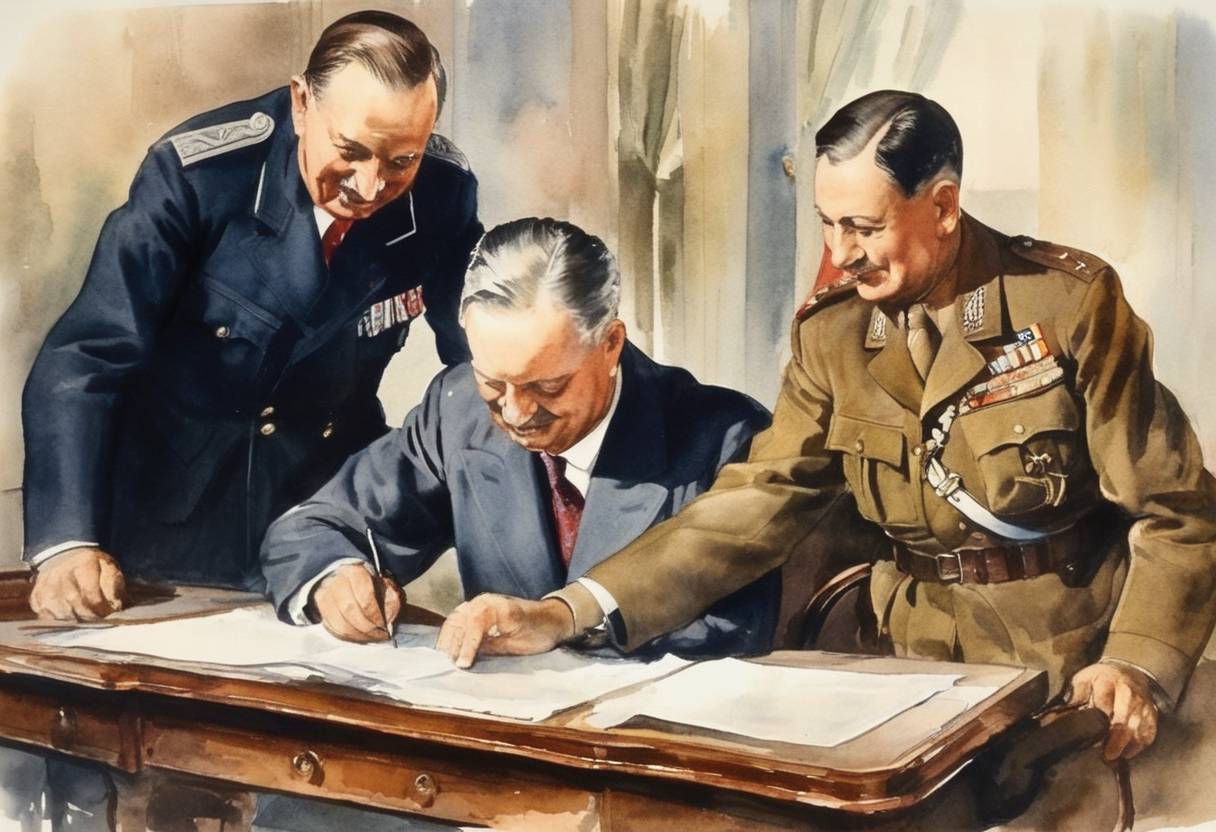
On November 20, 1940, Hungary officially aligned itself with the Axis Powers by signing the Tripartite Pact in Vienna. This significant diplomatic move came during World War II when Hungary, seeking to regain territories lost following World War I, saw alignment with Germany, Italy, and Japan as a strategic opportunity.
Hungary’s geopolitical landscape in the years following World War I was largely shaped by the Treaty of Trianon, which drastically reduced its territory and left it economically weakened and politically marginalized. As World War II unfolded, the Hungarian government, led by Prime Minister Pál Teleki, sought to restore its influence and borders by leveraging alliances with major Axis powers.
The Tripartite Pact formed the Axis alliance, establishing a mutual defense treaty between Germany, Italy, and Japan on September 27, 1940. Hungary’s acceptance into this pact marked its formal commitment to the Axis cause. The signing took place at the Belvedere Palace in Vienna, with Foreign Minister István Csáky representing Hungary. In addition to Hungary, the signing was attended by German Foreign Minister Joachim von Ribbentrop, Italian Foreign Minister Galeazzo Ciano, and other Axis diplomats.
Territorial Ambitions: By joining the Axis, Hungary aimed to revise the territorial settlements established by the Treaty of Trianon. This alliance promised potential territorial gains in regions such as Northern Transylvania, which had been part of the historical Kingdom of Hungary.
Military and Economic Aid: As a member of the Axis, Hungary gained access to German military and economic resources, which were crucial for its ambitions and war potential.
Complex Alliances: Hungary’s decision was driven partly by pressure and partly by its desire for security and territorial revisionism, but it also put the country in a precarious position. Aligning with the Axis meant eventual participation in military operations alongside Germany, which had significant implications for Hungary’s resources and military personnel.
Hungary’s alliance with the Axis powers led to its active involvement in military campaigns, including those against Yugoslavia and the Soviet Union. This alignment eventually resulted in Hungary facing invasion by the Soviet Union and suffering significant destruction and political upheaval at the war’s end. Post-war, Hungary was occupied by Soviet forces and transitioned into a communist state, profoundly altering its political trajectory.
Hungary’s decision to join the Axis powers underlines the complex web of alliances and ambitions that characterized the geopolitics of World War II and highlights the broader implications of aligning with major Axis states during the conflict.
Source: www.history.com