Constantine XI's Coronation as Byzantine Emperor
1449 · Mistra, Byzantine Empire
Constantine XI was crowned Byzantine Emperor at Mistra.
January 1, 1259
Michael VIII Palaiologos is proclaimed co-emperor of the Byzantine Empire.
Nicaea, Byzantine Empire | Byzantine Empire
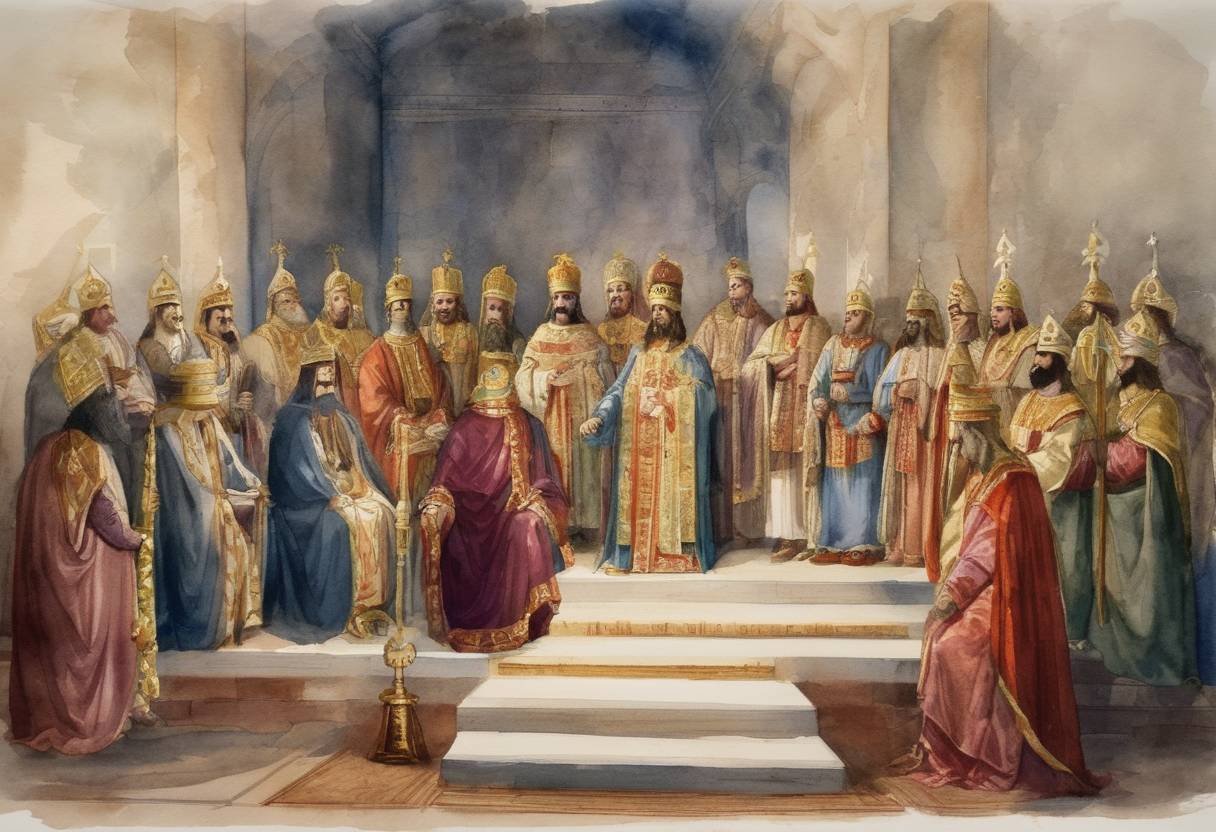
On January 1, 1259, Michael VIII Palaiologos was proclaimed co-emperor of the Byzantine Empire, marking a significant moment in the history of Byzantine political dynamics and restoration efforts.
At the time, the Byzantine Empire was fragmented, with the Latin Empire established in Constantinople following the Fourth Crusade of 1204. The Empire of Nicaea, a Byzantine successor state, was striving to reclaim Constantinople and restore the Byzantine Empire. Michael Palaiologos belonged to one of the prominent Byzantine noble families and wielded considerable influence through his military and political connections.
Michael Palaiologos was initially a general and a member of the aristocratic Palaiologos family. His rise to power was facilitated by the political instability following the deaths of previous Nicaean rulers. He captured the throne through a combination of strategic alliances and military success.
In 1258, following the death of Emperor Theodore II Laskaris, Michael became the regent for the young John IV Laskaris. By January 1, 1259, Michael had consolidated enough power and declared himself co-emperor alongside the young John IV. His coronation was partly to secure legitimacy and to rally the empire around a strong leader capable of restoring its former territories.
Michael VIII’s proclamation as co-emperor was a precursor to the eventual Byzantine recapture of Constantinople in 1261. As the leader of the Nicaean forces, he played a pivotal role in retaking the city and overthrowing the Latin Empire. This achievement marked the restoration of the Byzantine Empire, with Constantinople once again becoming its capital.
Michael VIII’s reign from 1259 to 1282 witnessed significant efforts to rebuild and strengthen the empire. He worked on repairing the damage from Latin control, consolidating the empire’s territories, and restoring its political and religious traditions.
Michael VIII’s assumption of power and subsequent successful reign had lasting effects on Byzantine history. His establishment of the Palaiologos dynasty, which would rule the Byzantine Empire until its fall in 1453, marked the last great dynasty of the Byzantine emperors. Despite initial controversy and opposition, his leadership was crucial in re-establishing Byzantine sovereignty in the region.
Michael’s reign also had profound diplomatic and ecclesiastical impact, as he sought to navigate the complex relationships with other major powers of the period, including the Papacy, the Latin states, and emerging Balkan entities.
The proclamation of Michael VIII as co-emperor was not just a political maneuver but a turning point that set the stage for nearly two centuries of Palaiologos rule, shaping the final era of Byzantine history.
Source: en.wikipedia.org