The Crash of Aerolinee Itavia Flight 870
1980 · Tyrrhenian Sea, Italy
The Italian Aerolinee Itavia Flight 870 crashed into the Tyrrhenian Sea, leading to a major aviation disaster investigation.
October 9, 1963
The Vajont Dam disaster occurred in Italy, resulting in a massive landslide and flood that killed around 2,000 people.
Longarone, Italy | SADE (Società Adriatica di Elettricità)
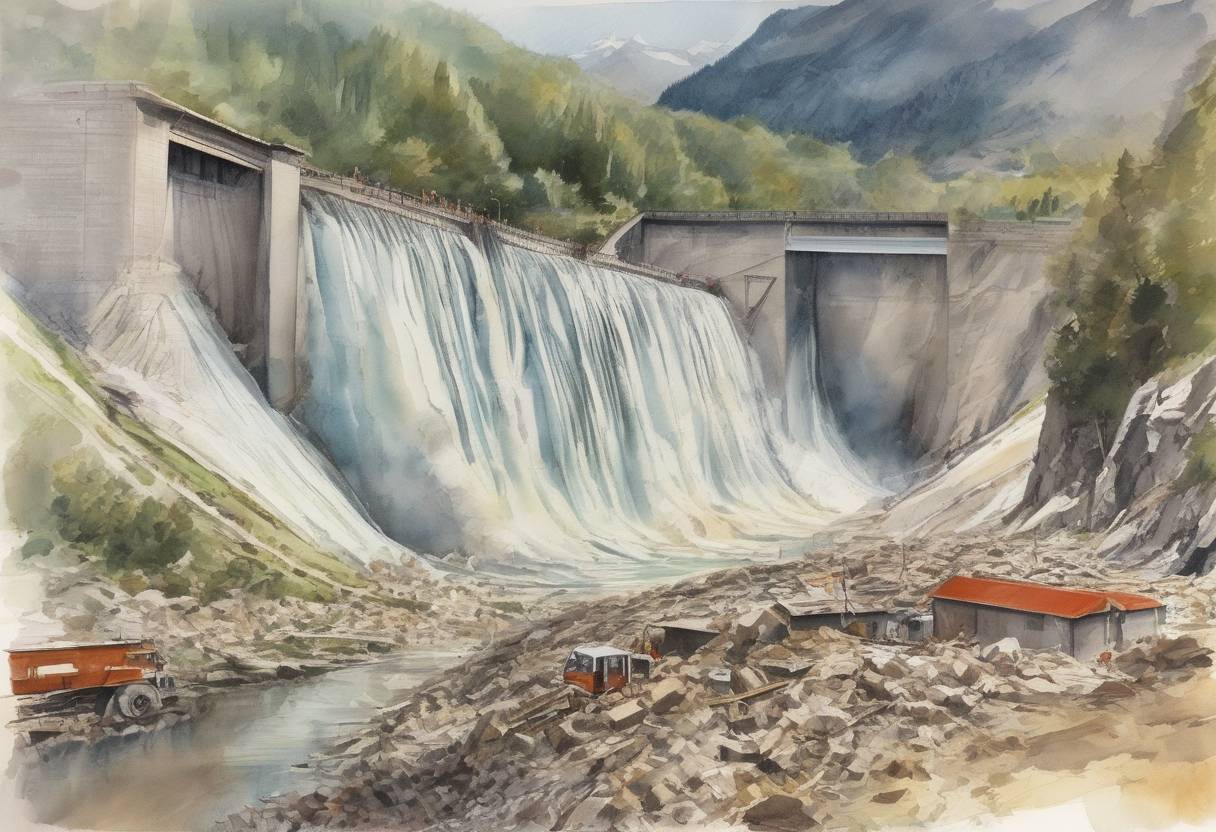
The Vajont Dam disaster is one of the most tragic and significant engineering failures in history, occurring on October 9, 1963, in northern Italy. This catastrophic event resulted in the deaths of approximately 2,000 people and had profound implications for engineering practices and disaster management.
The Vajont Dam, located in the valley of the Vajont River near the town of Longarone, was an ambitious hydroelectric project. Construction of the dam began in 1957 and was completed in 1960. At the time, it was one of the tallest dams in the world, standing at 262 meters (860 feet) high. The dam was designed to harness the power of the river for electricity generation, but its location in a geologically unstable area raised concerns.
Geological Instability: The area surrounding the Vajont Dam was known for its unstable geology. The slopes of Monte Toc, adjacent to the reservoir, were particularly prone to landslides. Despite warnings from geologists and local residents about the potential for disaster, construction proceeded.
Reservoir Filling: By 1963, the reservoir behind the dam had been filled to near capacity. The weight of the water exacerbated the instability of the surrounding mountains.
Warnings Ignored: In the months leading up to the disaster, there were several warning signs, including small landslides and unusual movements in the mountain. However, these warnings were largely ignored by the authorities and the dam’s operators.
On the evening of October 9, 1963, a massive landslide occurred when approximately 260 million cubic meters of rock from Monte Toc plunged into the reservoir at high speed. This displacement caused a megatsunami, with waves reaching heights of up to 250 meters (820 feet).
Impact on Longarone: The wave overtopped the dam, which remarkably remained intact, but the water surged down the valley, obliterating the town of Longarone and several nearby villages within minutes. The force of the water and debris was so powerful that it left little chance for survival.
Casualties and Damage: The disaster claimed the lives of around 2,000 people, making it one of the deadliest landslide-related disasters in history. The town of Longarone was almost entirely destroyed, and the surrounding area suffered extensive damage.
Legal and Political Repercussions: The disaster led to widespread outrage and legal proceedings. Several engineers and officials were held accountable for negligence, although the complex nature of the disaster meant that not all those responsible faced justice.
Changes in Engineering Practices: The Vajont Dam disaster prompted significant changes in engineering practices, particularly in the assessment of geological risks and the importance of heeding expert warnings. It highlighted the need for rigorous environmental and geological assessments in large-scale engineering projects.
Memorialization: Today, the Vajont Dam stands as a somber reminder of the disaster. Memorials and museums in the region commemorate the lives lost and serve as a testament to the lessons learned from this tragic event.
The Vajont Dam disaster remains a poignant example of the potential consequences of ignoring geological warnings and the importance of prioritizing safety in engineering endeavors.
Source: en.wikipedia.org