December 19, 0401

Pope Innocent I is elected as the Bishop of Rome. His papacy is marked by efforts to maintain the authority of the Roman See and his involvement in the Pelagian controversy.


Rome, Western Roman Empire | Catholic Church
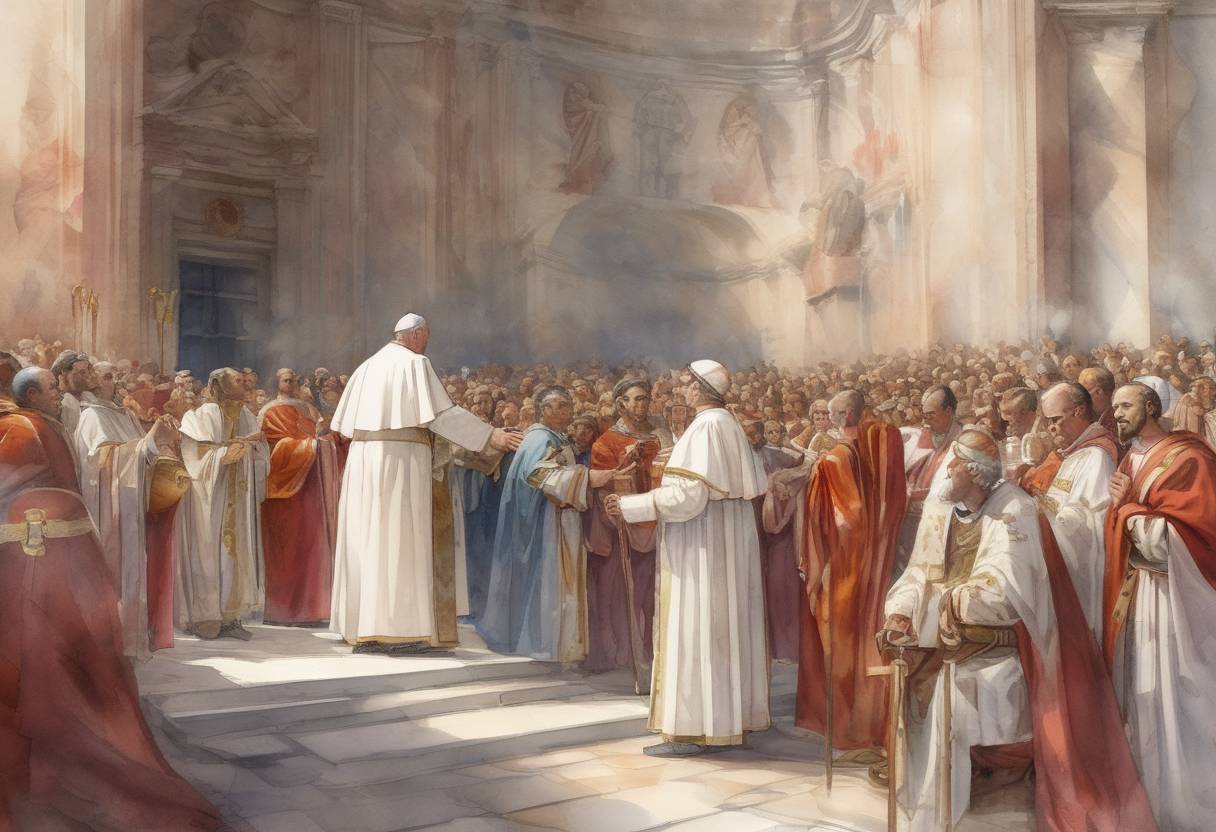
Watercolor painting based depiction of Pope Innocent I is elected as the Bishop of Rome. His papacy is marked by efforts to maintain the authority of the Roman See and his involvement in the Pelagian controversy. (401)

Election of Pope Innocent I - December 19, 401

On December 19, 401, Innocent I was elected as the Bishop of Rome, becoming Pope Innocent I. His papacy, which lasted until his death in 417, was notable for his efforts to assert the authority of the Roman See and his involvement in significant theological controversies of the time.

Context and Background

Innocent I succeeded Pope Anastasius I, during a period when the Western Roman Empire was facing significant challenges, both politically and theologically. The Roman Church was striving to maintain its influence and authority amidst the decline of Roman political power and the rise of theological disputes.

Key Aspects of His Papacy

Assertion of Papal Authority

  • Centralization of Church Authority: Innocent I worked diligently to reinforce the primacy of the Roman See. He emphasized the role of the Pope as the ultimate arbiter in ecclesiastical matters, seeking to centralize decision-making within the Church.
  • Correspondence and Influence: He maintained extensive correspondence with bishops across the Western Roman Empire, offering guidance and asserting the authority of Rome in resolving disputes.

Involvement in the Pelagian Controversy

  • Pelagianism: This theological doctrine, propagated by the British monk Pelagius, argued against the concept of original sin and emphasized human free will in achieving salvation. It was a significant theological issue during Innocent I’s papacy.
  • Condemnation of Pelagianism: Innocent I played a crucial role in condemning Pelagianism. He supported the views of Augustine of Hippo, who argued for the necessity of divine grace for salvation. In 417, Innocent I formally condemned Pelagianism, reinforcing the orthodox position of the Church.

Broader Historical Significance

  • Strengthening of Papal Influence: Innocent I’s efforts to assert the authority of the Roman See laid the groundwork for the increasing influence of the papacy in the medieval period.
  • Theological Impact: His condemnation of Pelagianism contributed to shaping the theological foundations of the Western Church, particularly in the development of doctrines concerning grace and original sin.

Aftermath

Pope Innocent I’s papacy had lasting effects on the structure and theological direction of the Church. His actions helped to solidify the role of the papacy as a central authority within Christianity, a legacy that would continue to evolve in the centuries following his tenure.

Innocent I’s leadership during a tumultuous period for the Roman Empire and the Church highlights his significance as a pivotal figure in early Church history. His efforts to maintain doctrinal purity and ecclesiastical authority remain influential in the history of the papacy.